Bangladesh’s Home Minister Salahuddin Ahmed announced on 1 March that India will “gradually resume” its full spectrum of visa operations in Dhaka and other Bangladeshi cities after an 18-month period of curtailed services caused by protest-related attacks.
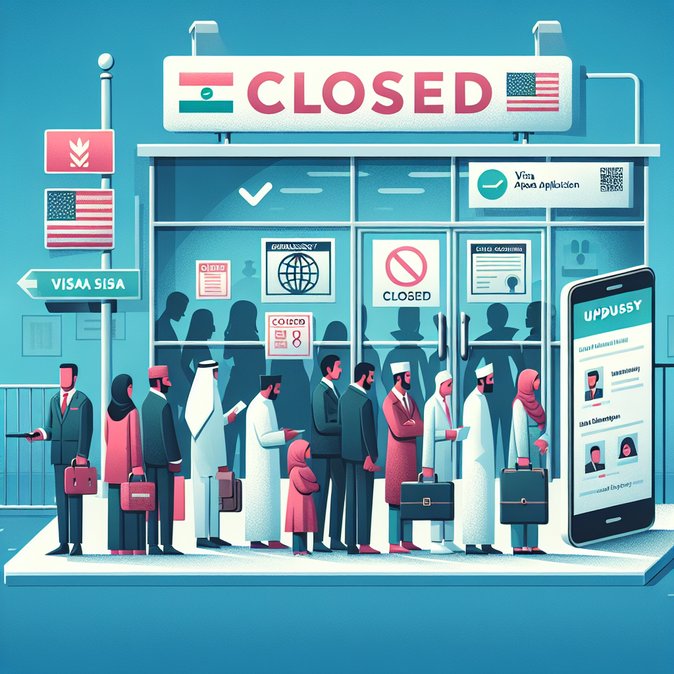
Speaking to reporters after meeting Indian High Commissioner Pranay Verma, Ahmed said New Delhi had scaled back staff numbers and restricted categories—including medical and business visas—following demonstrations that damaged consular property in late 2024. Emergency and diplomatic visas continued, but other applicants faced wait-times of up to four months.
For applicants eager to get ahead of the anticipated rush, third-party facilitators can prove invaluable. VisaHQ, for example, lets Bangladeshi travelers upload documents, secure appointments and monitor processing for every category of Indian visa through its dedicated portal (https://www.visahq.com/india/). Using such a service can shorten lead times and reduce the chances of incomplete submissions once the High Commission’s counters are fully staffed again.
![Indian High Commission promises Bangladesh full restoration of visa services after security-related cutbacks]()
The Embassy has now completed a security audit and plans a phased reopening beginning with additional biometric counters and longer office hours at the Jamuna Future Park Visa Centre. A new SMS-based token system will replace physical queues—part of India’s broader shift toward digital appointment management in South Asia.
For Indian corporates operating textile and pharma plants near Dhaka, the announcement is significant. Expatriate engineer movements have required detours via Kolkata for stamping; the restored service will cut travel costs and downtime. Bangladeshi buyers attending Indian trade shows should also see smoother processing before the busy April-June exhibition season.
Officials did not commit to a hard deadline, saying full capacity depends on the political climate, but insiders expect normal levels by early May if no fresh incidents occur.
Speaking to reporters after meeting Indian High Commissioner Pranay Verma, Ahmed said New Delhi had scaled back staff numbers and restricted categories—including medical and business visas—following demonstrations that damaged consular property in late 2024. Emergency and diplomatic visas continued, but other applicants faced wait-times of up to four months.
For applicants eager to get ahead of the anticipated rush, third-party facilitators can prove invaluable. VisaHQ, for example, lets Bangladeshi travelers upload documents, secure appointments and monitor processing for every category of Indian visa through its dedicated portal (https://www.visahq.com/india/). Using such a service can shorten lead times and reduce the chances of incomplete submissions once the High Commission’s counters are fully staffed again.
The Embassy has now completed a security audit and plans a phased reopening beginning with additional biometric counters and longer office hours at the Jamuna Future Park Visa Centre. A new SMS-based token system will replace physical queues—part of India’s broader shift toward digital appointment management in South Asia.
For Indian corporates operating textile and pharma plants near Dhaka, the announcement is significant. Expatriate engineer movements have required detours via Kolkata for stamping; the restored service will cut travel costs and downtime. Bangladeshi buyers attending Indian trade shows should also see smoother processing before the busy April-June exhibition season.
Officials did not commit to a hard deadline, saying full capacity depends on the political climate, but insiders expect normal levels by early May if no fresh incidents occur.