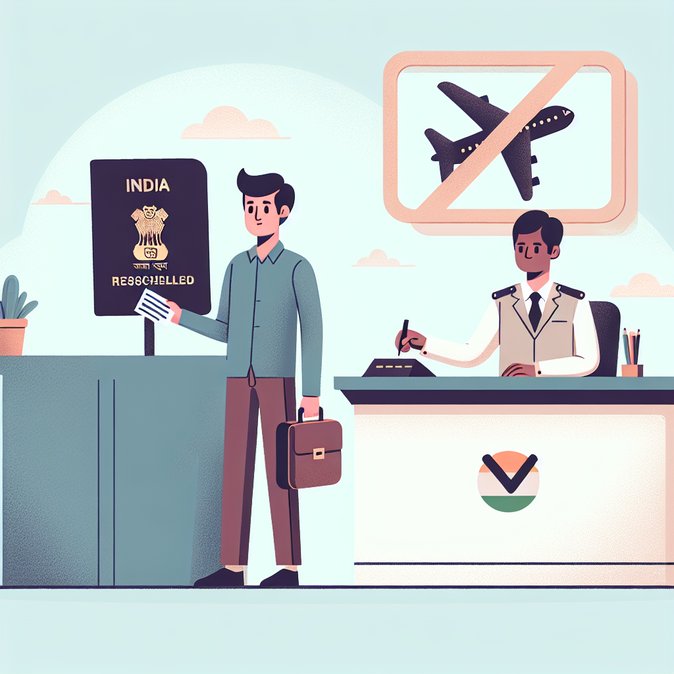
With scores of outbound flights scrapped over the weekend, India’s Ministry of Home Affairs (MHA) has activated emergency measures to stop foreign visitors from accidentally overstaying. A circular sent late on 1 March directs all Foreigners Regional Registration Offices (FRROs) to accept walk-in applications for short-term visa extensions and to waive the usual penalty fees if applicants can provide proof of cancelled tickets.
According to the advisory—first reported by Kerala portal Onmanorama—the policy covers tourist, business and medical visas expiring between 28 February and 7 March 2026. Airlines have simultaneously published change-fee waivers: IndiGo has extended its Middle-East suspension to 2 March and added Central-Asian destinations such as Almaty and Tashkent to the waiver list, while Air India is offering full refunds on 22 cancelled flights.
For travelers who need extra help navigating these abrupt changes, VisaHQ’s India portal (https://www.visahq.com/india/) can streamline the process by outlining the exact documents required, providing real-time support, and facilitating hassle-free online submissions—whether you’re applying for an emergency extension now or planning a future visa once schedules stabilize.
![Government instructs FRROs to grant visa extensions as stranded tourists face flight chaos]()
Travel-risk consultants say the proactive stance is welcome. During previous crisis-driven overstays, visitors often discovered only at departure that they owed hefty fines, leading to missed connections and immigration blacklists. The new directive allows extensions to be issued in under four hours, eliminating that uncertainty.
Employers hosting foreign staff should collect flight-cancellation evidence—airline emails, screenshots of app notifications, or official social-media statements—and submit them with Form C and passport copies at the nearest FRRO. Digital nomads on e-Tourist visas are also eligible but must present a fresh onward ticket once rebooked.
The MHA has not given an end-date for the concession, saying the validity will be reviewed “in line with aviation normalisation.” Observers expect at least a week’s grace while airlines rebuild schedules.
According to the advisory—first reported by Kerala portal Onmanorama—the policy covers tourist, business and medical visas expiring between 28 February and 7 March 2026. Airlines have simultaneously published change-fee waivers: IndiGo has extended its Middle-East suspension to 2 March and added Central-Asian destinations such as Almaty and Tashkent to the waiver list, while Air India is offering full refunds on 22 cancelled flights.
For travelers who need extra help navigating these abrupt changes, VisaHQ’s India portal (https://www.visahq.com/india/) can streamline the process by outlining the exact documents required, providing real-time support, and facilitating hassle-free online submissions—whether you’re applying for an emergency extension now or planning a future visa once schedules stabilize.

Travel-risk consultants say the proactive stance is welcome. During previous crisis-driven overstays, visitors often discovered only at departure that they owed hefty fines, leading to missed connections and immigration blacklists. The new directive allows extensions to be issued in under four hours, eliminating that uncertainty.
Employers hosting foreign staff should collect flight-cancellation evidence—airline emails, screenshots of app notifications, or official social-media statements—and submit them with Form C and passport copies at the nearest FRRO. Digital nomads on e-Tourist visas are also eligible but must present a fresh onward ticket once rebooked.
The MHA has not given an end-date for the concession, saying the validity will be reviewed “in line with aviation normalisation.” Observers expect at least a week’s grace while airlines rebuild schedules.
More From India
View all
Air India and IndiGo cancel hundreds of flights as Middle-East airspace closures spill over to Europe
VFS Global warns visa applicants of possible Middle-East centre closures and processing delays