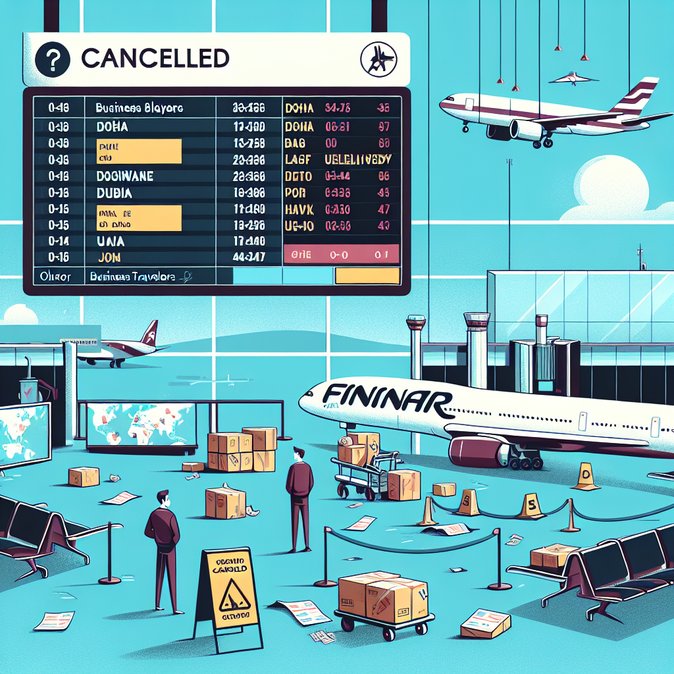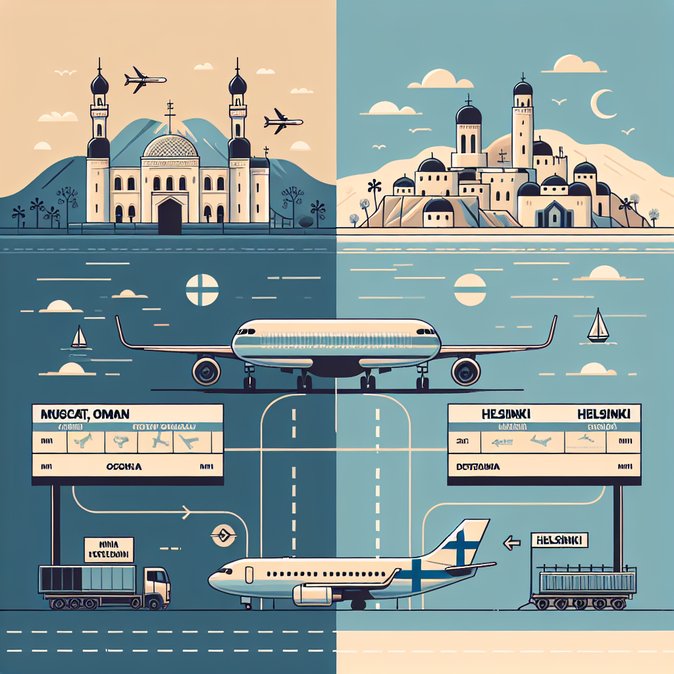
Finland’s Ministry for Foreign Affairs confirmed on 2 March 2026 that it will organise a one-off, self-financed repatriation charter from Muscat to Helsinki after commercial links between the United Arab Emirates and Europe collapsed in the wake of escalating hostilities in the Gulf. The charter—priced at about €2,300 per passenger—targets the estimated 600 Finnish citizens and permanent residents holidaying or working in Dubai and Abu Dhabi who found themselves without a return option when Finnair, Lufthansa and several Gulf carriers grounded services earlier this week. Consular staff deployed to the region are compiling a passenger list from the ministry’s travel-notification database and arranging bus transfers across the UAE–Oman land border to Muscat International Airport, where the wide-body aircraft will depart “no earlier than Sunday”.
![Government Charters €2,300 Repatriation Flight From Oman for Finns Stranded in UAE]()
For Finns scrambling to secure the right exit papers, transit permits or fresh visas before boarding that charter, VisaHQ can streamline the paperwork in a matter of hours. Its Finland-dedicated portal (https://www.visahq.com/finland/) gives real-time guidance on requirements for more than 200 destinations and can file applications electronically on a traveller’s behalf—an invaluable shortcut when local embassies are swamped by the same crisis.
Although the flight is commercially expensive, officials stress it is cheaper and faster than negotiating seats on fragmented third-country routings at the height of a regional air-space shutdown. The ministry warned travellers that they remain liable for the fare and any extra hotel nights in Muscat, and urged all Finns abroad to file travel notifications so that consular teams can reach them in future crises. Employers with staff on long-term Gulf projects were also advised to review evacuation clauses in assignment contracts and consider temporary remote-work options. At least three Helsinki-based engineering firms told the Helsinki Times they are activating business-continuity plans, moving key personnel to company sites in Oman or Bahrain until normal flight patterns resume. The repatriation operation echoes similar COVID-era missions in 2020 but is the first time since Finland joined NATO in 2023 that geopolitical conflict—not a pandemic—has triggered a large-scale organised return of nationals. Industry observers say the price tag underlines a new reality: in a volatile security environment, travellers and employers must shoulder a bigger share of the cost of last-resort mobility support.

For Finns scrambling to secure the right exit papers, transit permits or fresh visas before boarding that charter, VisaHQ can streamline the paperwork in a matter of hours. Its Finland-dedicated portal (https://www.visahq.com/finland/) gives real-time guidance on requirements for more than 200 destinations and can file applications electronically on a traveller’s behalf—an invaluable shortcut when local embassies are swamped by the same crisis.
Although the flight is commercially expensive, officials stress it is cheaper and faster than negotiating seats on fragmented third-country routings at the height of a regional air-space shutdown. The ministry warned travellers that they remain liable for the fare and any extra hotel nights in Muscat, and urged all Finns abroad to file travel notifications so that consular teams can reach them in future crises. Employers with staff on long-term Gulf projects were also advised to review evacuation clauses in assignment contracts and consider temporary remote-work options. At least three Helsinki-based engineering firms told the Helsinki Times they are activating business-continuity plans, moving key personnel to company sites in Oman or Bahrain until normal flight patterns resume. The repatriation operation echoes similar COVID-era missions in 2020 but is the first time since Finland joined NATO in 2023 that geopolitical conflict—not a pandemic—has triggered a large-scale organised return of nationals. Industry observers say the price tag underlines a new reality: in a volatile security environment, travellers and employers must shoulder a bigger share of the cost of last-resort mobility support.