A routine Sunday evening departure from Lanzarote to Bristol turned into an object lesson in how fragile Spain’s external-border processing can be. Flight FR4756 eventually took off on 2 March with 89 empty seats after non-EU lines at passport control ground to a halt. According to the airline, the gate was held open for almost an hour before the final call was made and hold baggage for the absent travellers had to be removed for security reasons. (itij.com)
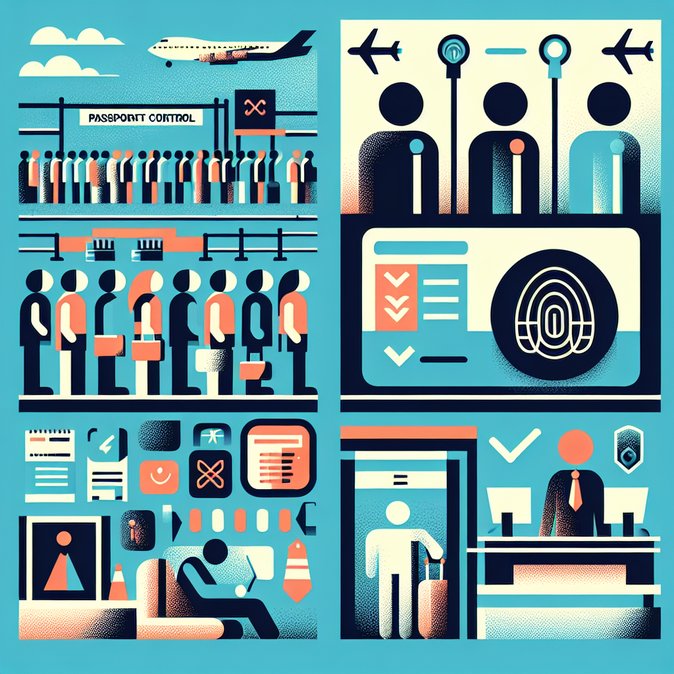
Local business leaders say the bottleneck is symptomatic of a wider staffing deficit across the Canary Islands’ airports. José Valle, president of Lanzarote’s Chamber of Commerce, warned earlier this year that “serious collapses” were likely in the run-up to the EU Entry/Exit System (EES) going live next month. EES will require each third-country national – now including UK holiday-makers – to register fingerprints and a facial image the first time they enter the Schengen Area, replacing the current manual stamp. (itij.com)
For anyone concerned about navigating these forthcoming checks, VisaHQ can help simplify the process before you even reach the airport. The company’s online platform provides real-time information on Spain’s visa and entry rules, assists with documentation, and offers expedited passport and visa services—all accessible at https://www.visahq.com/spain/ Taking care of the formalities in advance can shave valuable minutes off an already tight departure window.
![Border queue chaos leaves 89 Ryanair passengers stranded in Lanzarote]()
Airports Council International Europe and Spain’s AENA have repeatedly cautioned that the extra biometric steps could add 30–50 seconds per traveller if resources are not increased. For leisure airports with narrow peaks, that could quickly cascade into missed flights and secondary disruption at baggage belts and air-traffic slots. Business-travel stakeholders are urging carriers to pad schedules and warn clients about tighter minimum-connection times over Easter and the summer high season.
Practically, employers with mobile workforces should advise staff to arrive at least three hours before departure at Canary Island gateways and carry travel insurance that covers missed-connection costs. Companies should also review duty-of-care protocols: the Lanzarote episode shows that—even without strikes or storms—operational risk has grown at Spain’s external borders.
In the medium term the incident acts as a stress test for Spain’s EES readiness. If the system launches on schedule in April, airports that have not resolved staffing shortfalls could see repeated flare-ups, denting Spain’s reputation for smooth tourist and business-traveller processing.
Local business leaders say the bottleneck is symptomatic of a wider staffing deficit across the Canary Islands’ airports. José Valle, president of Lanzarote’s Chamber of Commerce, warned earlier this year that “serious collapses” were likely in the run-up to the EU Entry/Exit System (EES) going live next month. EES will require each third-country national – now including UK holiday-makers – to register fingerprints and a facial image the first time they enter the Schengen Area, replacing the current manual stamp. (itij.com)
For anyone concerned about navigating these forthcoming checks, VisaHQ can help simplify the process before you even reach the airport. The company’s online platform provides real-time information on Spain’s visa and entry rules, assists with documentation, and offers expedited passport and visa services—all accessible at https://www.visahq.com/spain/ Taking care of the formalities in advance can shave valuable minutes off an already tight departure window.

Airports Council International Europe and Spain’s AENA have repeatedly cautioned that the extra biometric steps could add 30–50 seconds per traveller if resources are not increased. For leisure airports with narrow peaks, that could quickly cascade into missed flights and secondary disruption at baggage belts and air-traffic slots. Business-travel stakeholders are urging carriers to pad schedules and warn clients about tighter minimum-connection times over Easter and the summer high season.
Practically, employers with mobile workforces should advise staff to arrive at least three hours before departure at Canary Island gateways and carry travel insurance that covers missed-connection costs. Companies should also review duty-of-care protocols: the Lanzarote episode shows that—even without strikes or storms—operational risk has grown at Spain’s external borders.
In the medium term the incident acts as a stress test for Spain’s EES readiness. If the system launches on schedule in April, airports that have not resolved staffing shortfalls could see repeated flare-ups, denting Spain’s reputation for smooth tourist and business-traveller processing.