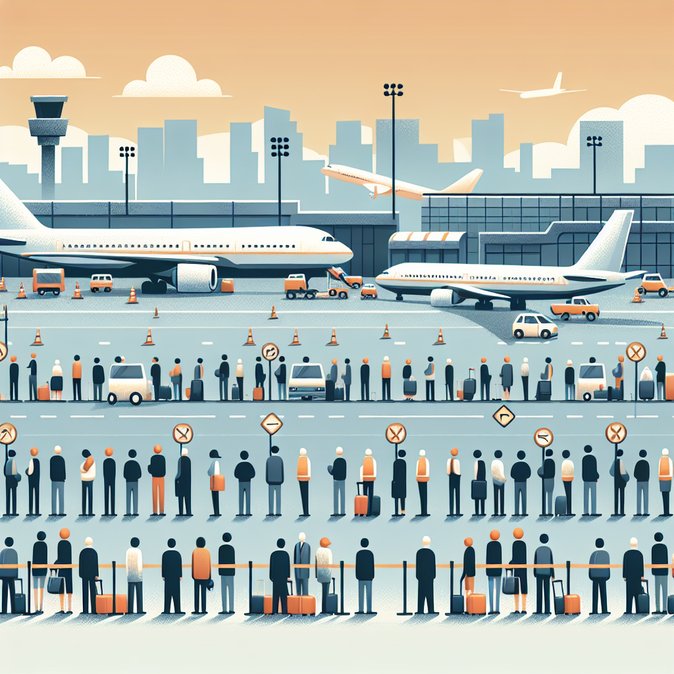
Chhatrapati Shivaji Maharaj International Airport (CSMIA) in Mumbai said it was forced to cancel 57 flights—24 arrivals and 33 departures—on 1 March 2026 as diverted aircraft from West Asia filled every available parking bay. By 9 p.m. local time the airport issued a NOTAM refusing further diversions until 08:00 a.m. on 2 March.
IndiGo flight 6E-1 from Mumbai to London was among the early cancellations. Air India scrubbed services to Heathrow, JFK, Newark and Frankfurt, while Akasa Air suspended departures to five Gulf cities. With capacity vanishing overnight, one-way economy fares to London spiked to ₹1.4 lakh (about US$1,700), according to online travel agencies.
For travellers scrambling to adjust itineraries, ensuring they have the right documents for any sudden route change is just as critical as securing a seat. VisaHQ’s India portal (https://www.visahq.com/india/) can fast-track e-visas and transit permits on short notice, giving passengers peace of mind if they end up connecting through an unexpected country.
![Mumbai Airport Cancels 57 Flights, Closes to Diversions as Stands Fill Up]()
Airport operations teams set up additional passenger-assistance desks, but travellers reported hour-long queues to rebook. Corporate travel managers are advising staff to consider Bengaluru or Hyderabad departures where limited capacity is still available.
The incident illustrates how a bottleneck at a single mega-hub can ripple across India’s mobility ecosystem. Analysts say CSMIA’s apron-expansion project, due in 2027, cannot come soon enough. Until then, airlines may proactively cap loads on flights likely to be diverted so that alternate airports have space to accept them.
Businesses moving critical personnel through Mumbai this week should prepare for sudden gate changes and carry overnight essentials in hand luggage.
IndiGo flight 6E-1 from Mumbai to London was among the early cancellations. Air India scrubbed services to Heathrow, JFK, Newark and Frankfurt, while Akasa Air suspended departures to five Gulf cities. With capacity vanishing overnight, one-way economy fares to London spiked to ₹1.4 lakh (about US$1,700), according to online travel agencies.
For travellers scrambling to adjust itineraries, ensuring they have the right documents for any sudden route change is just as critical as securing a seat. VisaHQ’s India portal (https://www.visahq.com/india/) can fast-track e-visas and transit permits on short notice, giving passengers peace of mind if they end up connecting through an unexpected country.

Airport operations teams set up additional passenger-assistance desks, but travellers reported hour-long queues to rebook. Corporate travel managers are advising staff to consider Bengaluru or Hyderabad departures where limited capacity is still available.
The incident illustrates how a bottleneck at a single mega-hub can ripple across India’s mobility ecosystem. Analysts say CSMIA’s apron-expansion project, due in 2027, cannot come soon enough. Until then, airlines may proactively cap loads on flights likely to be diverted so that alternate airports have space to accept them.
Businesses moving critical personnel through Mumbai this week should prepare for sudden gate changes and carry overnight essentials in hand luggage.