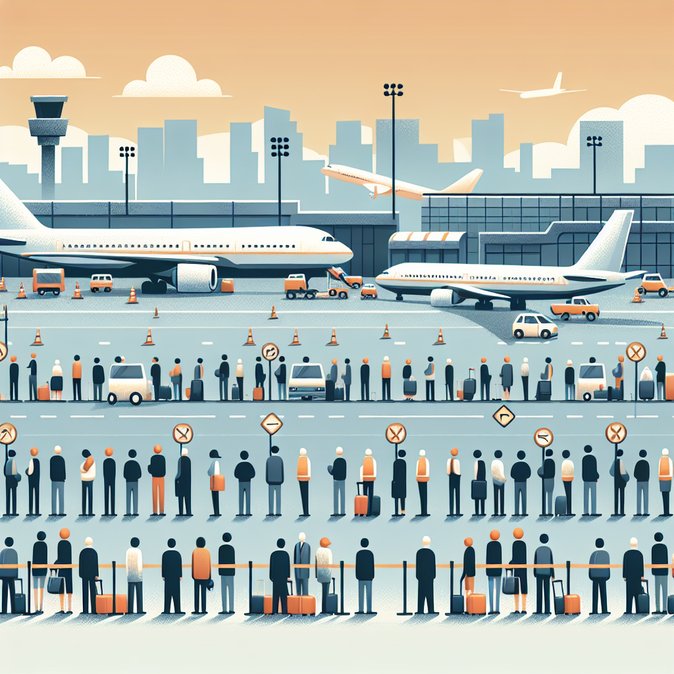
India’s Ministry of Civil Aviation (MoCA) confirmed on 1 March 2026 that 350 flights operated by Indian carriers were cancelled after Iran, Iraq, Qatar and several Gulf states temporarily closed their skies in the wake of a sharp escalation of the Iran-Israel conflict. The number is lower than the 444 cancellations MoCA had warned of the previous night, but it still represents the single-largest same-day disruption to India’s international schedules since the pandemic.
Most of the grounded services were westbound long-haul routes that normally overfly the Gulf. Air India alone scrubbed 28 departures to Europe and North America, while IndiGo, Vistara, Akasa Air and Air India Express pulled dozens of Middle-East and connecting flights. The cancellations stranded an estimated 60,000 passengers, forcing airlines to activate meal and hotel vouchers and waive date-change penalties.
With routings suddenly changing, many travelers may also find themselves needing additional transit or destination visas at very short notice. VisaHQ’s India portal (https://www.visahq.com/india/) can streamline those last-minute requirements by securing electronic or stamped visas quickly, providing real-time application tracking and expert guidance so disrupted passengers aren’t caught off guard at immigration checkpoints.
![India Warns of 350-Plus Flight Cancellations as West Asian Airspace Closes]()
MoCA said it is working with airports and airlines to re-accommodate passengers once affected air corridors reopen. Meanwhile, travel-management companies are advising corporate clients to place meetings on hold or shift them to virtual formats for at least a week. Freight forwarders are also reporting delays as cargo normally loaded in belly holds must now move on limited freighter capacity.
The disruption is a stark reminder of how geopolitical flashpoints outside India’s borders can cripple its fast-growing aviation network. Businesses with time-sensitive mobility plans should build contingency routings (e.g., via Central Asia) and monitor NOTAMs in real time. Travel insurers are already flagging “known event” clauses, meaning new policies may exclude cover for Middle-East-related delays booked after 1 March.
For now, Indian authorities say priority will be given to medical-evacuation and repatriation flights should conditions deteriorate further. Travellers are urged to verify flight status before heading to the airport and keep passport copies handy in case of forced layovers overseas.
Most of the grounded services were westbound long-haul routes that normally overfly the Gulf. Air India alone scrubbed 28 departures to Europe and North America, while IndiGo, Vistara, Akasa Air and Air India Express pulled dozens of Middle-East and connecting flights. The cancellations stranded an estimated 60,000 passengers, forcing airlines to activate meal and hotel vouchers and waive date-change penalties.
With routings suddenly changing, many travelers may also find themselves needing additional transit or destination visas at very short notice. VisaHQ’s India portal (https://www.visahq.com/india/) can streamline those last-minute requirements by securing electronic or stamped visas quickly, providing real-time application tracking and expert guidance so disrupted passengers aren’t caught off guard at immigration checkpoints.

MoCA said it is working with airports and airlines to re-accommodate passengers once affected air corridors reopen. Meanwhile, travel-management companies are advising corporate clients to place meetings on hold or shift them to virtual formats for at least a week. Freight forwarders are also reporting delays as cargo normally loaded in belly holds must now move on limited freighter capacity.
The disruption is a stark reminder of how geopolitical flashpoints outside India’s borders can cripple its fast-growing aviation network. Businesses with time-sensitive mobility plans should build contingency routings (e.g., via Central Asia) and monitor NOTAMs in real time. Travel insurers are already flagging “known event” clauses, meaning new policies may exclude cover for Middle-East-related delays booked after 1 March.
For now, Indian authorities say priority will be given to medical-evacuation and repatriation flights should conditions deteriorate further. Travellers are urged to verify flight status before heading to the airport and keep passport copies handy in case of forced layovers overseas.