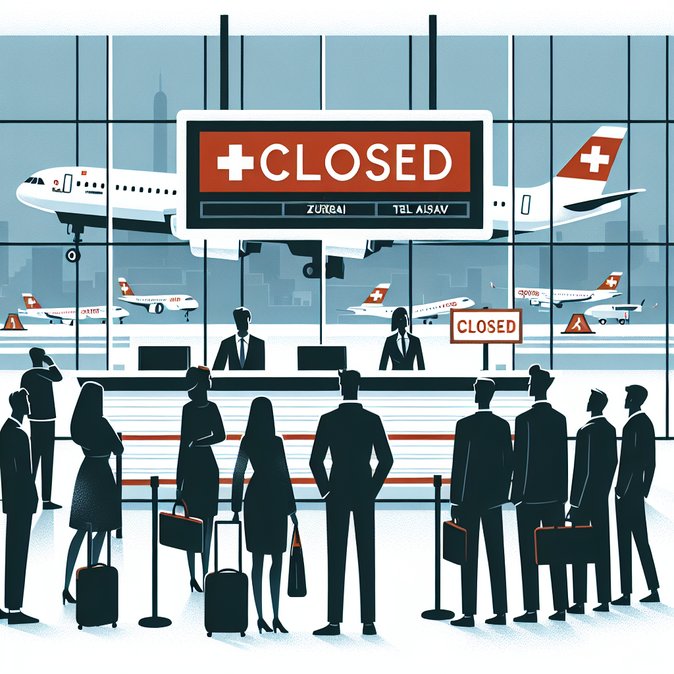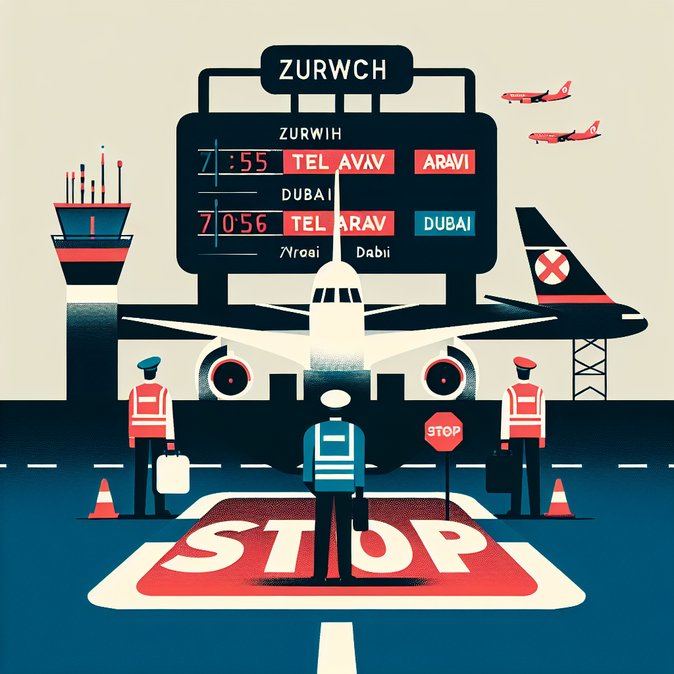
Swiss International Air Lines (SWISS) has become the latest European carrier to ground its Israel services after Saturday’s joint US-Israeli air-strikes on Iran triggered a cascade of air-space closures across the region. In a statement issued on 28 February, the Lufthansa-Group carrier announced an immediate suspension of all flights between Zurich and Tel Aviv until 7 March, affecting 14 rotations. The airline also cancelled two Zurich–Dubai services scheduled for 28 and 29 February because routings that normally cross Iraqi and Iranian airspace have been declared unsafe.(thelocal.ch)
SWISS emphasised that “the safety of crews and passengers is our absolute priority” and said customer-service teams are rebooking travellers free of charge, offering refunds or, where feasible, accommodating them on partner airlines via alternative hubs such as Athens, Istanbul or Cairo. Travel-management companies are advising corporate clients with tight connection windows to avoid the Middle East corridor for the coming week and to build longer ground buffers into itineraries.
For passengers rerouting through unfamiliar hubs at short notice, securing the correct transit or short-stay visas can add extra stress. VisaHQ simplifies the process by providing up-to-date entry requirements and fast online applications for Swiss citizens and residents, ensuring last-minute travel remains hassle-free. Find more information at https://www.visahq.com/switzerland/
![SWISS suspends Tel Aviv flights and cancels Zurich–Dubai services amid Middle-East escalation]()
The disruption lands at the start of the spring conference season, normally a busy period for Swiss exporters and academic delegations heading to Tel Aviv’s high-tech cluster and Dubai’s trade fairs. Insurers warn that “war-risk” surcharges may push ticket prices up once flights resume, and travel-risk consultancies are urging firms to review evacuation and duty-of-care plans for staff based in Israel, the Gulf and Tehran.
Beyond aviation, global freight forwarders report that several Swiss life-science companies have moved urgent shipments onto longer maritime or land corridors to avoid the Strait of Hormuz. Swiss logistics association SPEDLOGSWISS estimates that every 24 hours of air-cargo disruption on the Tel Aviv lane removes roughly 40 tonnes of high-value Swiss exports—principally medical devices and watch components—from the supply chain.
While the airline hopes to resume normal scheduling on 8 March, SWISS stresses that any restart “depends on the evolving security picture and the re-opening of several national airspaces.” Travellers are advised to monitor flight-status updates and register contact details in the company’s Travel ID app to receive real-time notifications.(thelocal.ch)
SWISS emphasised that “the safety of crews and passengers is our absolute priority” and said customer-service teams are rebooking travellers free of charge, offering refunds or, where feasible, accommodating them on partner airlines via alternative hubs such as Athens, Istanbul or Cairo. Travel-management companies are advising corporate clients with tight connection windows to avoid the Middle East corridor for the coming week and to build longer ground buffers into itineraries.
For passengers rerouting through unfamiliar hubs at short notice, securing the correct transit or short-stay visas can add extra stress. VisaHQ simplifies the process by providing up-to-date entry requirements and fast online applications for Swiss citizens and residents, ensuring last-minute travel remains hassle-free. Find more information at https://www.visahq.com/switzerland/

The disruption lands at the start of the spring conference season, normally a busy period for Swiss exporters and academic delegations heading to Tel Aviv’s high-tech cluster and Dubai’s trade fairs. Insurers warn that “war-risk” surcharges may push ticket prices up once flights resume, and travel-risk consultancies are urging firms to review evacuation and duty-of-care plans for staff based in Israel, the Gulf and Tehran.
Beyond aviation, global freight forwarders report that several Swiss life-science companies have moved urgent shipments onto longer maritime or land corridors to avoid the Strait of Hormuz. Swiss logistics association SPEDLOGSWISS estimates that every 24 hours of air-cargo disruption on the Tel Aviv lane removes roughly 40 tonnes of high-value Swiss exports—principally medical devices and watch components—from the supply chain.
While the airline hopes to resume normal scheduling on 8 March, SWISS stresses that any restart “depends on the evolving security picture and the re-opening of several national airspaces.” Travellers are advised to monitor flight-status updates and register contact details in the company’s Travel ID app to receive real-time notifications.(thelocal.ch)