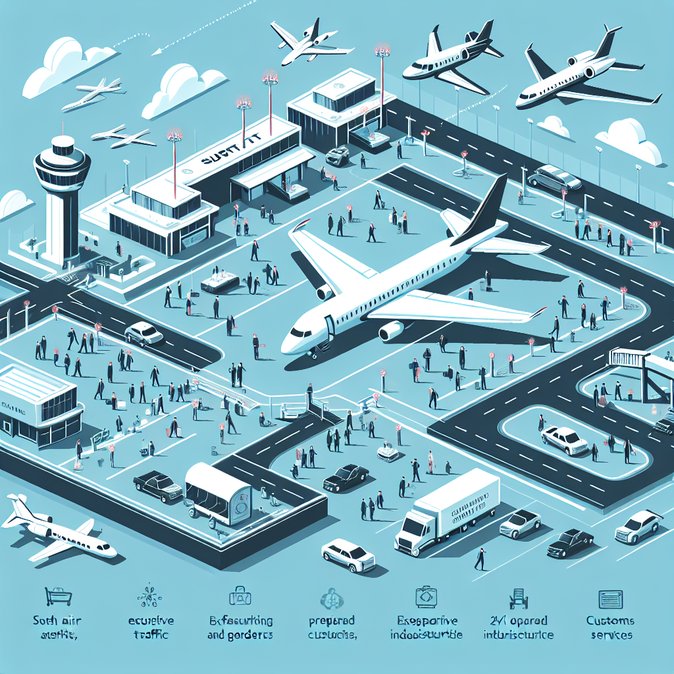
São Paulo Catarina Executive International Airport closed calendar-year 2025 with a 55.9% jump in aircraft movements and a 37.6% rise in fuel throughput, according to preliminary figures released today. Non-based aircraft accounted for nearly two-thirds of the traffic, underscoring Catarina’s emergence as the preferred entry point for international business jets. (edrotacultural.com.br)
Located 60 kilometres west of the financial district, the private airport offers 2,470 metres of runway, 24/7 customs and immigration, and Schengen-style e-gate processing for crew on pre-cleared manifests. The facility’s expansion comes as São Paulo’s main commercial gateways—Guarulhos and Congonhas—face slot constraints and new noise-abatement rules that limit late-night corporate operations.
For passengers and flight departments arranging these accelerated arrivals, VisaHQ can streamline the visa and documentation process long before touchdown. Through its Brazil-dedicated portal (https://www.visahq.com/brazil/), the service secures tourist, business, and crew visas entirely online, reducing lead times and ensuring that executives who land at Catarina spend those saved minutes on business—not paperwork.
![São Paulo Catarina Executive Airport Reports 56% Surge in Movements, Cements Role as Brazil’s Private-Aviation Gateway]()
For mobility managers, Catarina is becoming a strategic asset: executives can clear border formalities in under ten minutes, avoiding the lengthy queues common at Guarulhos. Several relocation firms report a spike in same-day ‘look-and-see’ trips by expatriate CEOs arriving on chartered Gulfstream 650s and departing the same evening.
Infrastructure upgrades scheduled for Q3 2026 include an on-site ANVISA health-control post and a bonded warehousing area for pets and household goods, further aligning the airport with the needs of the expatriate community. Meanwhile, real-estate developers are marketing adjacent hangar space as a turnkey solution for foreign companies seeking an aircraft registry foothold in Brazil.
Although the airport handles only about 3% of Brazil’s total air movements, its year-on-year growth outpaces the national average and signals a broader trend toward decentralised, high-service private aviation hubs.
Located 60 kilometres west of the financial district, the private airport offers 2,470 metres of runway, 24/7 customs and immigration, and Schengen-style e-gate processing for crew on pre-cleared manifests. The facility’s expansion comes as São Paulo’s main commercial gateways—Guarulhos and Congonhas—face slot constraints and new noise-abatement rules that limit late-night corporate operations.
For passengers and flight departments arranging these accelerated arrivals, VisaHQ can streamline the visa and documentation process long before touchdown. Through its Brazil-dedicated portal (https://www.visahq.com/brazil/), the service secures tourist, business, and crew visas entirely online, reducing lead times and ensuring that executives who land at Catarina spend those saved minutes on business—not paperwork.

For mobility managers, Catarina is becoming a strategic asset: executives can clear border formalities in under ten minutes, avoiding the lengthy queues common at Guarulhos. Several relocation firms report a spike in same-day ‘look-and-see’ trips by expatriate CEOs arriving on chartered Gulfstream 650s and departing the same evening.
Infrastructure upgrades scheduled for Q3 2026 include an on-site ANVISA health-control post and a bonded warehousing area for pets and household goods, further aligning the airport with the needs of the expatriate community. Meanwhile, real-estate developers are marketing adjacent hangar space as a turnkey solution for foreign companies seeking an aircraft registry foothold in Brazil.
Although the airport handles only about 3% of Brazil’s total air movements, its year-on-year growth outpaces the national average and signals a broader trend toward decentralised, high-service private aviation hubs.