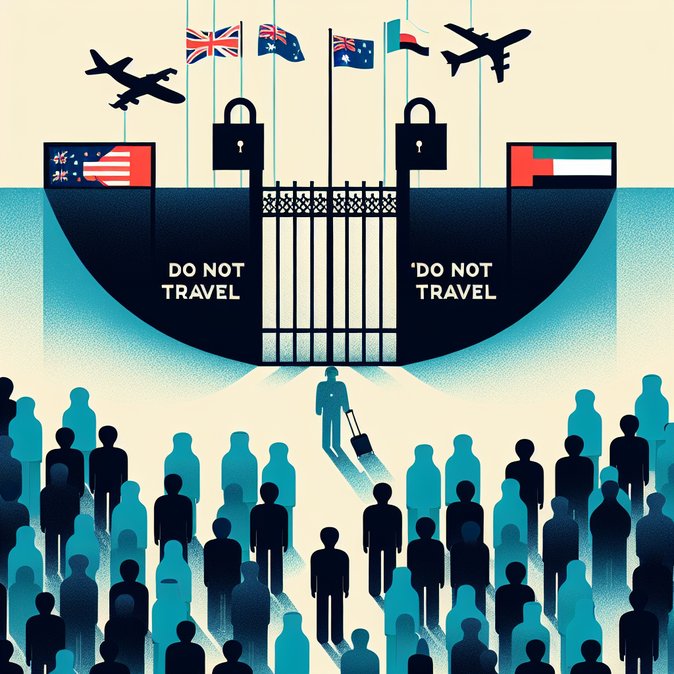
In a rapid escalation of consular responses, both the UK Foreign, Commonwealth & Development Office (FCDO) and Australia’s Department of Foreign Affairs and Trade (DFAT) upgraded their advice for the United Arab Emirates to “do not travel” on Sunday, 1 March 2026. The Guardian reveals that London is drafting contingency plans to evacuate as many as 50,000 Britons currently holidaying or doing business in the UAE, most of them in Dubai.
Officials are exploring overland convoys to Saudi Arabia if airspace remains closed. Meanwhile, Australia’s Smartraveller portal warns citizens that “military conflict in the region may result in widespread movement restrictions” and confirms that embassy phone lines have been diverted to Canberra’s Consular Emergency Centre after local telecom outages.
For organisations and individuals needing up-to-the-minute visa validity checks or emergency permit facilitation, VisaHQ can streamline the paperwork. Its dedicated UAE portal (https://www.visahq.com/united-arab-emirates/) provides live status updates, electronic application tools and expert support—resources that become invaluable if last-minute travel authorisations or exit documents are required amid shifting advisories.
![UK and Australia raise UAE travel warning to ‘do not travel’, plan evacuations]()
For global mobility leaders the advisories carry legal weight. Many corporate travel-insurance policies void cover if employees enter or remain in a location under a level-4 (“do not travel”) notice, unless a formal waiver is granted. Companies with British or Australian nationals on assignment in the UAE must therefore document business-critical reasons for staying put and may need board-level sign-off.
Evacuation planning also intersects with immigration status. UAE residence visas become void if holders remain outside the country for more than 180 days; premature departures could therefore jeopardise long-term assignment structures. HR should brief assignees on the possibility of special-circumstance re-entry permits, which the GDRFA issued during the pandemic and could resurrect if the crisis drags on.
Both governments continue to advise nationals already in the UAE to shelter in place and register their presence on consular portals. Employers should echo that guidance, ensure staff have hard-copy passports available and prepare manifests in case commercial flights resume on short notice.
Officials are exploring overland convoys to Saudi Arabia if airspace remains closed. Meanwhile, Australia’s Smartraveller portal warns citizens that “military conflict in the region may result in widespread movement restrictions” and confirms that embassy phone lines have been diverted to Canberra’s Consular Emergency Centre after local telecom outages.
For organisations and individuals needing up-to-the-minute visa validity checks or emergency permit facilitation, VisaHQ can streamline the paperwork. Its dedicated UAE portal (https://www.visahq.com/united-arab-emirates/) provides live status updates, electronic application tools and expert support—resources that become invaluable if last-minute travel authorisations or exit documents are required amid shifting advisories.

For global mobility leaders the advisories carry legal weight. Many corporate travel-insurance policies void cover if employees enter or remain in a location under a level-4 (“do not travel”) notice, unless a formal waiver is granted. Companies with British or Australian nationals on assignment in the UAE must therefore document business-critical reasons for staying put and may need board-level sign-off.
Evacuation planning also intersects with immigration status. UAE residence visas become void if holders remain outside the country for more than 180 days; premature departures could therefore jeopardise long-term assignment structures. HR should brief assignees on the possibility of special-circumstance re-entry permits, which the GDRFA issued during the pandemic and could resurrect if the crisis drags on.
Both governments continue to advise nationals already in the UAE to shelter in place and register their presence on consular portals. Employers should echo that guidance, ensure staff have hard-copy passports available and prepare manifests in case commercial flights resume on short notice.