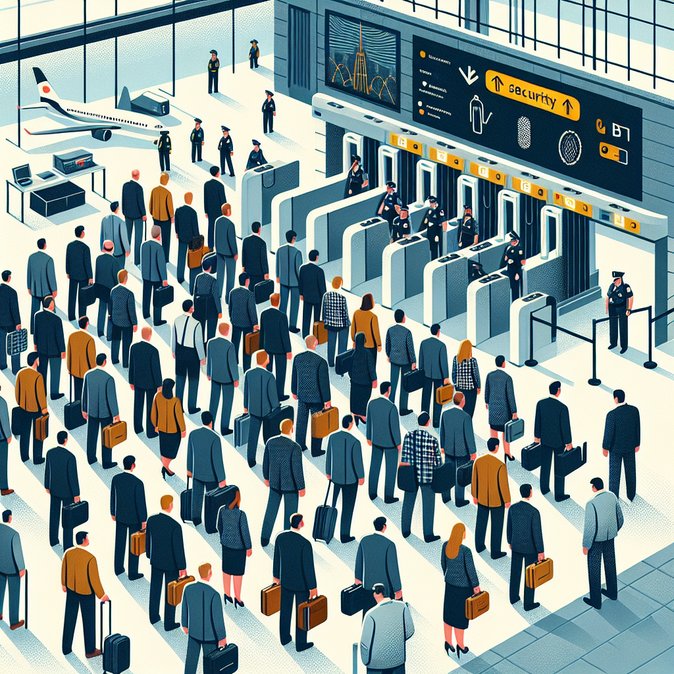
Europe’s three largest aviation trade bodies—Airports Council International Europe (ACI Europe), Airlines for Europe (A4E) and the International Air Transport Association (IATA)—issued a rare joint statement on 27 February 2026 warning that the new Schengen Entry/Exit System (EES) could paralyse passenger flows this summer unless its full launch is postponed. (itij.com)
The biometric programme, already live in test mode at Warsaw Chopin and Kraków–Balice airports, requires third-country travellers to complete facial-scan and fingerprint enrolment the first time they enter the EU. According to operators, kiosk throughput averages just 55 passengers per hour—less than half of the design spec—raising fears of four-hour queues at peak times. ACI Europe says only 35 percent of border posts across the bloc are properly equipped, and staffing models assume a processing speed that “is simply unattainable at present.” (itij.com)
![Airports and Airlines Urge EU to Pause Biometric Entry/Exit Roll-out as Polish Hubs Brace for 4-Hour Queues]()
For businesses and individual travellers trying to stay ahead of these shifting rules, VisaHQ can streamline the process: its Poland portal (https://www.visahq.com/poland/) consolidates real-time border updates, helps users understand biometric enrolment requirements and, when necessary, facilitates fast-track Schengen or national visa applications—saving valuable time when congestion at airport checkpoints becomes unpredictable.
If Brussels sticks to the September 2026 deadline, Polish airports—already handling record business-travel volumes—will need to double Border Guard head-counts or restrict flight schedules. Airlines warn that cascading delays at Warsaw could jeopardise onward connections through LOT’s hub-and-spoke network, eroding Poland’s appeal for corporate itineraries.
Global-mobility managers should brief assignees arriving from visa-waiver countries (US, UK, Canada, etc.) to allow extra time and to carry proof of previous EES registration. Companies may also wish to shift meetings to Schengen-internal locations or opt for rail links until clarity emerges on a revised implementation calendar.
The biometric programme, already live in test mode at Warsaw Chopin and Kraków–Balice airports, requires third-country travellers to complete facial-scan and fingerprint enrolment the first time they enter the EU. According to operators, kiosk throughput averages just 55 passengers per hour—less than half of the design spec—raising fears of four-hour queues at peak times. ACI Europe says only 35 percent of border posts across the bloc are properly equipped, and staffing models assume a processing speed that “is simply unattainable at present.” (itij.com)

For businesses and individual travellers trying to stay ahead of these shifting rules, VisaHQ can streamline the process: its Poland portal (https://www.visahq.com/poland/) consolidates real-time border updates, helps users understand biometric enrolment requirements and, when necessary, facilitates fast-track Schengen or national visa applications—saving valuable time when congestion at airport checkpoints becomes unpredictable.
If Brussels sticks to the September 2026 deadline, Polish airports—already handling record business-travel volumes—will need to double Border Guard head-counts or restrict flight schedules. Airlines warn that cascading delays at Warsaw could jeopardise onward connections through LOT’s hub-and-spoke network, eroding Poland’s appeal for corporate itineraries.
Global-mobility managers should brief assignees arriving from visa-waiver countries (US, UK, Canada, etc.) to allow extra time and to carry proof of previous EES registration. Companies may also wish to shift meetings to Schengen-internal locations or opt for rail links until clarity emerges on a revised implementation calendar.