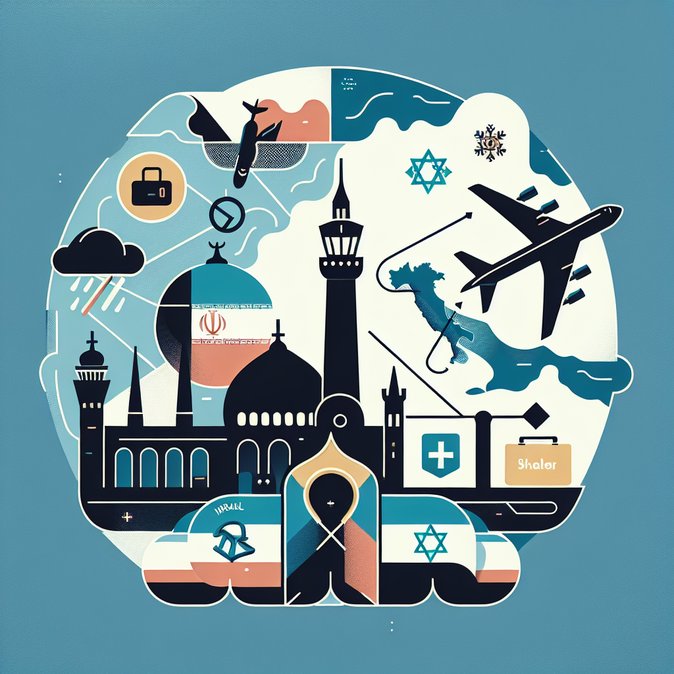
Irish travellers faced sudden disruption today after Dublin Airport confirmed that several flights to and through the Gulf had been cancelled or diverted in the wake of overnight U.S.-Israeli strikes on Iran and Tehran’s retaliatory missile launches. A 06:15 Abu Dhabi service returned to Dublin mid-route, while Emirates halted all operations in and out of Dubai International and Al Maktoum airports following a blanket closure of UAE airspace. (thesun.ie)
With Bahrain, Qatar, Kuwait and parts of Iraqi and Jordanian airspace also closed, airlines are scrambling to reroute long-haul sectors to Asia and Australasia, adding up to three hours’ flying time and fresh crew-duty complications. Aer Lingus said its evening service to Dubai—a key connection for Irish business travellers to India and Southeast Asia—had been scrubbed, and advised ticket-holders to rebook or claim refunds. Ryanair and Etihad warned of potential knock-on delays to Monday’s schedules.
The Department of Foreign Affairs upgraded its travel advice, urging Irish citizens already in the region to “shelter in place” and register their whereabouts on the DFA Travel Tracker. Employers with staff on assignment in the Gulf are advised to activate crisis-management protocols: review evacuation routes via Muscat or Istanbul, confirm local mobile contact numbers, and ensure employees have at least six months’ passport validity to facilitate emergency visa issuance.
![Middle-East airspace closures force Dublin Airport to cancel Gulf flights and issue ‘shelter in place’ advisory]()
For travellers scrambling to reroute through alternative hubs, obtaining new transit or entry visas can quickly become a stumbling block. VisaHQ’s Irish portal (https://www.visahq.com/ireland/) offers a fast, online solution—processing emergency applications for destinations such as Oman, Türkiye and Singapore, complete with real-time status updates and courier collection—helping passengers adjust itineraries without added stress.
Insurance brokers say standard corporate travel policies may exclude war-risk disruptions once a formal travel advisory is issued. Companies should check whether their policy wording covers “civil commotion” and consider buying top-up cover for critical staff stranded overseas. Legal experts add that employers may have a duty of care to repatriate dependants, not just employees, if the security situation deteriorates.
While Middle-East airspace remained largely empty on flight-tracking platforms Saturday afternoon, the European Aviation Safety Agency (EASA) has not yet issued a blanket notice prohibiting EU carriers from overflying the region. The Irish Aviation Authority said it was “monitoring developments hourly” and would update operators if EASA escalates the warning level.
With Bahrain, Qatar, Kuwait and parts of Iraqi and Jordanian airspace also closed, airlines are scrambling to reroute long-haul sectors to Asia and Australasia, adding up to three hours’ flying time and fresh crew-duty complications. Aer Lingus said its evening service to Dubai—a key connection for Irish business travellers to India and Southeast Asia—had been scrubbed, and advised ticket-holders to rebook or claim refunds. Ryanair and Etihad warned of potential knock-on delays to Monday’s schedules.
The Department of Foreign Affairs upgraded its travel advice, urging Irish citizens already in the region to “shelter in place” and register their whereabouts on the DFA Travel Tracker. Employers with staff on assignment in the Gulf are advised to activate crisis-management protocols: review evacuation routes via Muscat or Istanbul, confirm local mobile contact numbers, and ensure employees have at least six months’ passport validity to facilitate emergency visa issuance.

For travellers scrambling to reroute through alternative hubs, obtaining new transit or entry visas can quickly become a stumbling block. VisaHQ’s Irish portal (https://www.visahq.com/ireland/) offers a fast, online solution—processing emergency applications for destinations such as Oman, Türkiye and Singapore, complete with real-time status updates and courier collection—helping passengers adjust itineraries without added stress.
Insurance brokers say standard corporate travel policies may exclude war-risk disruptions once a formal travel advisory is issued. Companies should check whether their policy wording covers “civil commotion” and consider buying top-up cover for critical staff stranded overseas. Legal experts add that employers may have a duty of care to repatriate dependants, not just employees, if the security situation deteriorates.
While Middle-East airspace remained largely empty on flight-tracking platforms Saturday afternoon, the European Aviation Safety Agency (EASA) has not yet issued a blanket notice prohibiting EU carriers from overflying the region. The Irish Aviation Authority said it was “monitoring developments hourly” and would update operators if EASA escalates the warning level.
More From Ireland
View all
Critics warn of rushed overhaul as Ireland’s new International Protection Bill races through the Dáil
Passport bottlenecks strand Ryanair passengers as EU Entry/Exit System dress-rehearsal turns chaotic