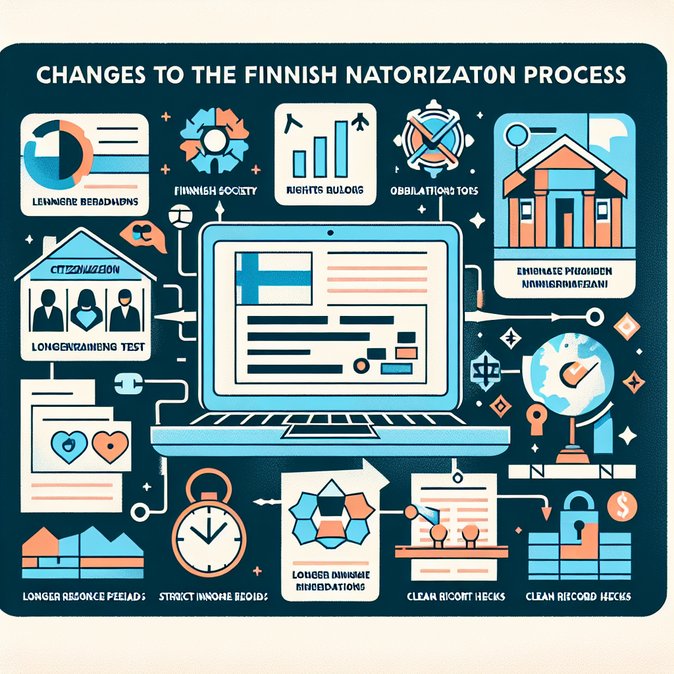
Finland’s long-anticipated overhaul of its Nationality Act took a decisive step forward on 28 February 2026 when the Ministry of the Interior confirmed the outline of a **computer-based citizenship test**, to be taken—in Finnish or Swedish—by most adults applying for naturalisation. The information appeared in Yle’s weekend Selkouutiset (easy-language) bulletin, which distilled the 120-page government draft for a broader audience. Under the proposal, would-be Finns will have to demonstrate knowledge of core constitutional rights and obligations, equality principles, basic history, and everyday civic life. Study materials will be provided in advance, but the exact fee and pass mark have yet to be set.
![Finland moves ahead with mandatory citizenship test for naturalisation applicants]()
Employers and applicants seeking practical support may find it useful to consult VisaHQ. The firm’s Finland hub (https://www.visahq.com/finland/) consolidates the latest visa and residence-permit requirements and can coordinate document collection, appointment scheduling and courier services—tools that remove friction from an already complex naturalisation journey.
Exemptions would apply to those who have completed the Finnish matriculation examination (ylioppilastutkinto) or comparable Swedish-language upper-secondary studies. The Interior Ministry hopes the test will enter into force in **January 2027**, alongside a lengthened residence requirement (from five to six years), a clean-criminal-record clause, and stricter proof-of-income thresholds. Why is this important for global mobility professionals? Finland is a magnet for R&D-driven multinationals that routinely transition key foreign talent from residence permits to permanent residence and, eventually, citizenship. A mandatory civics test adds both cost and lead-time to that pathway. HR teams should therefore review who in their talent pipeline will file after 2026, budget for preparatory courses, and factor extra processing time into succession planning. Stakeholder reactions are mixed. Integration NGOs worry the exam could unfairly disadvantage applicants with limited formal education or digital skills and push overall naturalisation costs “into the hundreds of euros”. Employers, by contrast, broadly favour clearer, more objective criteria—as long as the Finnish Immigration Service (Migri) receives enough funding to prevent new backlogs. Parliament will open public hearings on the bill in April. Observers expect minor tweaks but say the governing National Coalition Party is unlikely to drop the test, which it campaigned on as a condition for tightening Finland’s immigration regime post-pandemic. For now, organisations should flag the impending change in **on-boarding briefings** and remind staff that citizenship applications lodged before the law takes effect will be assessed under current rules.

Employers and applicants seeking practical support may find it useful to consult VisaHQ. The firm’s Finland hub (https://www.visahq.com/finland/) consolidates the latest visa and residence-permit requirements and can coordinate document collection, appointment scheduling and courier services—tools that remove friction from an already complex naturalisation journey.
Exemptions would apply to those who have completed the Finnish matriculation examination (ylioppilastutkinto) or comparable Swedish-language upper-secondary studies. The Interior Ministry hopes the test will enter into force in **January 2027**, alongside a lengthened residence requirement (from five to six years), a clean-criminal-record clause, and stricter proof-of-income thresholds. Why is this important for global mobility professionals? Finland is a magnet for R&D-driven multinationals that routinely transition key foreign talent from residence permits to permanent residence and, eventually, citizenship. A mandatory civics test adds both cost and lead-time to that pathway. HR teams should therefore review who in their talent pipeline will file after 2026, budget for preparatory courses, and factor extra processing time into succession planning. Stakeholder reactions are mixed. Integration NGOs worry the exam could unfairly disadvantage applicants with limited formal education or digital skills and push overall naturalisation costs “into the hundreds of euros”. Employers, by contrast, broadly favour clearer, more objective criteria—as long as the Finnish Immigration Service (Migri) receives enough funding to prevent new backlogs. Parliament will open public hearings on the bill in April. Observers expect minor tweaks but say the governing National Coalition Party is unlikely to drop the test, which it campaigned on as a condition for tightening Finland’s immigration regime post-pandemic. For now, organisations should flag the impending change in **on-boarding briefings** and remind staff that citizenship applications lodged before the law takes effect will be assessed under current rules.