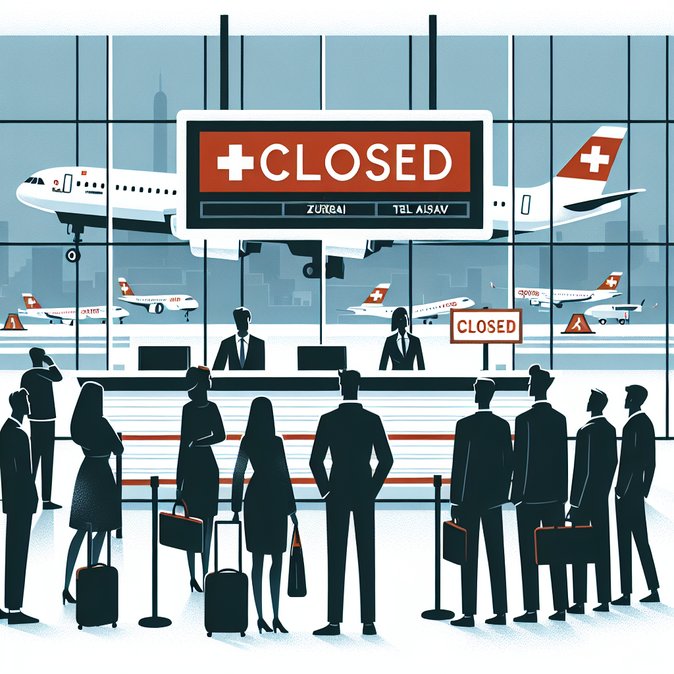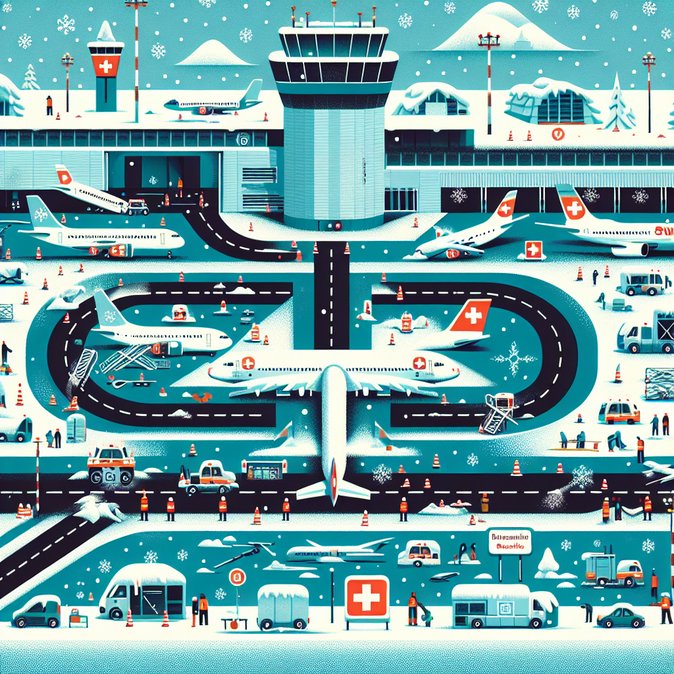
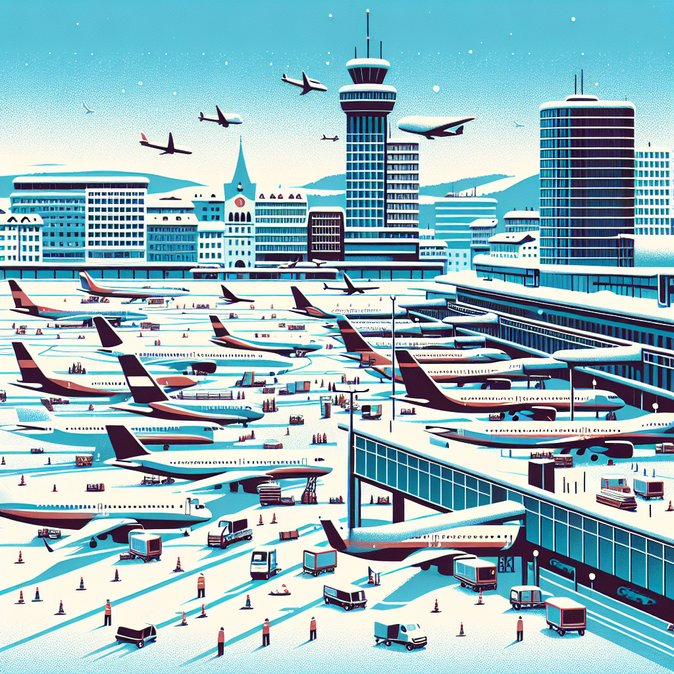
Winter weather, de-icing backlogs and air-traffic-control restrictions combined on 28 February to create one of the toughest travel days of the season for Switzerland’s two largest airports. According to data compiled by industry portal Travel & Tour World, Zurich Airport recorded 84 delays and two cancellations, while Geneva Cointrin logged 59 delays and two cancellations—143 disrupted movements in total.
Passengers faced queues stretching through departure halls as Swiss International Air Lines, easyJet, Air France and other carriers scrambled to re-crew services and free scarce de-icing trucks. Aviation analysts noted that freezing fog and sub-zero temperatures forced longer turnaround times, while technical maintenance on Skyguide’s radar system reduced arrival sequencing rates at Geneva.
For travellers whose schedules suddenly change or who discover they need updated travel documentation during disruptions like these, VisaHQ can step in to help. Through its Switzerland portal (https://www.visahq.com/switzerland/), the service expedites visa and passport processing, supplies real-time application tracking, and offers expert support that can relieve some of the stress when flights stall and connections disappear.
![143 flight delays leave thousands stranded at Zurich and Geneva airports]()
Airport authorities stressed that safety procedures—particularly de-icing—cannot be shortened. Both hubs deployed extra customer-service staff, opened pop-up information desks and worked with hotels near the terminals to house travellers whose onward connections evaporated. Under EU261 rules, airlines must offer care and compensation, but global mobility managers report that many business travellers still had to make last-minute expense approvals for alternative routings.
FOCA is assessing whether additional night-curfew exemptions are needed if the backlog continues. The agency reminded companies to stagger Monday-morning departures or consider rail links for domestic transfers in order to reduce pressure on slot-limited morning waves.
For employers, the episode reinforces the importance of real-time duty-of-care tracking and the need to brief staff on their rights when flights are delayed more than two hours. Many HR teams are reviewing travel-policy thresholds for automatic re-booking to minimise productivity losses during Switzerland’s volatile late-winter weather window.
Passengers faced queues stretching through departure halls as Swiss International Air Lines, easyJet, Air France and other carriers scrambled to re-crew services and free scarce de-icing trucks. Aviation analysts noted that freezing fog and sub-zero temperatures forced longer turnaround times, while technical maintenance on Skyguide’s radar system reduced arrival sequencing rates at Geneva.
For travellers whose schedules suddenly change or who discover they need updated travel documentation during disruptions like these, VisaHQ can step in to help. Through its Switzerland portal (https://www.visahq.com/switzerland/), the service expedites visa and passport processing, supplies real-time application tracking, and offers expert support that can relieve some of the stress when flights stall and connections disappear.
Airport authorities stressed that safety procedures—particularly de-icing—cannot be shortened. Both hubs deployed extra customer-service staff, opened pop-up information desks and worked with hotels near the terminals to house travellers whose onward connections evaporated. Under EU261 rules, airlines must offer care and compensation, but global mobility managers report that many business travellers still had to make last-minute expense approvals for alternative routings.
FOCA is assessing whether additional night-curfew exemptions are needed if the backlog continues. The agency reminded companies to stagger Monday-morning departures or consider rail links for domestic transfers in order to reduce pressure on slot-limited morning waves.
For employers, the episode reinforces the importance of real-time duty-of-care tracking and the need to brief staff on their rights when flights are delayed more than two hours. Many HR teams are reviewing travel-policy thresholds for automatic re-booking to minimise productivity losses during Switzerland’s volatile late-winter weather window.