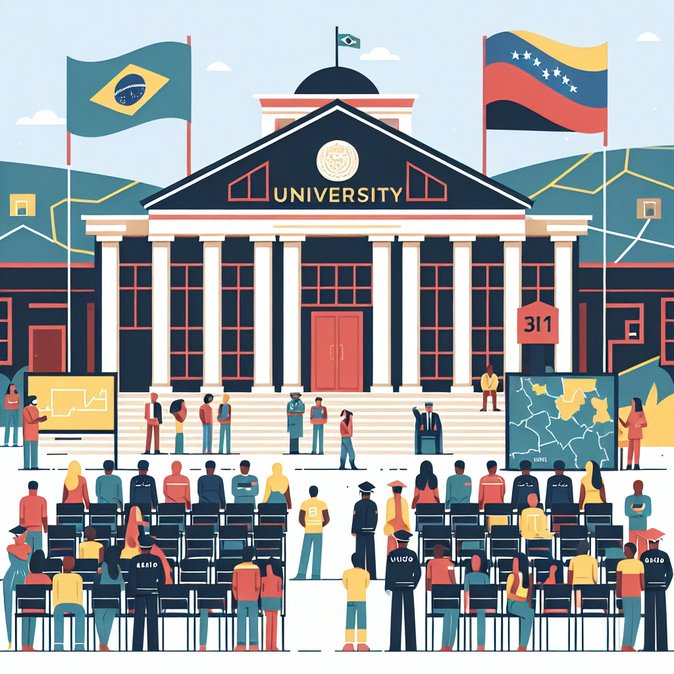
The Federal University of Roraima (UFRR) has launched two special selection processes for the 2026 academic year: one for applicants aged 60+ and another reserved for refugees, asylum-seekers and vulnerable migrants. Announced on 27 February 2026, the refugee/migrant track offers 31 seats across 22 undergraduate courses, with applications open until 8 March.
Candidates must submit educational transcripts online and sit a Portuguese-language essay. Tuition at public universities in Brazil is free, and successful applicants will be eligible for federal student-welfare grants covering housing and meals.
Meanwhile, applicants who need clarity on Brazil’s entry or residence requirements can turn to VisaHQ, whose Brazil visa specialists (https://www.visahq.com/brazil/) streamline paperwork, schedule appointments and track application status—support that can be invaluable to refugees and mature students navigating complex procedures.
![Brazilian University Opens Special Admissions Track for Refugees and Migrants]()
The initiative aligns with Brazil’s 2017 Migration Law, which guarantees equal access to education regardless of immigration status.
Roraima, which borders Venezuela and Guyana, hosts the country’s largest concentration of displaced Venezuelans. By creating a dedicated admissions pathway, UFRR seeks to channel skilled migrants into the local labour market and ease integration pressures on humanitarian shelters.
For employers operating in Brazil’s northern energy and agribusiness sectors, the programme enlarges the pipeline of multilingual graduates. HR leaders may wish to partner with UFRR on internship schemes that support refugee talent while meeting corporate diversity goals.
Candidates must submit educational transcripts online and sit a Portuguese-language essay. Tuition at public universities in Brazil is free, and successful applicants will be eligible for federal student-welfare grants covering housing and meals.
Meanwhile, applicants who need clarity on Brazil’s entry or residence requirements can turn to VisaHQ, whose Brazil visa specialists (https://www.visahq.com/brazil/) streamline paperwork, schedule appointments and track application status—support that can be invaluable to refugees and mature students navigating complex procedures.

The initiative aligns with Brazil’s 2017 Migration Law, which guarantees equal access to education regardless of immigration status.
Roraima, which borders Venezuela and Guyana, hosts the country’s largest concentration of displaced Venezuelans. By creating a dedicated admissions pathway, UFRR seeks to channel skilled migrants into the local labour market and ease integration pressures on humanitarian shelters.
For employers operating in Brazil’s northern energy and agribusiness sectors, the programme enlarges the pipeline of multilingual graduates. HR leaders may wish to partner with UFRR on internship schemes that support refugee talent while meeting corporate diversity goals.