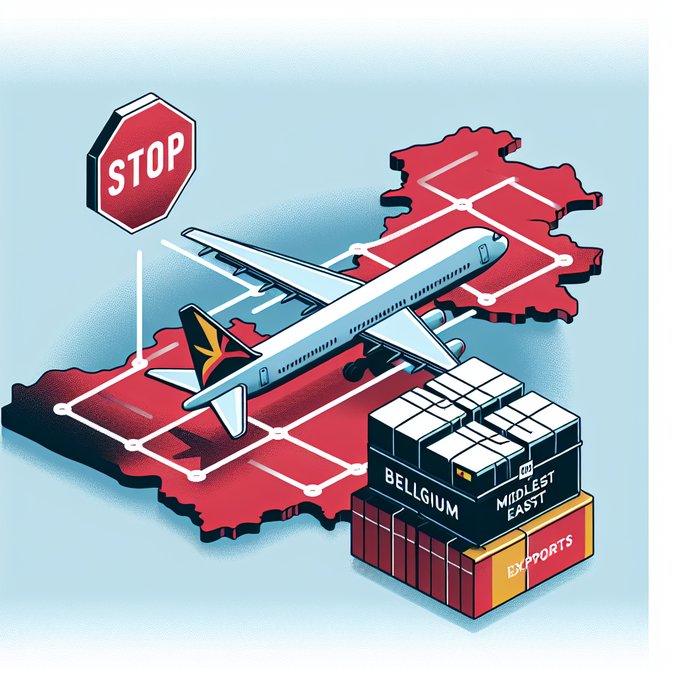
Brussels Airlines passengers heading to Israel are having to rethink their plans after the Belgian flag-carrier extended its suspension of Brussels–Tel Aviv flights until 7 March. The decision, announced on Saturday 28 February, follows overnight U.S.-Israeli air-strikes on Iranian targets and Tehran’s volley of missiles across the region. Israel closed its airspace to civilian traffic within minutes; Iran, Iraq and Syria quickly followed with partial closures, prompting airlines across Europe and the Gulf to pull services.
For Brussels Airlines—part of the Lufthansa Group—the security calculus is straightforward: crew cannot legally operate into airspace categorised as an active conflict zone by EU and ICAO authorities. The group therefore froze departures not only to Tel Aviv but also to Dubai, Beirut and Amman. Codeshare partner Lufthansa is applying identical measures from its Frankfurt and Munich hubs. Passengers booked to travel this week are being offered free re-booking or full refunds.
![Brussels Airlines grounds Tel Aviv service until 7 March amid Middle-East escalation]()
Meanwhile, travellers scrambling to reroute through third countries—or to switch their trips altogether—can streamline the inevitable visa paperwork through VisaHQ’s Brussels office. The platform (https://www.visahq.com/belgium/) supplies up-to-date entry requirements, rush processing and courier services for more than 200 destinations, enabling corporate travel teams and individual passengers to pivot itineraries without drowning in embassy queues.
Corporate travel managers have been warned to verify itineraries that rely on onward connections through the Gulf or Israel, as those segments are equally affected. Travel-risk consultancies are advising Belgian companies with staff in the Levant to activate duty-of-care protocols and ensure travellers register on the Foreign Ministry’s Travellers Online portal. The episode is another reminder of how quickly geopolitical shocks reverberate through international mobility. Belgian exporters flying high-value goods on Brussels Airlines’ wide-body network face potential supply-chain delays; mobility teams relocating staff to Israel will need contingency housing in Europe. While the suspension is officially “temporary”, aviation analysts warn that any repeat attack cycle could see the measure rolled over, complicating summer capacity plans and corporate assignment calendars.
For Brussels Airlines—part of the Lufthansa Group—the security calculus is straightforward: crew cannot legally operate into airspace categorised as an active conflict zone by EU and ICAO authorities. The group therefore froze departures not only to Tel Aviv but also to Dubai, Beirut and Amman. Codeshare partner Lufthansa is applying identical measures from its Frankfurt and Munich hubs. Passengers booked to travel this week are being offered free re-booking or full refunds.

Meanwhile, travellers scrambling to reroute through third countries—or to switch their trips altogether—can streamline the inevitable visa paperwork through VisaHQ’s Brussels office. The platform (https://www.visahq.com/belgium/) supplies up-to-date entry requirements, rush processing and courier services for more than 200 destinations, enabling corporate travel teams and individual passengers to pivot itineraries without drowning in embassy queues.
Corporate travel managers have been warned to verify itineraries that rely on onward connections through the Gulf or Israel, as those segments are equally affected. Travel-risk consultancies are advising Belgian companies with staff in the Levant to activate duty-of-care protocols and ensure travellers register on the Foreign Ministry’s Travellers Online portal. The episode is another reminder of how quickly geopolitical shocks reverberate through international mobility. Belgian exporters flying high-value goods on Brussels Airlines’ wide-body network face potential supply-chain delays; mobility teams relocating staff to Israel will need contingency housing in Europe. While the suspension is officially “temporary”, aviation analysts warn that any repeat attack cycle could see the measure rolled over, complicating summer capacity plans and corporate assignment calendars.