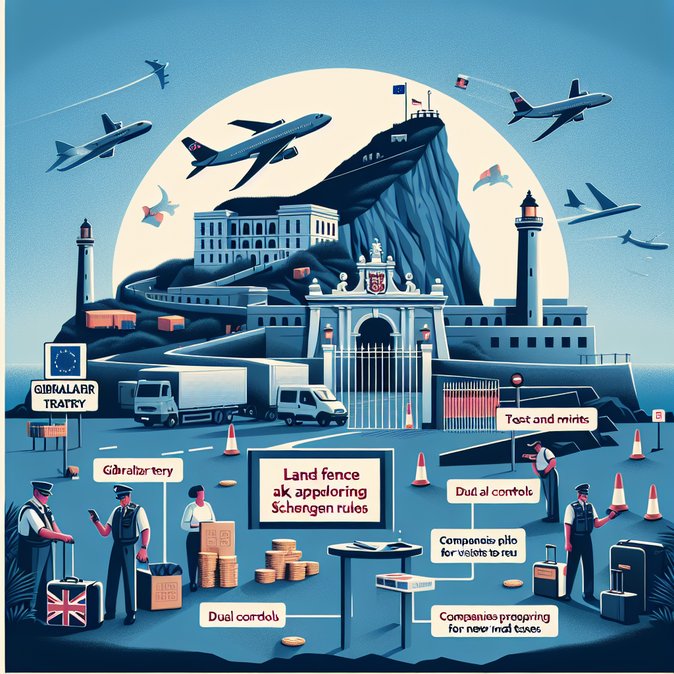
Spain and the United Kingdom on Thursday released the long-awaited legal text of the Gibraltar post-Brexit treaty, ending months of speculation over how people and goods will move across Europe’s last major land frontier outside the EU. Under the 336-article pact, the century-old wire fence and Spanish frontier post at La Línea de la Concepción will be removed before the peak summer season, creating what negotiators describe as “a fluid frontier” for the 15,000 cross-border workers and the nine million tourists who enter the Rock each year.
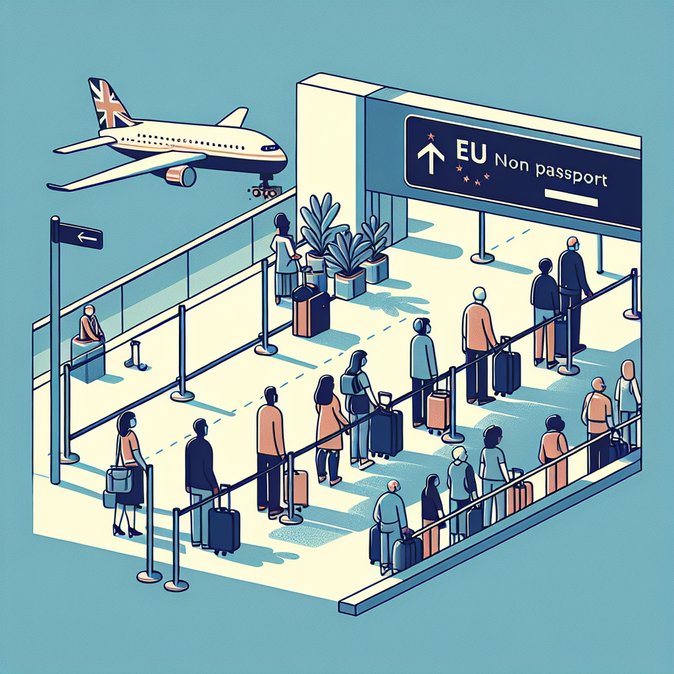
In practical terms, Gibraltar will remain a British Overseas Territory but will join the EU Customs Union and apply the Schengen Border Code. For travellers this means that a visit to Gibraltar will now count towards the 90/180-day limit that applies to non-EU nationals in the Schengen Area. The hard border shifts to the airport and port: from April 10, 2026, passengers arriving by air or sea will undergo two sequential controls—first by Gibraltar authorities, then by Spain’s Guardia Civil—using the EU’s new biometric Entry/Exit System (EES). Fingerprints and facial images will be stored for three years, and airlines will be required to verify travellers’ Schengen-day balances before boarding.
Whether you’re juggling Schengen day limits or simply want peace of mind before your trip, VisaHQ can guide you through the new rules and help secure any required documentation. Their Spain portal (https://www.visahq.com/spain/) lets travellers and businesses quickly check entry criteria, track remaining Schengen days, and apply online for visas or travel permits—streamlining journeys across the newly “fluid” Gibraltar frontier and beyond.
![Gibraltar-Spain border fence to be dismantled as post-Brexit treaty published]()
Spanish officers will not be allowed to refuse entry to registered Gibraltarians or pre-Brexit residents, but they will have the power to deny access to third-country nationals—including British visitors—on security or public-health grounds. Spain will also assume responsibility for issuing Schengen-wide alerts from the Rock, while the United Kingdom will retain control over asylum decisions and military movements.
Economically, Gibraltar will phase in a VAT-equivalent “Transaction Tax” starting at 15 % next April and rising to 17 % by 2029, aligning the territory with EU indirect-tax rules while preserving duty-free status for cruise passengers. Madrid argues the arrangement will curb tobacco and fuel smuggling; business groups on both sides of the isthmus welcome the end of costly customs checks but warn that dual airport controls could deter low-cost carriers.
For companies relocating staff, the treaty removes a significant Brexit headache: cross-border commuters will be able to live in Spain and work in Gibraltar without daily passport queues, and EU posted-worker rules on social security coordination will apply. Employers should, however, review rotation schedules, because time spent in Gibraltar will now consume Schengen allowance for non-EU assignees.
In practical terms, Gibraltar will remain a British Overseas Territory but will join the EU Customs Union and apply the Schengen Border Code. For travellers this means that a visit to Gibraltar will now count towards the 90/180-day limit that applies to non-EU nationals in the Schengen Area. The hard border shifts to the airport and port: from April 10, 2026, passengers arriving by air or sea will undergo two sequential controls—first by Gibraltar authorities, then by Spain’s Guardia Civil—using the EU’s new biometric Entry/Exit System (EES). Fingerprints and facial images will be stored for three years, and airlines will be required to verify travellers’ Schengen-day balances before boarding.
Whether you’re juggling Schengen day limits or simply want peace of mind before your trip, VisaHQ can guide you through the new rules and help secure any required documentation. Their Spain portal (https://www.visahq.com/spain/) lets travellers and businesses quickly check entry criteria, track remaining Schengen days, and apply online for visas or travel permits—streamlining journeys across the newly “fluid” Gibraltar frontier and beyond.

Spanish officers will not be allowed to refuse entry to registered Gibraltarians or pre-Brexit residents, but they will have the power to deny access to third-country nationals—including British visitors—on security or public-health grounds. Spain will also assume responsibility for issuing Schengen-wide alerts from the Rock, while the United Kingdom will retain control over asylum decisions and military movements.
Economically, Gibraltar will phase in a VAT-equivalent “Transaction Tax” starting at 15 % next April and rising to 17 % by 2029, aligning the territory with EU indirect-tax rules while preserving duty-free status for cruise passengers. Madrid argues the arrangement will curb tobacco and fuel smuggling; business groups on both sides of the isthmus welcome the end of costly customs checks but warn that dual airport controls could deter low-cost carriers.
For companies relocating staff, the treaty removes a significant Brexit headache: cross-border commuters will be able to live in Spain and work in Gibraltar without daily passport queues, and EU posted-worker rules on social security coordination will apply. Employers should, however, review rotation schedules, because time spent in Gibraltar will now consume Schengen allowance for non-EU assignees.