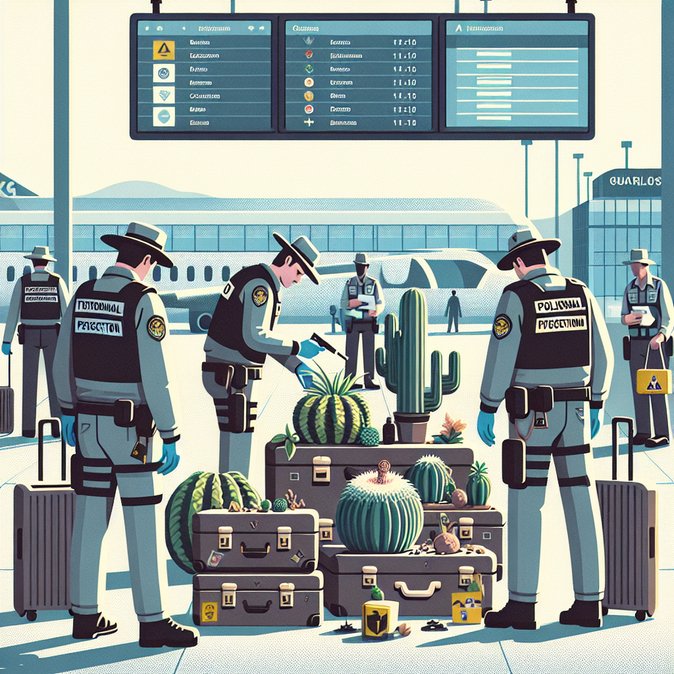
Federal Police officers and Ibama inspectors intercepted four Czech nationals at São Paulo/Guarulhos International Airport on 26 February after discovering more than 100 live cacti and roughly 2,000 seeds hidden in their luggage, beverage cans and even inside shoes. Many of the specimens are endemic to Rio Grande do Sul and listed under CITES Appendix II, meaning export is only legal with a permit. (gov.br)
The tourists were attempting to fly to Europe via Montevideo. They now face criminal charges for environmental smuggling and administrative fines that can exceed R$500,000. The plants were transferred to specialists at the Instituto Chico Mendes for quarantine and possible reintroduction into their native habitat.
Brazilian authorities highlighted the case as an example of strengthened inter-agency and cross-border cooperation: Uruguayan customs officials shared intelligence that prompted Guarulhos inspectors to target the bags. The seizure follows a 2025 Ibama directive requiring airlines to provide advance electronic cargo manifests that flag unusual agricultural items.
![Environmental Police Seize Endangered Cacti Smuggled by Foreign Tourists at São Paulo Airport]()
For travellers looking to stay ahead of these ever-tighter controls, VisaHQ offers a straightforward way to check Brazilian entry rules, request the correct visas and even obtain supporting permits for biological samples in coordination with CITES requirements. Its Brazil page (https://www.visahq.com/brazil/) consolidates forms, timelines and embassy updates in one place, helping researchers and corporate mobility teams avoid costly documentation gaps before they reach the airport.
For corporate mobility programmes, the incident is a reminder that Brazil’s customs enforcement has become more data-driven. Travellers importing or exporting biological samples for legitimate research must carry the appropriate SisGen and CITES documentation; failure can delay shipments and expose companies to penalties. Logistics teams should review freight forwarder compliance ahead of the 2026 overhaul of Brazil’s single-window trade platform.
Ibama says additional spot-checks will continue during the high-travel Easter period. Companies with frequent flyers through GRU may wish to build extra connection time into itineraries as officers expand baggage inspections in the international departures hall.
The tourists were attempting to fly to Europe via Montevideo. They now face criminal charges for environmental smuggling and administrative fines that can exceed R$500,000. The plants were transferred to specialists at the Instituto Chico Mendes for quarantine and possible reintroduction into their native habitat.
Brazilian authorities highlighted the case as an example of strengthened inter-agency and cross-border cooperation: Uruguayan customs officials shared intelligence that prompted Guarulhos inspectors to target the bags. The seizure follows a 2025 Ibama directive requiring airlines to provide advance electronic cargo manifests that flag unusual agricultural items.

For travellers looking to stay ahead of these ever-tighter controls, VisaHQ offers a straightforward way to check Brazilian entry rules, request the correct visas and even obtain supporting permits for biological samples in coordination with CITES requirements. Its Brazil page (https://www.visahq.com/brazil/) consolidates forms, timelines and embassy updates in one place, helping researchers and corporate mobility teams avoid costly documentation gaps before they reach the airport.
For corporate mobility programmes, the incident is a reminder that Brazil’s customs enforcement has become more data-driven. Travellers importing or exporting biological samples for legitimate research must carry the appropriate SisGen and CITES documentation; failure can delay shipments and expose companies to penalties. Logistics teams should review freight forwarder compliance ahead of the 2026 overhaul of Brazil’s single-window trade platform.
Ibama says additional spot-checks will continue during the high-travel Easter period. Companies with frequent flyers through GRU may wish to build extra connection time into itineraries as officers expand baggage inspections in the international departures hall.