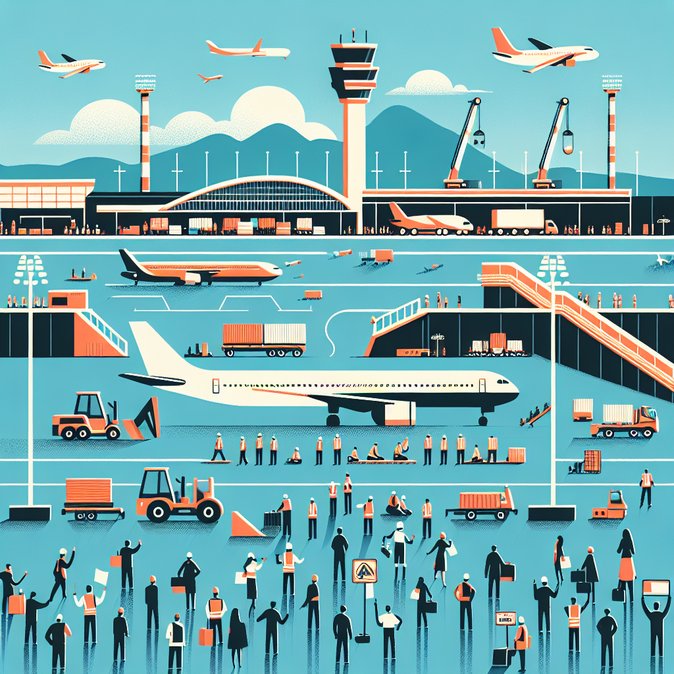
Brussels Airport Company chose 27 February 2026 to publish its eagerly awaited annual traffic report and the numbers show a resilient hub regaining altitude. A total of 24.4 million passengers used the Zaventem gateway last year, up 3.3 % on 2024 even though seven nationwide union strikes forced the cancellation of 2,400 flights and shaved an estimated 275,000 travellers off the total. Long-haul growth was the stand-out story: three new intercontinental routes—Atlanta (Delta), Chongqing (Hainan) and Hong Kong (Cathay Pacific)—helped belly-hold cargo jump 9.2 % and pushed the share of transfer passengers back to 14 %, an important metric for multinational corporates that use Brussels as a one-stop connection between Europe, North America and Africa.
![Brussels Airport clocks 24.4 million passengers in 2025 despite strike disruptions]()
For organisations arranging international assignments in or through Belgium, VisaHQ can simplify the paperwork. The platform’s Belgium portal (https://www.visahq.com/belgium/) lets travellers and mobility managers check entry rules, submit visa applications online and arrange secure passport courier pick-ups—an efficient safeguard when last-minute schedule changes arise from strikes or tightened night-slot caps.
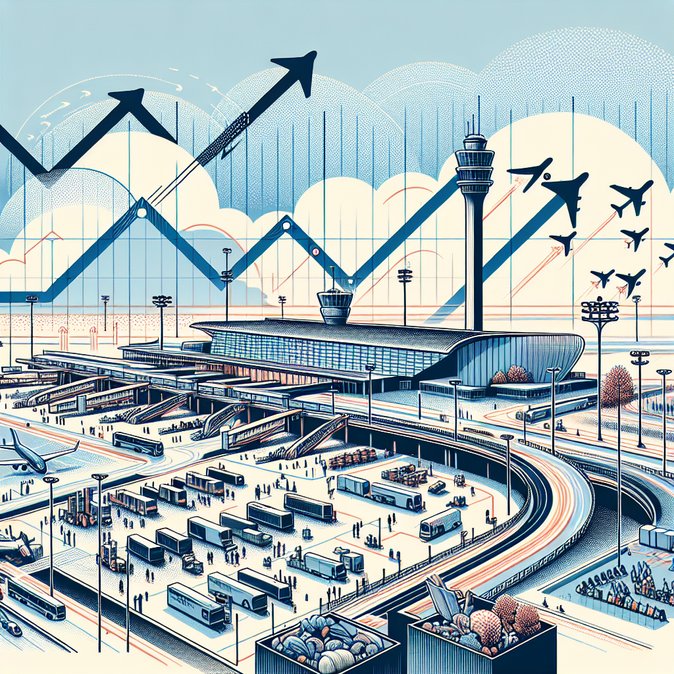
Overall cargo volumes reached 795,000 tonnes (+8.5 %), confirming the airport’s status as Belgium’s logistics nerve centre for pharmaceuticals and e-commerce. Chief Executive Arnaud Feist highlighted the launch of “Hub 3.0”, a €2 billion investment programme that will deliver a multi-modal forecourt, a new pier and fully biometric departure process by 2032. The first enabling works—a temporary bus terminal and redesigned drop-off zone—are already under way and align with the Flemish government’s objective of cutting car access to the airport by 30 % within the decade. For global-mobility managers the statistics bring good news and caution in equal measure. More destinations (six new European routes were added) translate into cheaper expatriate travel budgets and greater routing flexibility, but industrial action remains a wildcard. HR teams planning short-term assignments over the coming Easter and summer peaks are advised to book buffer nights and monitor contingency arrangements such as the dedicated fast-track immigration lane that the airport activates during strike periods. Meanwhile Belgium’s federal transport ministry confirmed that the night-slot regime—often criticised by freight forwarders—remains capped at 16,000 annual movements. Airlines operating between 23:00 and 06:00 logged 1,032 unscheduled night departures in 2025, down 29 % on 2022 after Brussels Airport and the slot coordinator tightened enforcement. Companies shipping time-sensitive goods should therefore secure capacity well in advance until additional quota is negotiated.
For organisations arranging international assignments in or through Belgium, VisaHQ can simplify the paperwork. The platform’s Belgium portal (https://www.visahq.com/belgium/) lets travellers and mobility managers check entry rules, submit visa applications online and arrange secure passport courier pick-ups—an efficient safeguard when last-minute schedule changes arise from strikes or tightened night-slot caps.
Overall cargo volumes reached 795,000 tonnes (+8.5 %), confirming the airport’s status as Belgium’s logistics nerve centre for pharmaceuticals and e-commerce. Chief Executive Arnaud Feist highlighted the launch of “Hub 3.0”, a €2 billion investment programme that will deliver a multi-modal forecourt, a new pier and fully biometric departure process by 2032. The first enabling works—a temporary bus terminal and redesigned drop-off zone—are already under way and align with the Flemish government’s objective of cutting car access to the airport by 30 % within the decade. For global-mobility managers the statistics bring good news and caution in equal measure. More destinations (six new European routes were added) translate into cheaper expatriate travel budgets and greater routing flexibility, but industrial action remains a wildcard. HR teams planning short-term assignments over the coming Easter and summer peaks are advised to book buffer nights and monitor contingency arrangements such as the dedicated fast-track immigration lane that the airport activates during strike periods. Meanwhile Belgium’s federal transport ministry confirmed that the night-slot regime—often criticised by freight forwarders—remains capped at 16,000 annual movements. Airlines operating between 23:00 and 06:00 logged 1,032 unscheduled night departures in 2025, down 29 % on 2022 after Brussels Airport and the slot coordinator tightened enforcement. Companies shipping time-sensitive goods should therefore secure capacity well in advance until additional quota is negotiated.