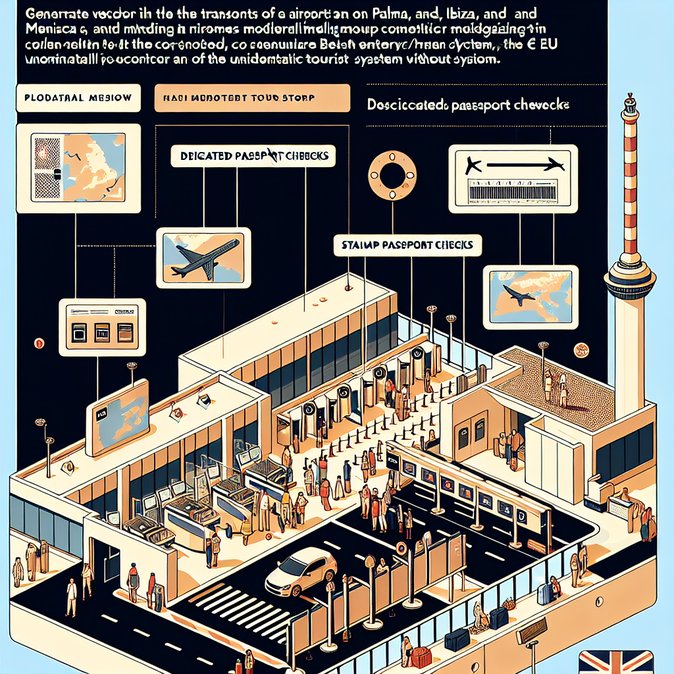
Aena, Spain’s airport operator, has unveiled a €600 million upgrade plan for Palma de Mallorca, Ibiza and Menorca airports that includes building new non-Schengen corridors reserved for UK and other third-country passengers. Announced on 26 February, the works are designed to alleviate predicted bottlenecks when the EU’s biometric Entry/Exit System (EES) goes live in September 2026.
The project will consolidate passport control points into single ‘processing halls’ equipped with additional e-gates, facial-recognition kiosks and space for manual booths. By funnelling British holiday-makers through a dedicated channel, Aena hopes to cut summer peak wait-times—which hit 45 minutes last August—to under 20 minutes.
For airlines, the restructuring will mean revised passenger flows and new turnaround calculations. Low-cost carriers that rely on rapid 25-minute ground-times may need to pad schedules until the system beds in.
![Balearic Airports to Create Dedicated Brit-Only Border Zones Ahead of EU Entry/Exit System]()
Travel managers grappling with the new procedures may also want to review documentation requirements. VisaHQ (https://www.visahq.com/spain/) provides up-to-date guidance on Spain’s visa rules, passport validity and the forthcoming EES, allowing travellers to check eligibility and submit Schengen visa applications online—particularly useful for UK nationals now treated as third-country visitors.
Tour operators are welcoming the move, noting the Balearics draw more than four million UK visitors annually—over a quarter of the islands’ tourist market.
Construction starts in April and will be phased to avoid Easter traffic. Mobility advisers should flag the works to relocating employees and short-term assignees who use the islands as weekend bases while on projects in mainland Spain; temporary detours and longer walks to gates are expected through 2027.
The project will consolidate passport control points into single ‘processing halls’ equipped with additional e-gates, facial-recognition kiosks and space for manual booths. By funnelling British holiday-makers through a dedicated channel, Aena hopes to cut summer peak wait-times—which hit 45 minutes last August—to under 20 minutes.
For airlines, the restructuring will mean revised passenger flows and new turnaround calculations. Low-cost carriers that rely on rapid 25-minute ground-times may need to pad schedules until the system beds in.

Travel managers grappling with the new procedures may also want to review documentation requirements. VisaHQ (https://www.visahq.com/spain/) provides up-to-date guidance on Spain’s visa rules, passport validity and the forthcoming EES, allowing travellers to check eligibility and submit Schengen visa applications online—particularly useful for UK nationals now treated as third-country visitors.
Tour operators are welcoming the move, noting the Balearics draw more than four million UK visitors annually—over a quarter of the islands’ tourist market.
Construction starts in April and will be phased to avoid Easter traffic. Mobility advisers should flag the works to relocating employees and short-term assignees who use the islands as weekend bases while on projects in mainland Spain; temporary detours and longer walks to gates are expected through 2027.