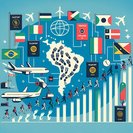
The Ministry of Ports and Airports has reported the highest monthly passenger total in Brazilian history: 12.37 million people travelled by air in January 2026, surpassing the previous record set in 2019. Domestic traffic reached 9.3 million, while international routes carried 2.9 million—also an all-time high.
Minister Silvio Costa Filho credited the surge to infrastructure upgrades, tax incentives on aviation fuel and the expansion of regional routes that reconnect secondary cities to São Paulo, Brasília and Recife hubs. Airlines LATAM, Gol and Azul collectively added 540,000 seats versus January 2025; foreign carriers reinstated daily frequencies from Europe and North America dropped during the pandemic.
For international travellers and corporate assignees heading to Brazil, ensuring the correct entry documents is just as critical as finding a seat. VisaHQ simplifies the visa process with an easy online application system, personalized support and up-to-date guidance on Brazilian tourist and business visa requirements—saving time as flight demand soars. Learn more at https://www.visahq.com/brazil/
![Brazil’s aviation sector posts record passenger volumes ahead of busiest Carnaval ever]()
Looking forward, the Ministry projects that 2.1 million passengers will have flown between 13 and 18 February (the extended Carnaval holiday), a jump of 10-11 % on last year and likely the busiest Carnaval travel period since records began in 2000. Airports in Rio de Janeiro and Salvador have activated contingency staffing and asked carriers to stagger flight banks to ease peak congestion.
For mobility and relocation managers the numbers confirm that Brazil’s aviation recovery is complete—and that securing seats, particularly in premium cabins, will be harder (and costlier) around local holidays. Companies should lock in tickets early and monitor potential ground-handling bottlenecks as terminals operate near capacity.
Analysts also point out that record traffic strengthens the business case for Brazil’s stalled open-skies negotiations with the EU and Canada, which could further diversify connection options for expatriates and cargo alike.
Minister Silvio Costa Filho credited the surge to infrastructure upgrades, tax incentives on aviation fuel and the expansion of regional routes that reconnect secondary cities to São Paulo, Brasília and Recife hubs. Airlines LATAM, Gol and Azul collectively added 540,000 seats versus January 2025; foreign carriers reinstated daily frequencies from Europe and North America dropped during the pandemic.
For international travellers and corporate assignees heading to Brazil, ensuring the correct entry documents is just as critical as finding a seat. VisaHQ simplifies the visa process with an easy online application system, personalized support and up-to-date guidance on Brazilian tourist and business visa requirements—saving time as flight demand soars. Learn more at https://www.visahq.com/brazil/

Looking forward, the Ministry projects that 2.1 million passengers will have flown between 13 and 18 February (the extended Carnaval holiday), a jump of 10-11 % on last year and likely the busiest Carnaval travel period since records began in 2000. Airports in Rio de Janeiro and Salvador have activated contingency staffing and asked carriers to stagger flight banks to ease peak congestion.
For mobility and relocation managers the numbers confirm that Brazil’s aviation recovery is complete—and that securing seats, particularly in premium cabins, will be harder (and costlier) around local holidays. Companies should lock in tickets early and monitor potential ground-handling bottlenecks as terminals operate near capacity.
Analysts also point out that record traffic strengthens the business case for Brazil’s stalled open-skies negotiations with the EU and Canada, which could further diversify connection options for expatriates and cargo alike.