The European Commission has unveiled its first-ever EU Visa Strategy and, if approved by member states, the reforms could transform how UAE residents travel for business and leisure. The headline change is a proposal to extend the validity of multiple-entry Schengen visas beyond today’s five-year ceiling for travellers who have a strong compliance history.
For Emiratis and UAE-based expatriates who make repeated trips to Europe—whether to visit head-office functions, manage supply-chain plants or simply holiday—fewer renewals mean less red tape, lower cost and more predictable planning cycles. EU officials estimate the measure could slash repeat-application volumes at consulates by up to 40 per cent, freeing capacity for first-time applicants and bringing down appointment backlogs that have plagued the region since travel demand rebounded post-pandemic.
If you prefer expert help navigating these changes, VisaHQ’s UAE portal (https://www.visahq.com/united-arab-emirates/) offers end-to-end support: its team pre-screens documents, secures consular appointments and tracks applications in real time, ensuring business and leisure travellers avoid unnecessary delays and meet evolving Schengen requirements with confidence.
![EU plans longer multi-entry Schengen visas and fully digital borders—good news for UAE frequent flyers]()
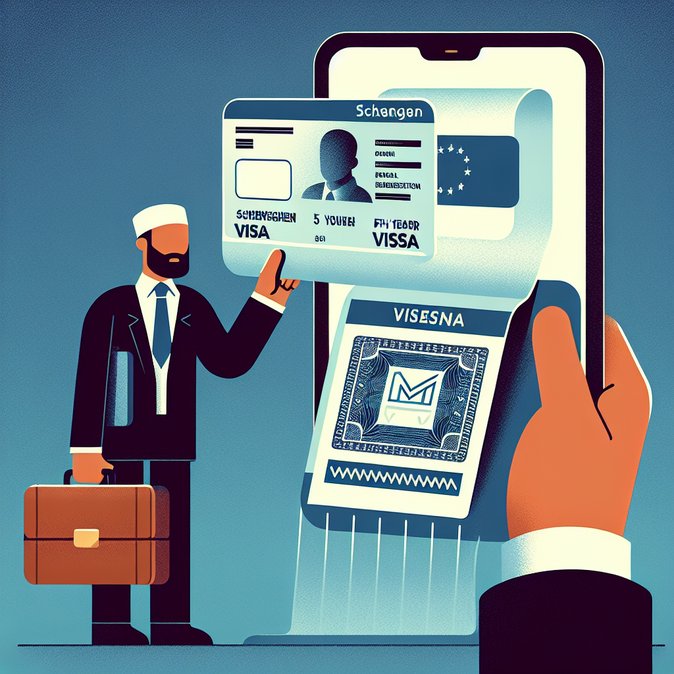
Equally significant is the push to replace physical visa stickers with secure digital tokens issued through a central EU platform. Applicants would upload documents once, track their case online and receive authorisation directly to their mobile wallet. At the border, biometric e-gates linked to the Entry/Exit System would confirm eligibility in seconds. The bloc hopes full interoperability of its border IT suite by 2028 will deliver what officials call “the world’s most advanced digital frontier”.
From a corporate-mobility standpoint, longer visas dovetail with the EU’s parallel Talent Partnerships, which are designed to entice skilled workers from the Gulf and Asia. Companies that rotate teams between Dubai and European subsidiaries should see lower administrative overheads while still benefitting from the EU’s strengthened security screening. Travel managers are advised to monitor delegated-act publications later this year that will finalize the exact visa-validity bands tied to compliance scorecards.
Until legislation passes, nothing changes immediately, but UAE travellers can prepare by maintaining meticulous travel histories—keeping old passports, exit stamps and previous Schengen visas—to maximise their chances of falling into the Commission’s “trusted traveller” category once rules take effect.
For Emiratis and UAE-based expatriates who make repeated trips to Europe—whether to visit head-office functions, manage supply-chain plants or simply holiday—fewer renewals mean less red tape, lower cost and more predictable planning cycles. EU officials estimate the measure could slash repeat-application volumes at consulates by up to 40 per cent, freeing capacity for first-time applicants and bringing down appointment backlogs that have plagued the region since travel demand rebounded post-pandemic.
If you prefer expert help navigating these changes, VisaHQ’s UAE portal (https://www.visahq.com/united-arab-emirates/) offers end-to-end support: its team pre-screens documents, secures consular appointments and tracks applications in real time, ensuring business and leisure travellers avoid unnecessary delays and meet evolving Schengen requirements with confidence.

Equally significant is the push to replace physical visa stickers with secure digital tokens issued through a central EU platform. Applicants would upload documents once, track their case online and receive authorisation directly to their mobile wallet. At the border, biometric e-gates linked to the Entry/Exit System would confirm eligibility in seconds. The bloc hopes full interoperability of its border IT suite by 2028 will deliver what officials call “the world’s most advanced digital frontier”.
From a corporate-mobility standpoint, longer visas dovetail with the EU’s parallel Talent Partnerships, which are designed to entice skilled workers from the Gulf and Asia. Companies that rotate teams between Dubai and European subsidiaries should see lower administrative overheads while still benefitting from the EU’s strengthened security screening. Travel managers are advised to monitor delegated-act publications later this year that will finalize the exact visa-validity bands tied to compliance scorecards.
Until legislation passes, nothing changes immediately, but UAE travellers can prepare by maintaining meticulous travel histories—keeping old passports, exit stamps and previous Schengen visas—to maximise their chances of falling into the Commission’s “trusted traveller” category once rules take effect.