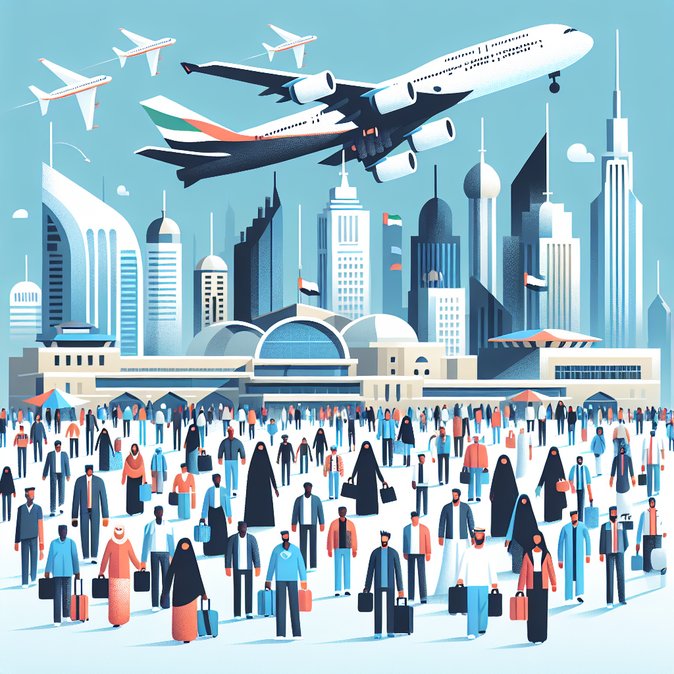
Fresh figures released by Dubai Airports and circulated in an industry analysis post on LinkedIn show that Dubai International (DXB) processed an all-time-high 95.2 million passengers in 2025—up 3.1 per cent year on year and the highest international throughput of any airport worldwide. The data translates to 261,000 daily passengers and 1,246 aircraft movements every 24 hours.
The milestone comes as the emirate pursues its ‘D33’ economic agenda, which targets placing Dubai among the top three global cities by 2033. Aviation is central to that strategy: DXB alone now channels about five per cent of all cross-border passenger journeys on the planet, vastly amplifying the city’s attractiveness for regional headquarters, trade fairs and high-value logistics.
Whether you’re a mobility manager moving teams or an individual traveller capitalising on DXB’s connectivity, VisaHQ can simplify entry formalities. Its UAE portal (https://www.visahq.com/united-arab-emirates/) walks applicants through current visa requirements, offers secure document uploads and provides concierge support—helping ensure that passengers arrive with the right paperwork and breeze through those record-breaking terminals.
![Dubai International handles 95.2 million passengers in 2025, cementing its status as a super-connector]()
Operationally, the airport averaged 214 passengers per flight—a figure analysts say reflects a wide-body-heavy fleet mix optimised for long-haul connectivity across Europe, Asia and Africa. Load factors remained robust at 77.6 per cent despite capacity increases by Emirates and flydubai, underscoring resilient demand.
For global-mobility teams the numbers confirm Dubai’s role as the pre-eminent one-stop hub for distributing staff across EMEA and APAC. Companies can leverage the dense network to design ‘hub & spoke’ assignment models that reduce total travel time and carbon emissions versus multi-stop itineraries through European gateways.
Looking ahead, airport operator Dubai Airports is fast-tracking biometric ‘One ID’ trials to push average immigration processing below 10 seconds, a further boon for frequent business travellers. Mobility managers should monitor the rollout, as enrollment of assignees could shave valuable minutes off transfer times during peak connection waves.
The milestone comes as the emirate pursues its ‘D33’ economic agenda, which targets placing Dubai among the top three global cities by 2033. Aviation is central to that strategy: DXB alone now channels about five per cent of all cross-border passenger journeys on the planet, vastly amplifying the city’s attractiveness for regional headquarters, trade fairs and high-value logistics.
Whether you’re a mobility manager moving teams or an individual traveller capitalising on DXB’s connectivity, VisaHQ can simplify entry formalities. Its UAE portal (https://www.visahq.com/united-arab-emirates/) walks applicants through current visa requirements, offers secure document uploads and provides concierge support—helping ensure that passengers arrive with the right paperwork and breeze through those record-breaking terminals.
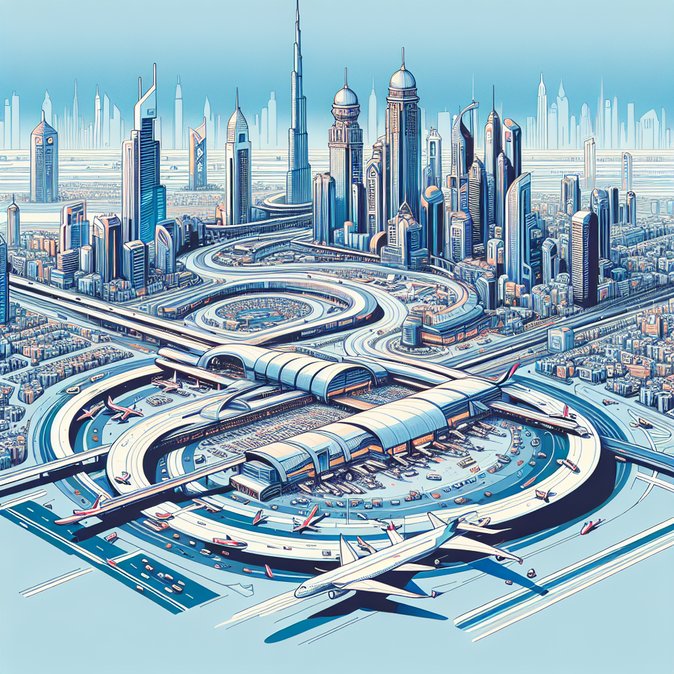
Operationally, the airport averaged 214 passengers per flight—a figure analysts say reflects a wide-body-heavy fleet mix optimised for long-haul connectivity across Europe, Asia and Africa. Load factors remained robust at 77.6 per cent despite capacity increases by Emirates and flydubai, underscoring resilient demand.
For global-mobility teams the numbers confirm Dubai’s role as the pre-eminent one-stop hub for distributing staff across EMEA and APAC. Companies can leverage the dense network to design ‘hub & spoke’ assignment models that reduce total travel time and carbon emissions versus multi-stop itineraries through European gateways.
Looking ahead, airport operator Dubai Airports is fast-tracking biometric ‘One ID’ trials to push average immigration processing below 10 seconds, a further boon for frequent business travellers. Mobility managers should monitor the rollout, as enrollment of assignees could shave valuable minutes off transfer times during peak connection waves.