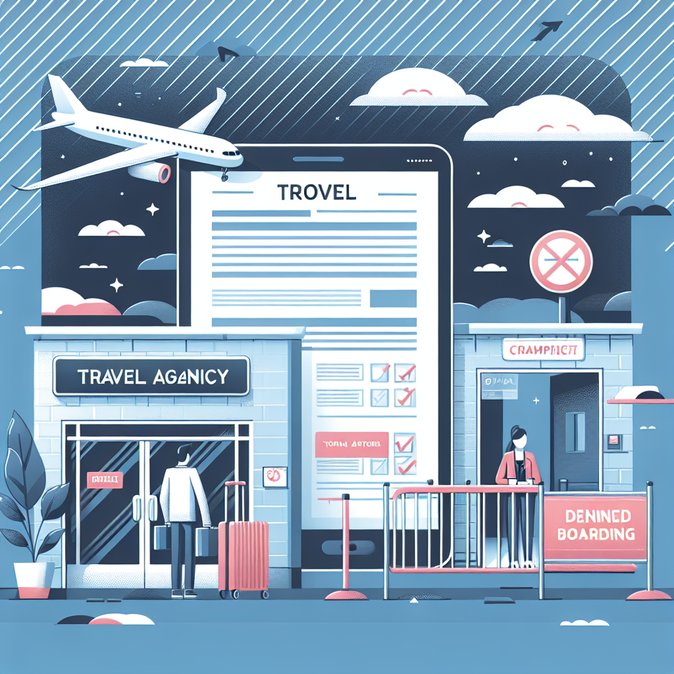
A landmark judgment delivered on 25 February by the Munich II Regional Court has held a package-tour operator responsible for not informing customers that their airline required a digital exit form—an ‘E-Ticket’ QR code—before check-in at Munich Airport. The couple, bound for the Dominican Republic, generated the code at the terminal but missed the cut-off time and were denied boarding. The court ordered the operator to refund the €3,640 holiday price, cover ancillary costs and pay compensation for ‘lost holiday enjoyment’ worth half the package price. The ruling, published in a 26 February press release by the Bavarian Ministry of Justice, emphasises that tour operators must proactively communicate both entry and exit formalities imposed by carriers, irrespective of public information available online. Merely linking to a destination’s government website was deemed insufficient. Legal experts say the decision raises the compliance bar for Germany’s €34-billion outbound-tourism industry and could extend to corporate travel arrangers.
Business-travel agencies may now need to verify airline document policies—such as Kenya’s e-Visa or the UK’s newly enforced ETA—and confirm that employees have completed them before issuing tickets.
![Munich Court Rules Tour Operator Liable for Failing to Warn Travellers About Exit Paperwork]()
For companies and travelers seeking a streamlined way to stay on top of these evolving mandates, VisaHQ offers an end-to-end digital platform that tracks entry and exit requirements in real time, generates the necessary forms, and even submits them on your behalf. Its German portal (https://www.visahq.com/germany/) lets users check the latest airline or government stipulations for any destination and can integrate with corporate booking tools to automate compliance, reducing the risk of costly oversights like the one highlighted in this court case.
The judgment is not yet final; the defendant may appeal. However, consumer-protection groups are already hailing the case as a precedent that closes a long-standing accountability gap between airlines and intermediaries. Companies booking group travel are advised to update duty-of-care checklists and ensure digital entry and exit requirements are highlighted alongside visa information. Practically, the case underlines the rapid digitalisation of border procedures worldwide. From Colombia’s ‘Check-Mig’ to the EU’s forthcoming ETIAS, missing an online form can now derail entire trips—and, as this ruling shows, trigger significant financial liability for facilitators.
Business-travel agencies may now need to verify airline document policies—such as Kenya’s e-Visa or the UK’s newly enforced ETA—and confirm that employees have completed them before issuing tickets.

For companies and travelers seeking a streamlined way to stay on top of these evolving mandates, VisaHQ offers an end-to-end digital platform that tracks entry and exit requirements in real time, generates the necessary forms, and even submits them on your behalf. Its German portal (https://www.visahq.com/germany/) lets users check the latest airline or government stipulations for any destination and can integrate with corporate booking tools to automate compliance, reducing the risk of costly oversights like the one highlighted in this court case.
The judgment is not yet final; the defendant may appeal. However, consumer-protection groups are already hailing the case as a precedent that closes a long-standing accountability gap between airlines and intermediaries. Companies booking group travel are advised to update duty-of-care checklists and ensure digital entry and exit requirements are highlighted alongside visa information. Practically, the case underlines the rapid digitalisation of border procedures worldwide. From Colombia’s ‘Check-Mig’ to the EU’s forthcoming ETIAS, missing an online form can now derail entire trips—and, as this ruling shows, trigger significant financial liability for facilitators.