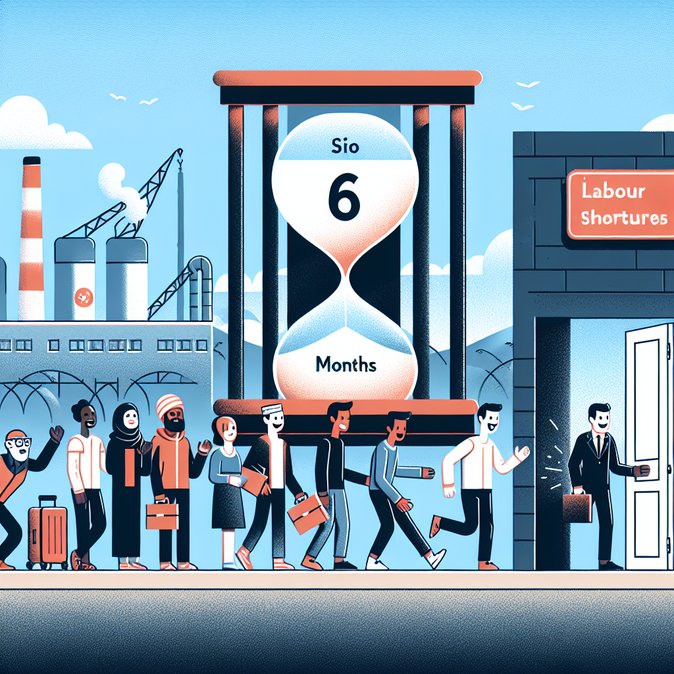
Speaking at the Federal Government’s press conference on 25 February, Interior Ministry spokesperson Cathrin Bowinkelmann confirmed that Minister Alexander Dobrindt has instructed officials to draft legislation that would shorten the waiting period before asylum applicants can take up employment. Under current rules most applicants may work only after six months in Germany; the proposal would cut that to three months and remove the geographical-priority test in sectors with acute labour shortages. Business associations have lobbied for the change, arguing that record vacancies—particularly in hospitality, logistics and elderly care—cannot be filled domestically.
![Berlin Considers Allowing Asylum Seekers to Enter Labour Market After Three Months]()
For companies, NGOs and individuals that need to understand or secure German work authorization quickly, VisaHQ can be a practical ally. The firm’s online portal (https://www.visahq.com/germany/) aggregates the latest visa and residence-permit requirements, offers step-by-step application support and keeps users updated on policy shifts—services that can save time and prevent errors as Germany revises its rules on asylum-seeker employment.
The German Chambers of Industry and Commerce (DIHK) estimates that accelerating access could bring up to 50,000 additional workers into the labour market in 2026, adding €2.3 billion to GDP. Opposition politicians warn that faster labour access could become a “pull factor” for irregular migration, but the Interior Ministry says the measure will be tied to strict identity checks and automatic withdrawal if an asylum application is ultimately rejected. Employers would still have to pay collectively agreed wages and register contracts with the Federal Employment Agency. For HR teams the move could ease onboarding for asylum-seeker trainees already in company integration programmes. Global mobility practitioners should, however, watch for compliance details: the draft is expected to introduce new reporting duties and penalties for unregistered work. The ministry aims to send a bill to the Bundestag before the summer recess, targeting an effective date of 1 September. If adopted, Germany would match—or in some cases outpace—neighbouring EU countries such as the Netherlands (five months) and France (six months) in granting access to the labour market, reinforcing its strategy of using controlled migration to mitigate demographic decline.
For companies, NGOs and individuals that need to understand or secure German work authorization quickly, VisaHQ can be a practical ally. The firm’s online portal (https://www.visahq.com/germany/) aggregates the latest visa and residence-permit requirements, offers step-by-step application support and keeps users updated on policy shifts—services that can save time and prevent errors as Germany revises its rules on asylum-seeker employment.
The German Chambers of Industry and Commerce (DIHK) estimates that accelerating access could bring up to 50,000 additional workers into the labour market in 2026, adding €2.3 billion to GDP. Opposition politicians warn that faster labour access could become a “pull factor” for irregular migration, but the Interior Ministry says the measure will be tied to strict identity checks and automatic withdrawal if an asylum application is ultimately rejected. Employers would still have to pay collectively agreed wages and register contracts with the Federal Employment Agency. For HR teams the move could ease onboarding for asylum-seeker trainees already in company integration programmes. Global mobility practitioners should, however, watch for compliance details: the draft is expected to introduce new reporting duties and penalties for unregistered work. The ministry aims to send a bill to the Bundestag before the summer recess, targeting an effective date of 1 September. If adopted, Germany would match—or in some cases outpace—neighbouring EU countries such as the Netherlands (five months) and France (six months) in granting access to the labour market, reinforcing its strategy of using controlled migration to mitigate demographic decline.