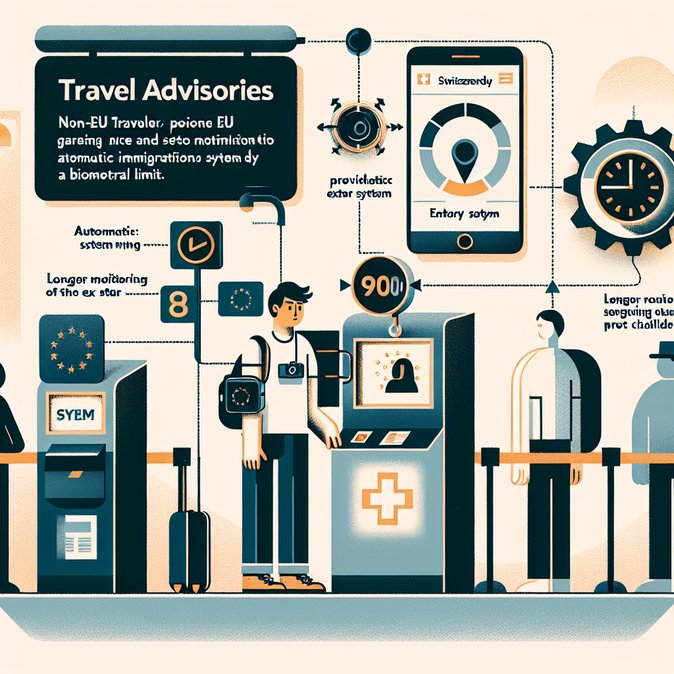
Ireland’s Department of Foreign Affairs and the UK Foreign, Commonwealth & Development Office updated their advice on 25 February 2026 for non-EU travellers heading to 29 Schengen countries—including Switzerland—because the EU Entry/Exit System (EES) will become fully mandatory on 10 April 2026. The notice reminds British, Irish and other third-country nationals that passports will no longer be stamped; instead, fingerprints and a facial image will be captured on first entry and automatically verified on exit.
The EES has been in phased use at Basel and Geneva airports since October 2025, but manual stamping has run in parallel while kiosks and staffing levels were tested. From April, biometric capture will be compulsory at all Swiss external borders. Travellers who have not pre-registered should expect longer queues during the first months, especially over the Easter holidays and the start of the summer season.
![EU biometric border system prompts new travel advice for Switzerland-bound visitors]()
For companies or individuals who want extra reassurance, VisaHQ can review travel histories against the 90-day rule, help secure ETIAS authorisations when they roll out, and even book priority biometric slots for Switzerland. Full details and live support are available on their Switzerland page: https://www.visahq.com/switzerland/
Business-travel managers should brief employees on the 90-day-in-180 rule, which the digital system will now enforce automatically. Frequent commuters—such as consultants flying weekly between London and Zurich—risk being refused entry once the rolling limit is reached. Carriers will also be liable for fines if they board passengers whose travel authorisation has lapsed.
Airports are expanding e-gates and deploying multilingual staff, but the government advises arriving at least two hours before departure on non-Schengen flights until throughput data stabilises. Companies may wish to book fast-track services at Geneva and Zurich for senior executives during the transition period.
The EES has been in phased use at Basel and Geneva airports since October 2025, but manual stamping has run in parallel while kiosks and staffing levels were tested. From April, biometric capture will be compulsory at all Swiss external borders. Travellers who have not pre-registered should expect longer queues during the first months, especially over the Easter holidays and the start of the summer season.

For companies or individuals who want extra reassurance, VisaHQ can review travel histories against the 90-day rule, help secure ETIAS authorisations when they roll out, and even book priority biometric slots for Switzerland. Full details and live support are available on their Switzerland page: https://www.visahq.com/switzerland/
Business-travel managers should brief employees on the 90-day-in-180 rule, which the digital system will now enforce automatically. Frequent commuters—such as consultants flying weekly between London and Zurich—risk being refused entry once the rolling limit is reached. Carriers will also be liable for fines if they board passengers whose travel authorisation has lapsed.
Airports are expanding e-gates and deploying multilingual staff, but the government advises arriving at least two hours before departure on non-Schengen flights until throughput data stabilises. Companies may wish to book fast-track services at Geneva and Zurich for senior executives during the transition period.