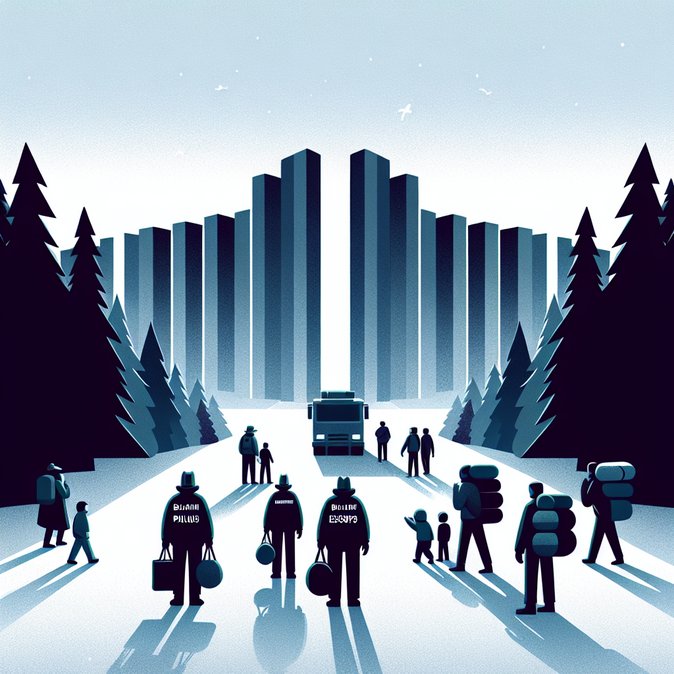
The New Yorker’s long-form piece, published online on 23 February and slated for the 2 March print edition, paints a harrowing portrait of life and death along the Białowieża Forest, where Poland’s 18-foot steel barrier meets a growing humanitarian emergency. Reporter George Packer spent ten days embedded with volunteer medics and activists who navigate the primeval woods to deliver blankets, water and legal advice to migrants pushed back by Polish patrols or shepherded by Belarusian forces.
Through first-person accounts—from Ahmed, a Somali engineer fleeing al-Shabaab, to Amara, a Cameroonian nurse—the article illustrates the racial double standard between Poland’s embrace of millions of white Ukrainian refugees and its militarised response to darker-skinned asylum seekers. It details “push-and-pull” tactics: Belarusian guards slash inflatable rafts to force crossings into Poland, while Polish units deploy thermal-imaging drones, sound cannons and flashbangs to repel entries.
![Feature: ‘Migrants in the Ancient Forest’ Chronicles Human Cost of Poland’s Border Wall with Belarus]()
Whether you’re a journalist heading to the exclusion zone or a corporate team arranging travel for staff, VisaHQ can simplify the process of securing Polish visas, staying on top of fast-changing entry rules and advising on humanitarian exemptions. Their dedicated Poland hub (https://www.visahq.com/poland/) provides real-time requirements and expert assistance, ensuring travel plans align with both legal obligations and ethical considerations.
The feature also examines the legal limbo created by Poland’s 2022 amendment allowing border-guard commanders to summarily expel migrants without access to asylum procedures. Human-rights lawyers argue the policy violates EU law; Warsaw counters that it is a necessary response to Minsk’s “weaponisation of migration.”
For mobility and corporate-social-responsibility teams, the story underscores reputational stakes when planning projects near the exclusion zone. Companies contracting local logistics or forestry services should ensure suppliers respect humanitarian corridors and support NGOs permitted to operate in the area.
Through first-person accounts—from Ahmed, a Somali engineer fleeing al-Shabaab, to Amara, a Cameroonian nurse—the article illustrates the racial double standard between Poland’s embrace of millions of white Ukrainian refugees and its militarised response to darker-skinned asylum seekers. It details “push-and-pull” tactics: Belarusian guards slash inflatable rafts to force crossings into Poland, while Polish units deploy thermal-imaging drones, sound cannons and flashbangs to repel entries.

Whether you’re a journalist heading to the exclusion zone or a corporate team arranging travel for staff, VisaHQ can simplify the process of securing Polish visas, staying on top of fast-changing entry rules and advising on humanitarian exemptions. Their dedicated Poland hub (https://www.visahq.com/poland/) provides real-time requirements and expert assistance, ensuring travel plans align with both legal obligations and ethical considerations.
The feature also examines the legal limbo created by Poland’s 2022 amendment allowing border-guard commanders to summarily expel migrants without access to asylum procedures. Human-rights lawyers argue the policy violates EU law; Warsaw counters that it is a necessary response to Minsk’s “weaponisation of migration.”
For mobility and corporate-social-responsibility teams, the story underscores reputational stakes when planning projects near the exclusion zone. Companies contracting local logistics or forestry services should ensure suppliers respect humanitarian corridors and support NGOs permitted to operate in the area.