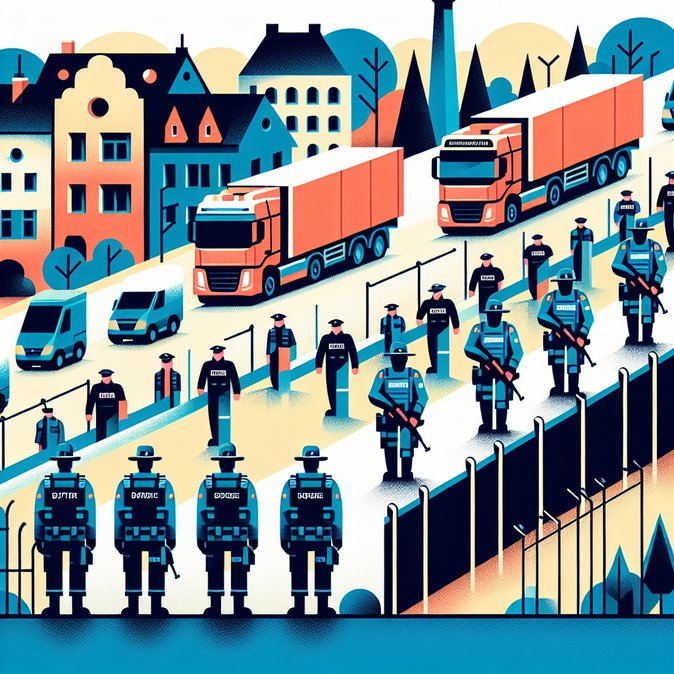
Digital forensics researchers at the Atlantic Council’s DFRLab and fact-checking site StopFake published a joint report on 23 February revealing that inauthentic social-media networks are driving a growing “citizen patrol” movement along Poland’s western border. The study analysed more than 50 Facebook pages and Telegram channels created in mid-2025 that amplify anti-migration rhetoric and legitimize vigilante patrols targeting trucks and buses suspected of carrying irregular migrants from Germany.
Using network-analysis tools, investigators found clusters of newly minted accounts sharing AI-generated images of migrants allegedly “flooding” Polish towns, with identical captions copied across pages within minutes. Many profiles listed fake locations or reused profile pictures from Russian-language spam farms. Posts were systematically boosted by far-right influencers and a handful of political figures ahead of Poland’s October 2025 parliamentary elections.
![DFRLab Investigation Exposes Coordinated Social-Media Networks Backing Polish Border Vigilantes]()
For companies and individuals who still need to cross the border, VisaHQ can help smooth the process. Its Poland portal (https://www.visahq.com/poland/) consolidates the latest entry requirements, offers expedited visa-processing services, and provides real-time application tracking—giving travellers extra confidence and reducing the risk of delays during heightened patrol activity.
Although the patrols claim to merely “observe and report,” police documents leaked to Gazeta Wyborcza cite at least six incidents in which activists blocked roads or demanded to see passengers’ identification. Business federations complain that lorry drivers have been harassed and delayed, jeopardising just-in-time deliveries to German automotive plants.
The report urges Polish authorities to prosecute cases of intimidation and to cooperate with Meta and Telegram to dismantle coordinated inauthentic behaviour. For global mobility managers, the finding is a reminder to brief assignees who drive rental cars with foreign plates near the German border and to store emergency helplines in case of roadside confrontation.
Using network-analysis tools, investigators found clusters of newly minted accounts sharing AI-generated images of migrants allegedly “flooding” Polish towns, with identical captions copied across pages within minutes. Many profiles listed fake locations or reused profile pictures from Russian-language spam farms. Posts were systematically boosted by far-right influencers and a handful of political figures ahead of Poland’s October 2025 parliamentary elections.

For companies and individuals who still need to cross the border, VisaHQ can help smooth the process. Its Poland portal (https://www.visahq.com/poland/) consolidates the latest entry requirements, offers expedited visa-processing services, and provides real-time application tracking—giving travellers extra confidence and reducing the risk of delays during heightened patrol activity.
Although the patrols claim to merely “observe and report,” police documents leaked to Gazeta Wyborcza cite at least six incidents in which activists blocked roads or demanded to see passengers’ identification. Business federations complain that lorry drivers have been harassed and delayed, jeopardising just-in-time deliveries to German automotive plants.
The report urges Polish authorities to prosecute cases of intimidation and to cooperate with Meta and Telegram to dismantle coordinated inauthentic behaviour. For global mobility managers, the finding is a reminder to brief assignees who drive rental cars with foreign plates near the German border and to store emergency helplines in case of roadside confrontation.