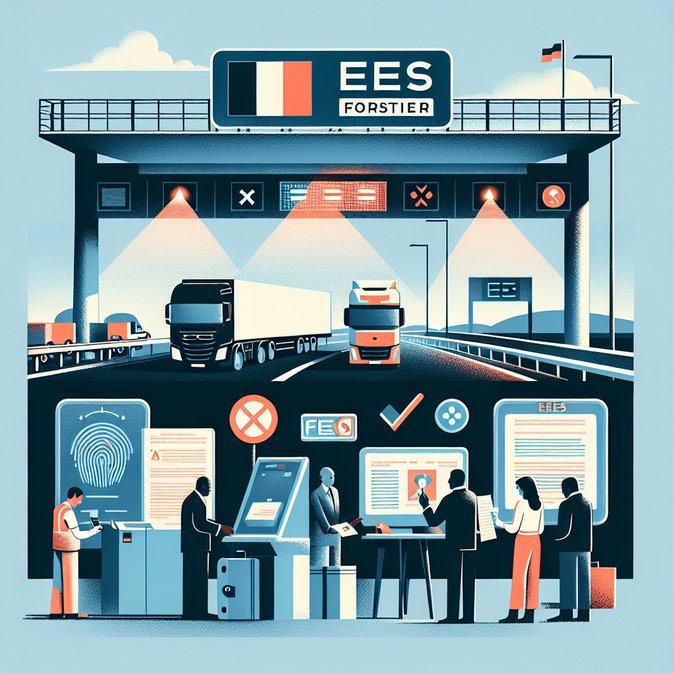
Hours after ADP’s press call, trade journal Travel and Tour World obtained and published the joint letter that Paris-Charles-de-Gaulle and Paris-Orly sent to the European Commission on 24 February. The document sets out operational data from the airports’ January pilot: average first-time EES enrolment took 3 minutes 40 seconds per traveller, rising to 7 minutes for family groups; automated gates failed to capture quality fingerprints in 18 % of trials, forcing a manual fallback; and border-guard overtime costs jumped 43 %. The airports predict that if the biometric obligation becomes universal in April, departures halls will back-up into landside areas, increasing security risk and jeopardising on-time performance for long-haul banking waves. They therefore propose a phased approach: keep enrolment voluntary between April and September, raise the threshold to 50 % by October, and reach 100 % only in November, when leisure volumes subside.
![CDG & Orly Tell Brussels: Postpone Full EES Roll-Out Until After Summer]()
Whether you’re a frequent flyer or managing travel for an entire team, VisaHQ can help you stay ahead of these shifting requirements. The company tracks France’s EES rollout in real time, offers step-by-step assistance for Schengen and transit visa applications, and sends timely alerts so travellers can adjust their plans before reaching the airport. Visit https://www.visahq.com/france/ for details.
Travel and Tour World notes that the airports’ stance echoes similar pleas from Lisbon, Barcelona and Amsterdam, but marks the first time a major hub has published granular failure-rate statistics. The article also quotes corporate-travel managers who fear missed connections could invalidate through-ticketed segments, leading to duty-of-care headaches and higher re-accommodation costs. While the Commission has not yet replied, EU sources told TTW that member-state flexibility clauses could be invoked for up to 150 days after “unforeseen operational disruption”, giving France room to negotiate. Airlines serving Paris are already updating check-in scripts to warn travellers about possible biometric registration and advising arrival at the airport at least four hours before departure during peak school-holiday weekends. For mobility departments, the leaked metrics provide a rare evidence-base to justify contingency budgets and traveller communications around the EES transition.

Whether you’re a frequent flyer or managing travel for an entire team, VisaHQ can help you stay ahead of these shifting requirements. The company tracks France’s EES rollout in real time, offers step-by-step assistance for Schengen and transit visa applications, and sends timely alerts so travellers can adjust their plans before reaching the airport. Visit https://www.visahq.com/france/ for details.
Travel and Tour World notes that the airports’ stance echoes similar pleas from Lisbon, Barcelona and Amsterdam, but marks the first time a major hub has published granular failure-rate statistics. The article also quotes corporate-travel managers who fear missed connections could invalidate through-ticketed segments, leading to duty-of-care headaches and higher re-accommodation costs. While the Commission has not yet replied, EU sources told TTW that member-state flexibility clauses could be invoked for up to 150 days after “unforeseen operational disruption”, giving France room to negotiate. Airlines serving Paris are already updating check-in scripts to warn travellers about possible biometric registration and advising arrival at the airport at least four hours before departure during peak school-holiday weekends. For mobility departments, the leaked metrics provide a rare evidence-base to justify contingency budgets and traveller communications around the EES transition.