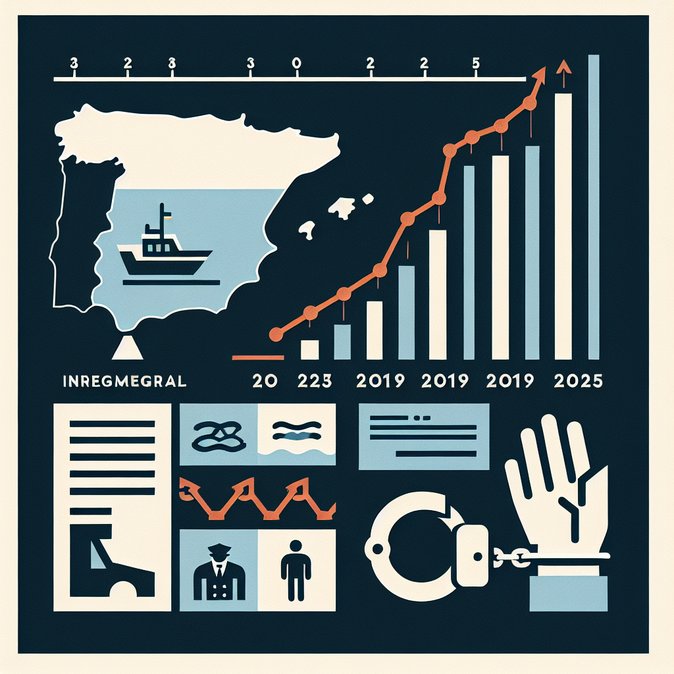
New data released on 24 February show Spain expelled 20,682 irregular migrants between 2019 and 2025—barely seven percent of the 305,371 people who entered the country illegally in that period. The statistics, requested in parliament by Navarra deputy Alberto Catalán, were published by the Interior Ministry and first reported by El Mundo. (archyde.com)
The numbers highlight the scale of Spain’s enforcement challenge even as overall sea arrivals fell sharply last year. Irregular landings in the Canary Islands dropped 62 percent in 2025, largely thanks to joint patrols and investment agreements with Mauritania and stepped-up surveillance by Morocco, but inflows rose in Ceuta and the Balearics. (archyde.com)
![Interior Ministry figures reveal just 7 % of Spain’s 305,000 irregular arrivals expelled since 2019]()
Amid these shifting migration patterns, VisaHQ can be a practical ally for travellers, foreign employees and their sponsors. Through its Spain portal (https://www.visahq.com/spain/), the firm guides users through visa and residence-permit requirements, supplies up-to-date document checklists and offers application tracking—an efficient way to avoid bureaucratic snags as controls intensify.
Behind the headline decline lies a demographic surge: the stock of undocumented migrants living in Spain has ballooned from an estimated 107,000 in 2017 to about 840,000 today—a 685 percent jump in eight years. The government admits it has no consolidated database showing how many expulsion orders remain unexecuted, underscoring administrative backlogs that have become a political flash-point.
For employers the figures foreshadow tighter scrutiny of right-to-work compliance. Labour inspectors increasingly target sectors dependent on seasonal and low-skilled workers—agriculture, hospitality and logistics—where informal hiring remains common. Companies should audit subcontractor chains and ensure identity-document tracking systems are robust ahead of the mass regularisation programme due to open in April.
The numbers highlight the scale of Spain’s enforcement challenge even as overall sea arrivals fell sharply last year. Irregular landings in the Canary Islands dropped 62 percent in 2025, largely thanks to joint patrols and investment agreements with Mauritania and stepped-up surveillance by Morocco, but inflows rose in Ceuta and the Balearics. (archyde.com)

Amid these shifting migration patterns, VisaHQ can be a practical ally for travellers, foreign employees and their sponsors. Through its Spain portal (https://www.visahq.com/spain/), the firm guides users through visa and residence-permit requirements, supplies up-to-date document checklists and offers application tracking—an efficient way to avoid bureaucratic snags as controls intensify.
Behind the headline decline lies a demographic surge: the stock of undocumented migrants living in Spain has ballooned from an estimated 107,000 in 2017 to about 840,000 today—a 685 percent jump in eight years. The government admits it has no consolidated database showing how many expulsion orders remain unexecuted, underscoring administrative backlogs that have become a political flash-point.
For employers the figures foreshadow tighter scrutiny of right-to-work compliance. Labour inspectors increasingly target sectors dependent on seasonal and low-skilled workers—agriculture, hospitality and logistics—where informal hiring remains common. Companies should audit subcontractor chains and ensure identity-document tracking systems are robust ahead of the mass regularisation programme due to open in April.