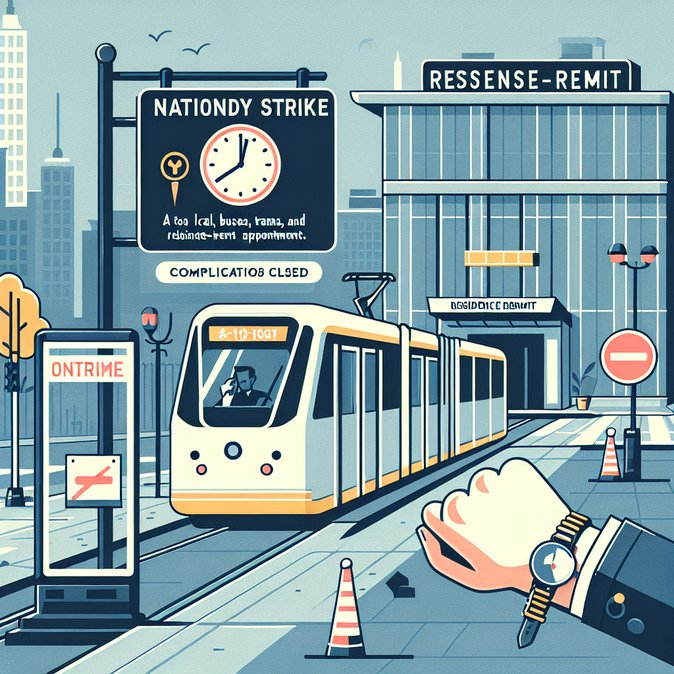
The Verdi union has called 100,000 municipal bus, tram and metro drivers out on a 48-hour strike starting Friday, 27 February, after wage talks with local authorities stalled. Walkouts are expected in most federal states except Saxony-Anhalt and Mecklenburg-Vorpommern, threatening severe disruption to commuter flows and business travel.
Airports and long-distance rail services are not directly affected, but past strikes have shown knock-on effects as travellers shift to inter-city trains and car-hire. Companies with in-country assignees are being urged to activate contingency travel policies, including remote-work options and taxi allowances, especially for employees scheduled to renew residence permits at foreigners’ offices that may themselves be short-staffed.
![48-hour public-transport strike to hit German cities this Friday]()
Amid such uncertainties, organisations should remember that visa and residence paperwork can still be handled online: VisaHQ’s Germany portal (https://www.visahq.com/germany/) offers end-to-end application support, courier submission and real-time status tracking, allowing travellers and HR teams to avoid in-person visits to foreigners’ offices that may be disrupted by the strike.
Verdi is demanding an inflation-plus pay rise and shorter shift intervals to address chronic staffing shortages. Employers’ association VKA says the claims are unaffordable without federal subsidies. The stand-off comes amid Germany’s wider “strike year”, with negotiations looming in the chemicals, retail and rail sectors – all of which could compound mobility headaches.
Travel-risk consultants advise corporates to brief travellers on alternative routes and to build extra lead-time into Schengen border crossings by road, which may see surge traffic. HR should also check force-majeure clauses in assignment contracts where transport availability is critical to performance obligations.
Airports and long-distance rail services are not directly affected, but past strikes have shown knock-on effects as travellers shift to inter-city trains and car-hire. Companies with in-country assignees are being urged to activate contingency travel policies, including remote-work options and taxi allowances, especially for employees scheduled to renew residence permits at foreigners’ offices that may themselves be short-staffed.

Amid such uncertainties, organisations should remember that visa and residence paperwork can still be handled online: VisaHQ’s Germany portal (https://www.visahq.com/germany/) offers end-to-end application support, courier submission and real-time status tracking, allowing travellers and HR teams to avoid in-person visits to foreigners’ offices that may be disrupted by the strike.
Verdi is demanding an inflation-plus pay rise and shorter shift intervals to address chronic staffing shortages. Employers’ association VKA says the claims are unaffordable without federal subsidies. The stand-off comes amid Germany’s wider “strike year”, with negotiations looming in the chemicals, retail and rail sectors – all of which could compound mobility headaches.
Travel-risk consultants advise corporates to brief travellers on alternative routes and to build extra lead-time into Schengen border crossings by road, which may see surge traffic. HR should also check force-majeure clauses in assignment contracts where transport availability is critical to performance obligations.