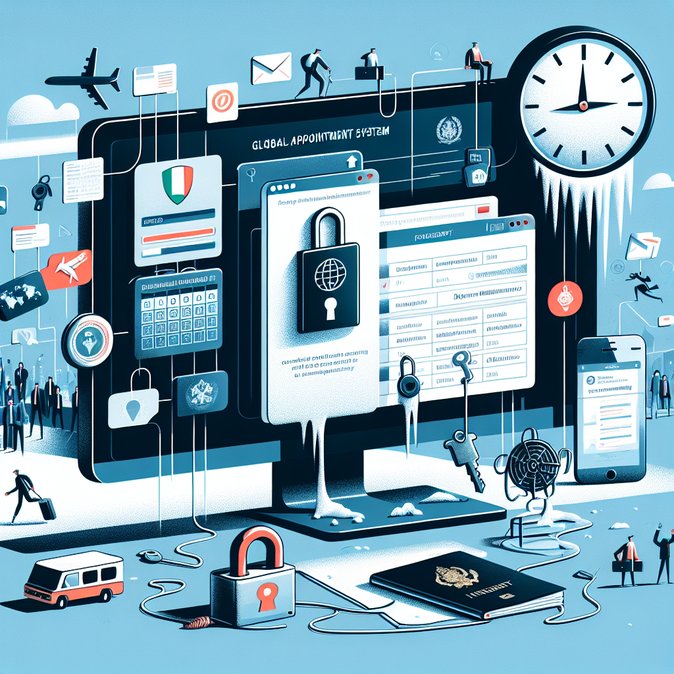
Businesses and Italian nationals abroad faced a sudden scheduling scramble on 23 February when the Consulate General of Italy in Cologne announced that the central Prenot@mi booking portal would be offline from 23 to 25 February for urgent technical maintenance. Prenot@mi is the sole channel for reserving visa, passport and ID-card appointments at more than 140 Italian consulates worldwide; downtime therefore reverberates far beyond Germany. According to the Foreign Ministry, engineers are migrating the platform’s authentication module to Italy’s new national digital-identity framework (CIE 3.0), a prerequisite for integrating with Europe’s eIDAS2 “digital wallet”.
![Italian Foreign Ministry Shuts Prenot@mi Appointment Portal for 72 Hours]()
During such interruptions, VisaHQ can step in to monitor appointment release calendars, flag open slots the moment they reappear and, when feasible, redirect applicants to less-busy consulates. Their Italy-focused team also pre-screens documentation to minimise repeat visits once Prenot@mi is back online. Travellers can learn more at https://www.visahq.com/italy/
Although previously scheduled appointments remain valid, users were unable to view, cancel or modify slots for three days—a particular nuisance for business travellers trying to renew fast-track passports ahead of mid-March trade fairs in Milan and Bologna. Most consulates responded by activating email-based emergency procedures limited to proven humanitarian or professional urgency. Immigration lawyers reported that the Cologne consulate’s February visa quota (80 study, 40 work, 25 family-reunification cases) is now likely to roll over into March, extending wait times for posted-worker permits. The incident highlights the fragility of a system that handled more than 1.4 million appointments in 2025. The ministry said a redundancy server cluster will be added before summer, but stopped short of offering service-level guarantees. Mobility managers are advised to monitor local consular sites and factor potential outages into assignment timelines, especially during the March–June peak for seasonal-worker visas.

During such interruptions, VisaHQ can step in to monitor appointment release calendars, flag open slots the moment they reappear and, when feasible, redirect applicants to less-busy consulates. Their Italy-focused team also pre-screens documentation to minimise repeat visits once Prenot@mi is back online. Travellers can learn more at https://www.visahq.com/italy/
Although previously scheduled appointments remain valid, users were unable to view, cancel or modify slots for three days—a particular nuisance for business travellers trying to renew fast-track passports ahead of mid-March trade fairs in Milan and Bologna. Most consulates responded by activating email-based emergency procedures limited to proven humanitarian or professional urgency. Immigration lawyers reported that the Cologne consulate’s February visa quota (80 study, 40 work, 25 family-reunification cases) is now likely to roll over into March, extending wait times for posted-worker permits. The incident highlights the fragility of a system that handled more than 1.4 million appointments in 2025. The ministry said a redundancy server cluster will be added before summer, but stopped short of offering service-level guarantees. Mobility managers are advised to monitor local consular sites and factor potential outages into assignment timelines, especially during the March–June peak for seasonal-worker visas.