
The start of Finland’s school winter-holiday week was upended when a fast-moving Arctic low swept across Northern Europe on 23 February 2026, dumping up to 40 cm of snow and triggering a chain-reaction of disruption that paralysed air travel. Travel and Tour World reports that airlines operating through London-Heathrow, Paris-CDG, Madrid-Barajas, Amsterdam-Schiphol and Helsinki-Vantaa scrubbed 159 flights and posted delays on a further 1,190 rotations as ground-handling crews struggled with ice-encrusted equipment and de-icing queues stretched past the two-hour mark.
![Winter-holiday blizzard cancels 159 flights and delays 1,190 across Europe, hitting Helsinki hub on 23 February 2026]()
Travellers suddenly forced to reroute—sometimes through non-Schengen hubs—can also face unexpected visa or transit-document requirements. VisaHQ’s portal (https://www.visahq.com/finland/) provides a rapid way to verify up-to-the-minute entry rules and secure last-minute paperwork, helping passengers and corporate mobility teams keep itineraries moving when weather turns plans upside down.
In Finland the timing was particularly painful: February’s so-called ‘ski holiday’ sees a 25 percent spike in domestic leisure traffic and a noticeable uptick in outbound corporate travel as executives combine remote working with family trips. Finnair pre-emptively cancelled morning departures to Brussels, Berlin and Oslo, while Norra curtailed several feeder services to Oulu and Kuopio. Fintraffic’s network statistics show average arrival delays of 46 minutes at HEL between 06:00 and 12:00 local time. Beyond the capital, road-weather warnings blanketed the country. The Finnish Meteorological Institute urged motorists to avoid non-essential journeys, and logistics firm Posti rerouted overnight truck convoys to keep e-commerce fulfilment on schedule. Helsinki Times later confirmed that conditions remained poor in most regions on 25 February, with freezing drizzle compounding black-ice risks. For employers the storm underscores the importance of dynamic duty-of-care tools. Real-time rebooking alerts and automated per-diem extensions helped multinational firms headquartered in Espoo keep traveller frustration to a minimum. HR teams are advised to update their severe-weather playbooks, noting new Finavia guidelines that limit apron staff exposure to −18 °C wind-chill, a threshold reached twice during the event. Analysts estimate the direct cost to airlines at €4–6 million in compensation and aircraft repositioning. Yet the indirect hit—missed client meetings, postponed site-inspections and emergency remote-work set-ups—may be far larger. Companies with Nordic portfolios should treat extreme winter events as a strategic mobility risk, not merely an operational nuisance.

Travellers suddenly forced to reroute—sometimes through non-Schengen hubs—can also face unexpected visa or transit-document requirements. VisaHQ’s portal (https://www.visahq.com/finland/) provides a rapid way to verify up-to-the-minute entry rules and secure last-minute paperwork, helping passengers and corporate mobility teams keep itineraries moving when weather turns plans upside down.
In Finland the timing was particularly painful: February’s so-called ‘ski holiday’ sees a 25 percent spike in domestic leisure traffic and a noticeable uptick in outbound corporate travel as executives combine remote working with family trips. Finnair pre-emptively cancelled morning departures to Brussels, Berlin and Oslo, while Norra curtailed several feeder services to Oulu and Kuopio. Fintraffic’s network statistics show average arrival delays of 46 minutes at HEL between 06:00 and 12:00 local time. Beyond the capital, road-weather warnings blanketed the country. The Finnish Meteorological Institute urged motorists to avoid non-essential journeys, and logistics firm Posti rerouted overnight truck convoys to keep e-commerce fulfilment on schedule. Helsinki Times later confirmed that conditions remained poor in most regions on 25 February, with freezing drizzle compounding black-ice risks. For employers the storm underscores the importance of dynamic duty-of-care tools. Real-time rebooking alerts and automated per-diem extensions helped multinational firms headquartered in Espoo keep traveller frustration to a minimum. HR teams are advised to update their severe-weather playbooks, noting new Finavia guidelines that limit apron staff exposure to −18 °C wind-chill, a threshold reached twice during the event. Analysts estimate the direct cost to airlines at €4–6 million in compensation and aircraft repositioning. Yet the indirect hit—missed client meetings, postponed site-inspections and emergency remote-work set-ups—may be far larger. Companies with Nordic portfolios should treat extreme winter events as a strategic mobility risk, not merely an operational nuisance.
More From Finland
View all
Finland activates temporary airspace restrictions for ‘Vihuri 26’ military exercise, travellers warned of reroutes 23–26 February 2026
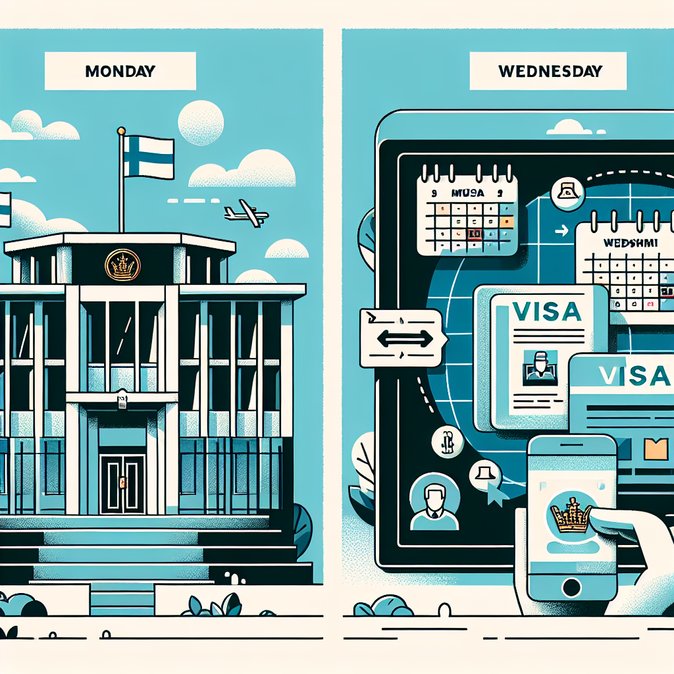
Finnish Embassy in Nairobi trims consular counter to Mondays and Wednesdays from 23 February 2026