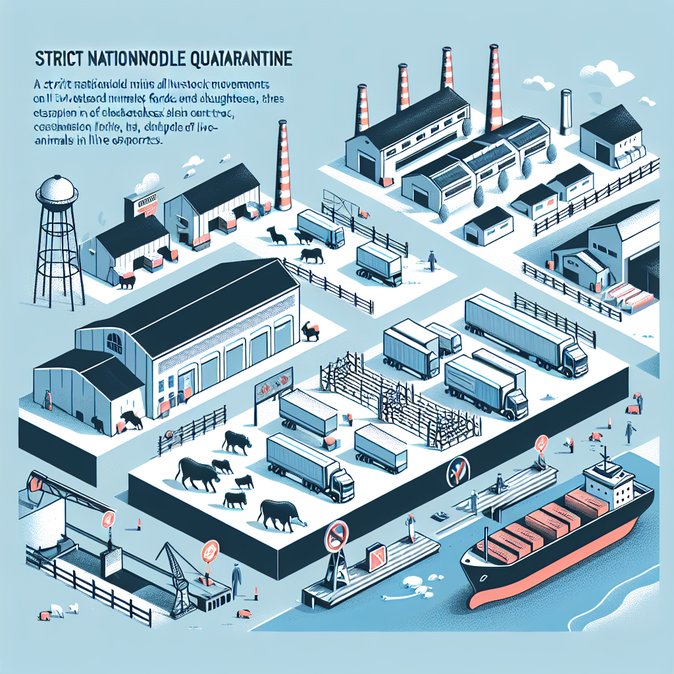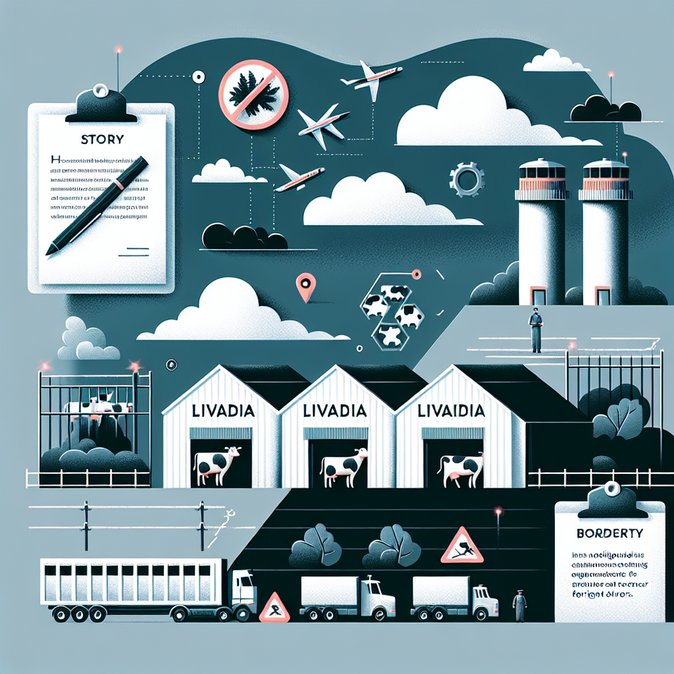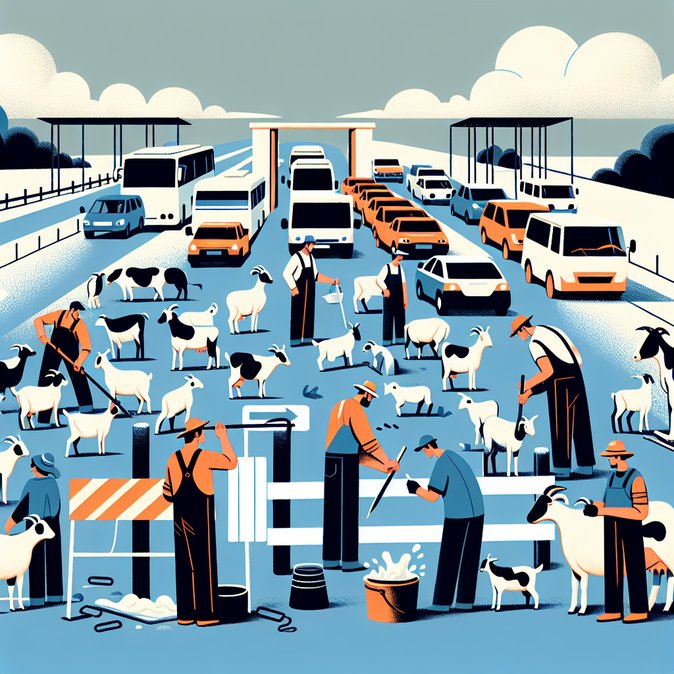
Cyprus’ Veterinary Services placed an urgent call to Brussels on 22 February after fresh laboratory tests showed that the island’s first outbreak of foot-and-mouth disease (FMD) in 60 years was spreading beyond its initial cluster in Livadia. By Sunday afternoon a four-member rapid-response team from the European Commission’s Directorate-General for Health (DG SANTE) was on the ground in Nicosia, beginning a three-day mission to audit bio-security at farms, slaughterhouses and the Republic’s two commercial ports. The experts immediately endorsed a temporary, nationwide stand-still on the movement of cloven-hoofed animals, animal feed and livestock vehicles. All transfers—even to slaughterhouses—now require written permits, while wheel-bath disinfection points are being installed on secondary roads leading to the affected Larnaca district. Farmers have been ordered to keep visitor logs, source feed only from approved origins and report any suspicious symptoms within 24 hours. Heavy fines and possible criminal charges await those who ignore the rules. Although the restrictions focus on cattle, sheep and goat herds, they have wider mobility implications. Cyprus exports small quantities of live pigs and Halloumi-grade milk to neighbouring EU states; both product streams are now suspended pending a follow-up inspection. Importers, meanwhile, are scrambling to reroute chilled meat shipments through Limassol port instead of Larnaca airport, where veterinary staff have been redeployed to field surveillance.
![EU veterinary team lands in Cyprus as nationwide foot-and-mouth restrictions escalate]()
For professionals suddenly contending with evolving entry requirements and emergency health paperwork, VisaHQ can simplify the process. The company’s Cyprus portal (https://www.visahq.com/cyprus/) tracks real-time government advisories and lets travelers secure any necessary visas or declarations online, offering a one-stop solution for firms coordinating urgent staff movements or individuals unsure about the latest rules.
Logistics providers told Phileleftheros they expect clearance delays of 24-48 hours as documentation is checked against the new emergency health certificates. For business-immigration managers the biggest operational challenge is staff travel to rural sites. Companies with expatriate engineers servicing solar parks in Larnaca have been advised to wear disposable cover-alls and to disinfect rental vehicles before returning them. Failure to do so could lead to quarantine of the vehicle—and an on-the-spot administrative fine of €3,000 under Cyprus’ Animal Health Law. Multinationals are also reviewing duty-of-care protocols, reminding assignees that unauthorised farm visits could invalidate corporate travel insurance. Officials stress that human health is not at risk and that the restrictions are expected to be in force for three weeks, subject to negative test results. The EU task-force will present its preliminary findings to agriculture ministers on 26 February, after which a phased relaxation of the ban—starting with intra-island animal movements—will be considered.

For professionals suddenly contending with evolving entry requirements and emergency health paperwork, VisaHQ can simplify the process. The company’s Cyprus portal (https://www.visahq.com/cyprus/) tracks real-time government advisories and lets travelers secure any necessary visas or declarations online, offering a one-stop solution for firms coordinating urgent staff movements or individuals unsure about the latest rules.
Logistics providers told Phileleftheros they expect clearance delays of 24-48 hours as documentation is checked against the new emergency health certificates. For business-immigration managers the biggest operational challenge is staff travel to rural sites. Companies with expatriate engineers servicing solar parks in Larnaca have been advised to wear disposable cover-alls and to disinfect rental vehicles before returning them. Failure to do so could lead to quarantine of the vehicle—and an on-the-spot administrative fine of €3,000 under Cyprus’ Animal Health Law. Multinationals are also reviewing duty-of-care protocols, reminding assignees that unauthorised farm visits could invalidate corporate travel insurance. Officials stress that human health is not at risk and that the restrictions are expected to be in force for three weeks, subject to negative test results. The EU task-force will present its preliminary findings to agriculture ministers on 26 February, after which a phased relaxation of the ban—starting with intra-island animal movements—will be considered.