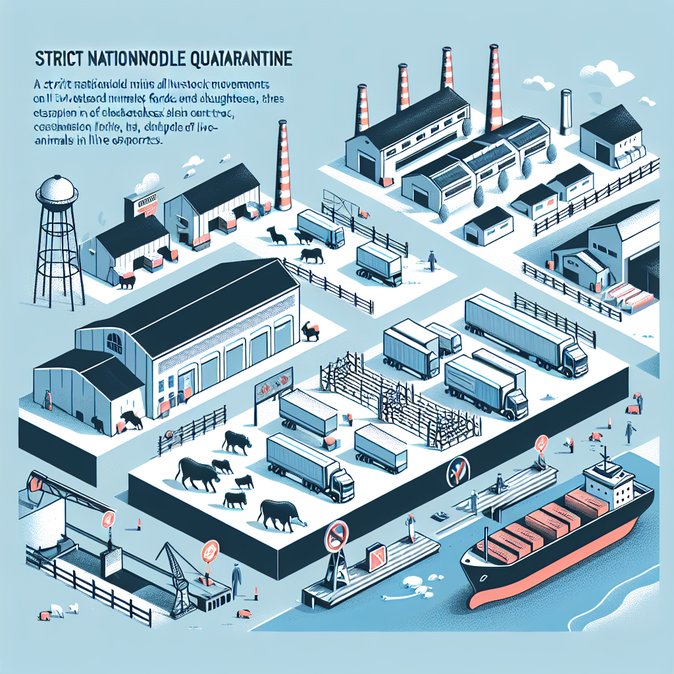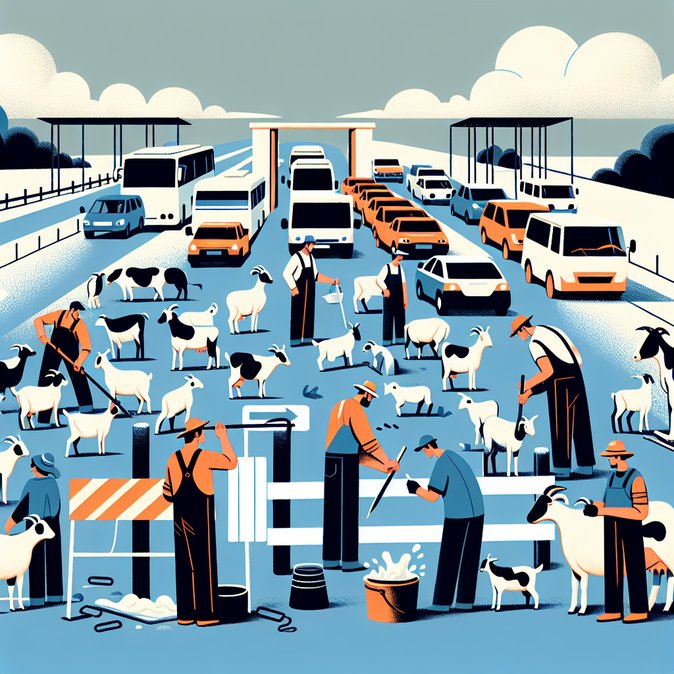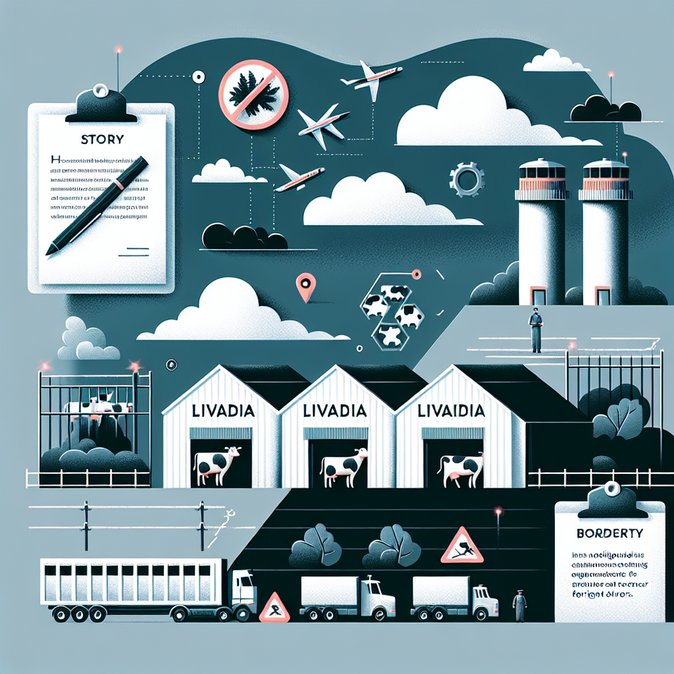
The Veterinary Services’ 6 p.m. bulletin on 22 February revealed that three more livestock units in Livadia tested positive for FMD, bringing the total number of infected farms to six. Director Christodoulos Pipis confirmed that the previously announced movement ban would be enforced nationwide and that sampling teams were being redeployed from Paphos to boost testing capacity. Under Cyprus’ contingency plan, farms within a 10-kilometre radius of an outbreak must install wheel-bath disinfectants, maintain 48-hour visitor logs and allow inspectors unannounced access. Insurance carriers told local media they may suspend cover for farms that fail spot checks—a move that could accelerate voluntary culling and compensation claims. Transport companies servicing the Larnaca dairy belt are bracing for disruptions. One operator said half his drivers are foreign nationals on temporary work visas; HR departments now need to issue official letters explaining why the workers are travelling through police checkpoints.
![Additional Larnaca farms infected as foot-and-mouth crisis widens, movement ban confirmed]()
To ease some of that paperwork burden, firms can tap VisaHQ’s Cyprus portal (https://www.visahq.com/cyprus/), which lets employers and mobile staff confirm visa rules, generate supporting documents, and track application progress in real time—helpful tools when a single checkpoint delay can jeopardise a load of perishable dairy products.
Neighbouring EU states are watching closely. Bulgaria has already announced that any vehicle arriving from Cyprus must undergo tyre disinfection at Black Sea ports, adding €120 to the over-the-road cost of forwarding chilled Halloumi blocks to Eastern European supermarkets. Authorities hope that fast tracing and laboratory surge capacity will prevent the need for an export embargo—a scenario that would undermine Cyprus’ bid to position itself as a logistics hub for the eastern Mediterranean food trade.

To ease some of that paperwork burden, firms can tap VisaHQ’s Cyprus portal (https://www.visahq.com/cyprus/), which lets employers and mobile staff confirm visa rules, generate supporting documents, and track application progress in real time—helpful tools when a single checkpoint delay can jeopardise a load of perishable dairy products.
Neighbouring EU states are watching closely. Bulgaria has already announced that any vehicle arriving from Cyprus must undergo tyre disinfection at Black Sea ports, adding €120 to the over-the-road cost of forwarding chilled Halloumi blocks to Eastern European supermarkets. Authorities hope that fast tracing and laboratory surge capacity will prevent the need for an export embargo—a scenario that would undermine Cyprus’ bid to position itself as a logistics hub for the eastern Mediterranean food trade.