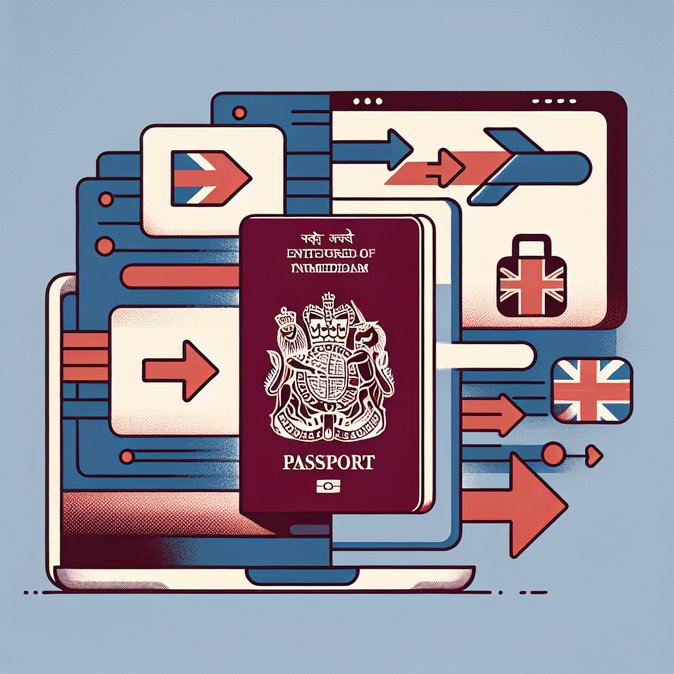
In another step towards a paperless immigration system, the Home Office has confirmed that, from 25 February 2026, all *new* visitor visas issued to Indian citizens will be in digital-only format. Instead of a vignette sticker affixed to a passport, successful applicants will receive an electronic visa stored in a UK Visas & Immigration (UKVI) account and linked to the passport number provided at application. Airlines will verify the e-Visa automatically at check-in and border officers will access the same record on arrival.
![UK scraps physical visa stickers for Indian nationals in favour of fully digital e-Visas]()
For travellers and corporate mobility teams seeking assistance with these new digital permissions, VisaHQ provides an online, end-to-end visa facilitation service. Through its UK platform (https://www.visahq.com/united-kingdom/), applicants can obtain real-time guidance, document verification and status tracking to ensure each e-Visa is properly linked to the correct passport—helping avoid last-minute hiccups at check-in or the border.
For Indian business travellers the change removes the need to surrender passports for sticker endorsement, reducing turnaround time and courier costs. Companies sending staff to the UK on short-notice assignments can expect faster mobilisation, but mobility teams must ensure that employees update their UKVI profile whenever they renew or replace a passport, otherwise the e-Visa will not match the document presented at check-in. The switch is also a live test bed for the UK’s broader digital-status ambitions. Officials say similar roll-outs will follow for work, study and family visas, eventually replacing Biometric Residence Permits with an e-status accessible via smartphone. The move aligns with the UK-India Migration & Mobility Partnership aimed at smoothing talent flows between the two countries. Existing visa-holders need not re-apply: their records will be migrated automatically in phases. However, dual British/Indian nationals must still travel on a UK or Irish passport, or with a Certificate of Entitlement—rules that come into force the same week as the e-Visa launch.

For travellers and corporate mobility teams seeking assistance with these new digital permissions, VisaHQ provides an online, end-to-end visa facilitation service. Through its UK platform (https://www.visahq.com/united-kingdom/), applicants can obtain real-time guidance, document verification and status tracking to ensure each e-Visa is properly linked to the correct passport—helping avoid last-minute hiccups at check-in or the border.
For Indian business travellers the change removes the need to surrender passports for sticker endorsement, reducing turnaround time and courier costs. Companies sending staff to the UK on short-notice assignments can expect faster mobilisation, but mobility teams must ensure that employees update their UKVI profile whenever they renew or replace a passport, otherwise the e-Visa will not match the document presented at check-in. The switch is also a live test bed for the UK’s broader digital-status ambitions. Officials say similar roll-outs will follow for work, study and family visas, eventually replacing Biometric Residence Permits with an e-status accessible via smartphone. The move aligns with the UK-India Migration & Mobility Partnership aimed at smoothing talent flows between the two countries. Existing visa-holders need not re-apply: their records will be migrated automatically in phases. However, dual British/Indian nationals must still travel on a UK or Irish passport, or with a Certificate of Entitlement—rules that come into force the same week as the e-Visa launch.
More From United Kingdom
View all
UK introduces mandatory Electronic Travel Authorisation (ETA) for all visa-exempt visitors from 25 February 2026
Biometric EES, ETIAS and UK ETA: what the 2026 border shake-up means for British holiday-makers and business travellers