
While attention has focused on the UK’s new ETA for inbound visitors, UK residents heading overseas face their own set of sweeping changes in 2026. Travel analysts warn that a confluence of three separate border technology projects—the EU’s Entry/Exit System (EES), the forthcoming European Travel Information and Authorisation System (ETIAS) and the UK’s stricter enforcement of its own ETA—could create bottlenecks at airports and ports during the peak summer getaway. The EES, already live at selected Schengen borders, records fingerprint and facial scans for every non-EU arrival and calculates allowable stay time. For UK passport-holders this means the familiar stamp will disappear, replaced by a biometric record. Full deployment is scheduled for 10 April 2026, so British travellers heading to Spain for Easter or France for the summer Olympics should expect longer processing times as officers capture biometrics for the first time. Later in 2026 (date to be confirmed), ETIAS will add another pre-travel layer: Britons will pay around €20 and complete an online questionnaire similar to the US ESTA. Although ETIAS applications are expected to be approved quickly, corporates sending staff to multiple EU states will need to track validity (three years or until passport expiry) and ensure applications are lodged well before departure to avoid last-minute trip cancellations.
![Biometric EES, ETIAS and UK ETA: what the 2026 border shake-up means for British holiday-makers and business travellers]()
To help travellers navigate these overlapping schemes, VisaHQ provides a centralised portal (https://www.visahq.com/united-kingdom/) where UK citizens and corporate travel managers can begin ETIAS or UK ETA applications, monitor upcoming expiries and receive automated reminders—minimising the risk of delays or denied boarding.
Complicating matters, the UK’s own ETA regime for *incoming* visitors begins enforcement on 25 February 2026. That affects inbound clients and colleagues from the US, Canada, Australia and many Asian markets—and means airlines departing European hubs for the UK will be responsible for checking both ETIAS (outbound) and ETA (inbound) documents on the same passenger manifest. Travel managers are advised to brief staff to arrive at ports at least 90 minutes before short-haul departures, factor the €20 ETIAS fee into budgets and update traveller-tracking systems to flag imminent ETIAS expiry. Dual UK/EU citizens should be reminded to travel with the passport that avoids ETIAS and EES processing where possible.

To help travellers navigate these overlapping schemes, VisaHQ provides a centralised portal (https://www.visahq.com/united-kingdom/) where UK citizens and corporate travel managers can begin ETIAS or UK ETA applications, monitor upcoming expiries and receive automated reminders—minimising the risk of delays or denied boarding.
Complicating matters, the UK’s own ETA regime for *incoming* visitors begins enforcement on 25 February 2026. That affects inbound clients and colleagues from the US, Canada, Australia and many Asian markets—and means airlines departing European hubs for the UK will be responsible for checking both ETIAS (outbound) and ETA (inbound) documents on the same passenger manifest. Travel managers are advised to brief staff to arrive at ports at least 90 minutes before short-haul departures, factor the €20 ETIAS fee into budgets and update traveller-tracking systems to flag imminent ETIAS expiry. Dual UK/EU citizens should be reminded to travel with the passport that avoids ETIAS and EES processing where possible.
More From United Kingdom
View all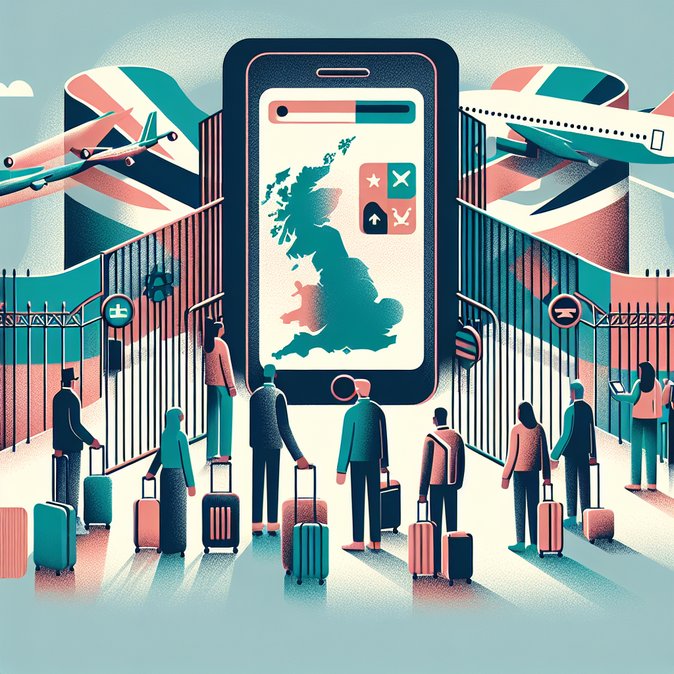
UK introduces mandatory Electronic Travel Authorisation (ETA) for all visa-exempt visitors from 25 February 2026
UK scraps physical visa stickers for Indian nationals in favour of fully digital e-Visas