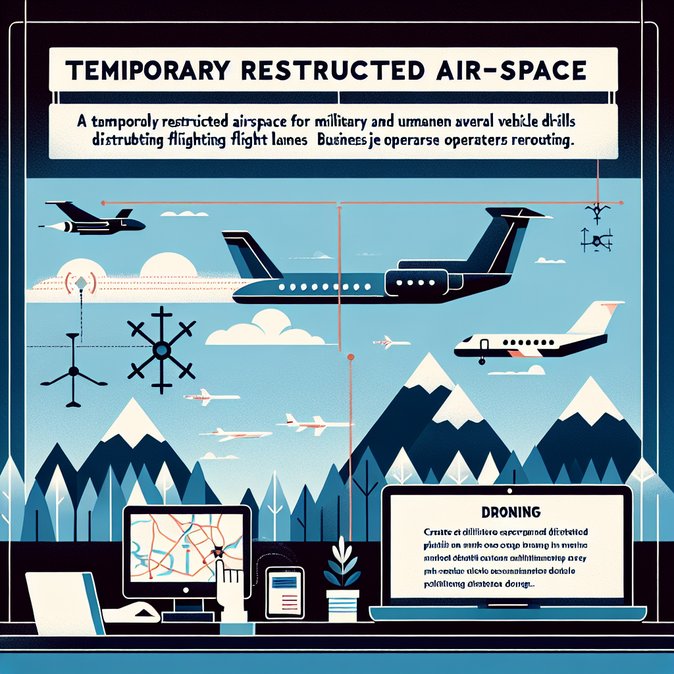
Fintraffic ANS has confirmed that temporary restricted area EFR643 Ketola, activated on 4 February 2026 for combined military flight and unmanned-aircraft operations, was deactivated at 21:59 UTC on 22 February 2026 as planned. The AIP Supplement (008/2026) established a surface-to-FL70 no-fly zone of roughly 600 km² in the eastern Helsinki FIR, limiting civilian traffic while the Finnish Defence Forces tested swarming drones and electronic-warfare counter-measures.
![Finland Closes Temporary Restricted Airspace EFR643 after Three-Week Military-UAV Exercise]()
While airspace constraints are largely an operational concern, every trip also starts with the right travel documents. VisaHQ’s Finland portal (https://www.visahq.com/finland/) streamlines visa and e-permit applications for crew members, technical staff, and passengers, offering real-time status updates and expert support so that regulatory paperwork doesn’t become another bottleneck when schedules already flex around restricted areas.
During the exercise, general-aviation pilots and commercial carriers were required to file reroutes or obtain specific clearances; exemptions applied only to state aircraft—Border Guard, police, customs, search-and-rescue and urgent HEMS flights. Finnair reported minor schedule adjustments on two domestic routes, while regional airline Norra tacked on an average of five minutes’ flight time per sector to skirt the zone. The closure coincided with peak north-bound leisure traffic for the winter-holiday season; charter operators serving Lapland resorts had to coordinate carefully with air-navigation services to avoid last-minute slot changes. Forwarders moving high-value goods by air cargo also faced restricted routings, prompting some to shift shipments to road or rail. The exercise highlights Finland’s expanding use of restricted airspace to integrate unmanned systems with conventional forces—knowledge deemed crucial since the country joined NATO in 2024. Mobility managers should expect more such activations: the Defence Forces’ 2027 roadmap foresees at least four large-scale UAV drills each year, with notice periods as short as 24 hours via NOTAM. Companies operating corporate jets or drones in Finland should subscribe to Fintraffic’s digital briefing service and build buffer time into travel schedules when planning flights from mid-winter through early spring. Aviation insurers note that operating in violation of an active TRA can void hull- and third-party liability cover, underscoring the need for robust flight-planning compliance. With EFR643 now released back to normal use, carriers have resumed shortest-track routings, but the episode is a reminder that Finland’s defence exercises can have immediate knock-on effects for commercial mobility.

While airspace constraints are largely an operational concern, every trip also starts with the right travel documents. VisaHQ’s Finland portal (https://www.visahq.com/finland/) streamlines visa and e-permit applications for crew members, technical staff, and passengers, offering real-time status updates and expert support so that regulatory paperwork doesn’t become another bottleneck when schedules already flex around restricted areas.
During the exercise, general-aviation pilots and commercial carriers were required to file reroutes or obtain specific clearances; exemptions applied only to state aircraft—Border Guard, police, customs, search-and-rescue and urgent HEMS flights. Finnair reported minor schedule adjustments on two domestic routes, while regional airline Norra tacked on an average of five minutes’ flight time per sector to skirt the zone. The closure coincided with peak north-bound leisure traffic for the winter-holiday season; charter operators serving Lapland resorts had to coordinate carefully with air-navigation services to avoid last-minute slot changes. Forwarders moving high-value goods by air cargo also faced restricted routings, prompting some to shift shipments to road or rail. The exercise highlights Finland’s expanding use of restricted airspace to integrate unmanned systems with conventional forces—knowledge deemed crucial since the country joined NATO in 2024. Mobility managers should expect more such activations: the Defence Forces’ 2027 roadmap foresees at least four large-scale UAV drills each year, with notice periods as short as 24 hours via NOTAM. Companies operating corporate jets or drones in Finland should subscribe to Fintraffic’s digital briefing service and build buffer time into travel schedules when planning flights from mid-winter through early spring. Aviation insurers note that operating in violation of an active TRA can void hull- and third-party liability cover, underscoring the need for robust flight-planning compliance. With EFR643 now released back to normal use, carriers have resumed shortest-track routings, but the episode is a reminder that Finland’s defence exercises can have immediate knock-on effects for commercial mobility.