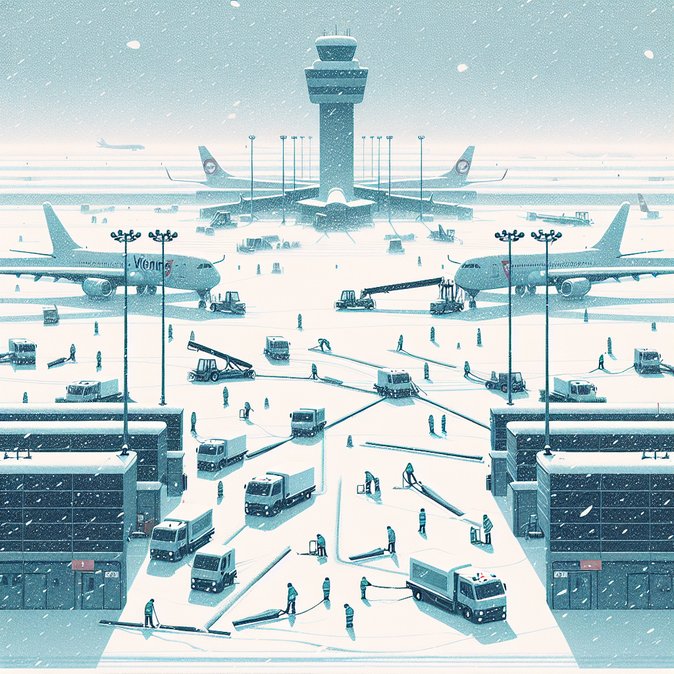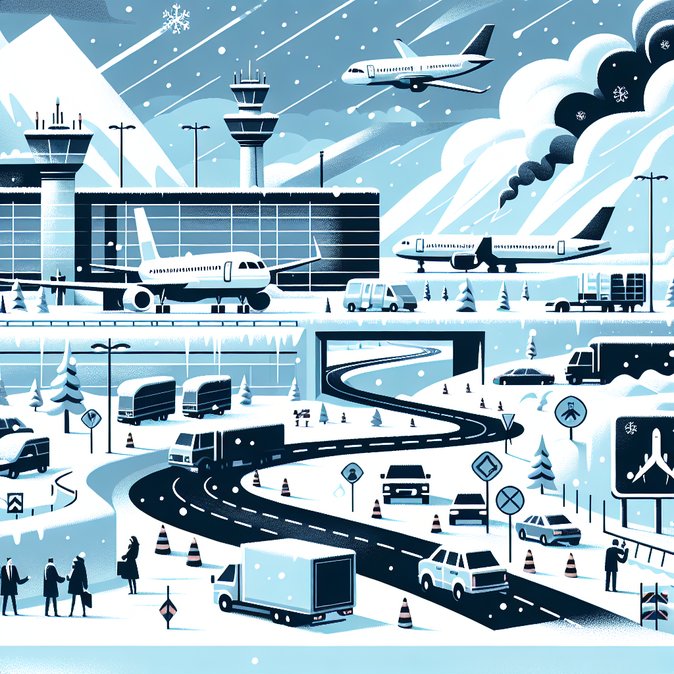
A powerful Mediterranean low swept across the Alps on 20–21 February, dumping up to 50 centimetres of snow and paralysing large parts of Austria. Authorities in Tyrol, Salzburg and Styria issued the highest avalanche warnings, and three people lost their lives in separate snow-slip incidents near Nauders and St. Anton. At the height of the storm Vienna International Airport suspended all movements for seven hours, cancelling more than 150 flights—including around 100 operated by Austrian Airlines—and forcing long-haul services from Asia and North America to divert to Munich and Prague.
![Blizzard Shuts Roads and Airports, Triggers Fatal Avalanches Across Austria]()
Travellers scrambling to rebook during the shutdown discovered that paperwork can be as critical as plane tickets: VisaHQ’s Austria hub (https://www.visahq.com/austria/) provides rapid visa checks, passport couriering and document renewal options, enabling both corporate mobility teams and stranded tourists to reroute through neighbouring countries without administrative headaches.
Regional airports in Graz, Klagenfurt and Salzburg also imposed temporary closures, while ÖBB warned rail passengers of multi-hour delays as overhead lines iced over. Road freight was equally hard-hit: the A21 Wiener Außenring Autobahn and sections of the Semmering S6 closed to lorries, stranding hundreds of HGVs and disrupting just-in-time deliveries to automotive plants in Upper Austria. The logistics association ZV Spedition & Logistik estimated direct costs at €4.5 million per lost day. Energy utilities battled outages affecting 30,000 Austrian and 40,000 Slovenian households, complicating remote-work contingencies for multinationals with staff in the region. GeoSphere Austria—the national weather service—confirmed that Vienna had not seen such intense February snowfall in more than two decades. Climate scientists argue that warming winters can paradoxically generate heavier single-event snowfalls as moist southern air masses collide with polar outbreaks, hinting that extreme-weather playbooks must now cover scenarios once deemed ‘once-in-a-generation.’ For mobility managers the blizzard underscores the value of multi-modal backup plans: companies with pre-approved cross-border rail options and hotel blocks in Linz for diverted crews reported faster recovery times. Insurance brokers expect a spike in claims for missed connections and perishable-goods spoilage, likely pushing up premiums on critical winter trade lanes.

Travellers scrambling to rebook during the shutdown discovered that paperwork can be as critical as plane tickets: VisaHQ’s Austria hub (https://www.visahq.com/austria/) provides rapid visa checks, passport couriering and document renewal options, enabling both corporate mobility teams and stranded tourists to reroute through neighbouring countries without administrative headaches.
Regional airports in Graz, Klagenfurt and Salzburg also imposed temporary closures, while ÖBB warned rail passengers of multi-hour delays as overhead lines iced over. Road freight was equally hard-hit: the A21 Wiener Außenring Autobahn and sections of the Semmering S6 closed to lorries, stranding hundreds of HGVs and disrupting just-in-time deliveries to automotive plants in Upper Austria. The logistics association ZV Spedition & Logistik estimated direct costs at €4.5 million per lost day. Energy utilities battled outages affecting 30,000 Austrian and 40,000 Slovenian households, complicating remote-work contingencies for multinationals with staff in the region. GeoSphere Austria—the national weather service—confirmed that Vienna had not seen such intense February snowfall in more than two decades. Climate scientists argue that warming winters can paradoxically generate heavier single-event snowfalls as moist southern air masses collide with polar outbreaks, hinting that extreme-weather playbooks must now cover scenarios once deemed ‘once-in-a-generation.’ For mobility managers the blizzard underscores the value of multi-modal backup plans: companies with pre-approved cross-border rail options and hotel blocks in Linz for diverted crews reported faster recovery times. Insurance brokers expect a spike in claims for missed connections and perishable-goods spoilage, likely pushing up premiums on critical winter trade lanes.