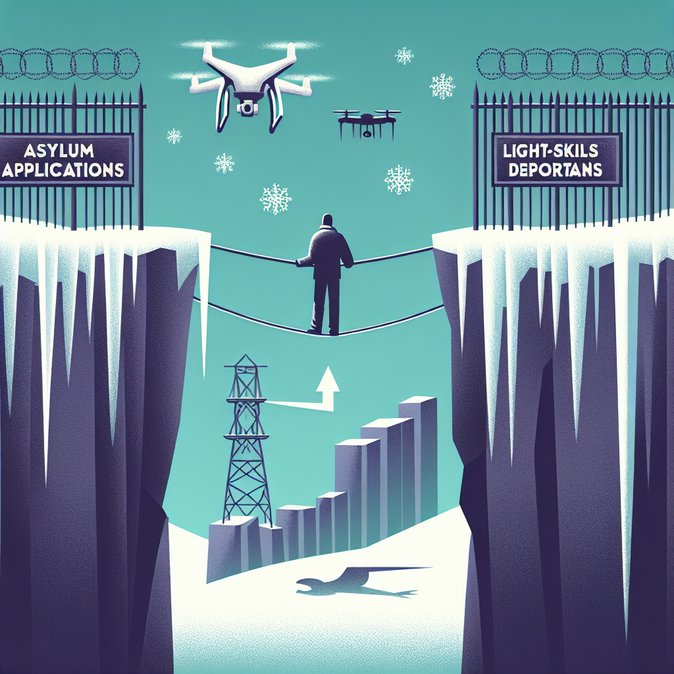
Austria’s Interior Ministry has released its first asylum statistics for 2026 and they show a dramatic contraction: only 945 people applied for protection in January, the lowest figure for that month since 2012 and a 51 percent drop compared with January 2025. The fall is driven by multiple factors. Most significant is the government’s freeze on family-reunification visas, in force until at least mid-2026, which limited such entries to a single case in January.
![Austria Sees 51 % Year-on-Year Plunge in January Asylum Applications]()
Amid these tighter rules, VisaHQ can be an invaluable partner for both individuals and companies needing to secure Austrian visas or work permits; its digital platform (https://www.visahq.com/austria/) offers step-by-step guidance, document checks and appointment scheduling, reducing errors and saving time for applicants navigating the Red-White-Red Card, shortage-occupation or family-reunification processes.
Tighter border policing along the Balkan route, joint patrols with neighbouring countries and an accelerated deportation programme—1,083 departures in January, 57 percent of them forced—have also cooled irregular inflows. Of the applications lodged, Syrians, Afghans and Somalis accounted for the bulk, though none exceeded 50 claims, indicating a highly fragmented caseload. First-time applicants (421) outnumbered repeat or reopened cases, while the gender split (55 percent male) and age profile (51 percent adults) suggest the shrinking pipeline is slightly older and more balanced than in previous years. For employers the numbers have a double edge. Fewer asylum seekers ease pressure on reception centres yet shrink a labour pool that many provinces had tapped for entry-level vacancies. At the same time, the Interior Ministry confirmed 338 positive decisions and 315 grants of subsidiary protection in January—status holders who are immediately eligible for the labour market under Austria’s integration model. Immigration counsel say the data foreshadow a tighter environment for humanitarian hiring in 2026. Corporations that depend on low-skill labour are advised to explore the expanded shortage-occupation list under the 2026 Fachkräfteverordnung or leverage the Red-White-Red Card for higher-skilled roles, as humanitarian channels alone will not meet demand.

Amid these tighter rules, VisaHQ can be an invaluable partner for both individuals and companies needing to secure Austrian visas or work permits; its digital platform (https://www.visahq.com/austria/) offers step-by-step guidance, document checks and appointment scheduling, reducing errors and saving time for applicants navigating the Red-White-Red Card, shortage-occupation or family-reunification processes.
Tighter border policing along the Balkan route, joint patrols with neighbouring countries and an accelerated deportation programme—1,083 departures in January, 57 percent of them forced—have also cooled irregular inflows. Of the applications lodged, Syrians, Afghans and Somalis accounted for the bulk, though none exceeded 50 claims, indicating a highly fragmented caseload. First-time applicants (421) outnumbered repeat or reopened cases, while the gender split (55 percent male) and age profile (51 percent adults) suggest the shrinking pipeline is slightly older and more balanced than in previous years. For employers the numbers have a double edge. Fewer asylum seekers ease pressure on reception centres yet shrink a labour pool that many provinces had tapped for entry-level vacancies. At the same time, the Interior Ministry confirmed 338 positive decisions and 315 grants of subsidiary protection in January—status holders who are immediately eligible for the labour market under Austria’s integration model. Immigration counsel say the data foreshadow a tighter environment for humanitarian hiring in 2026. Corporations that depend on low-skill labour are advised to explore the expanded shortage-occupation list under the 2026 Fachkräfteverordnung or leverage the Red-White-Red Card for higher-skilled roles, as humanitarian channels alone will not meet demand.