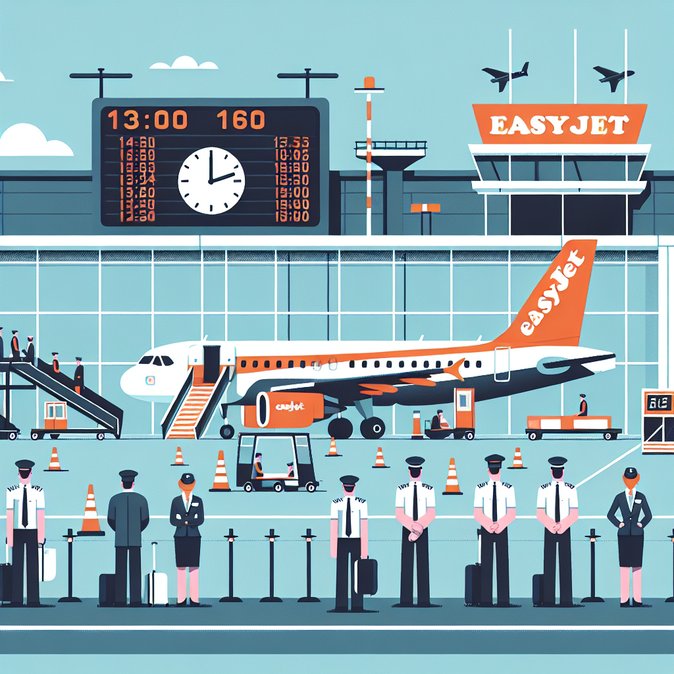
Budget carrier easyJet warned customers on 30 January that its Italian pilots and cabin crew will stage a nationwide four-hour strike on Saturday, 31 January, from 13:00 to 17:00. The walk-out, called by unions ANPAC and USB Lavoro Aereo, falls outside Italy’s ‘protected flight’ windows, meaning a significant number of services could legally be cancelled. Airports in Milan-Malpensa, Rome-Fiumicino, Naples and Venice are expected to be hardest hit, but UK-bound rotations may also suffer knock-on delays.
The dispute centres on post-pandemic wage alignment, roster stability and the integration of new A321neo aircraft. Although easyJet says it has contingency crews on standby and hopes to operate a skeleton schedule, it has urged passengers to check the mobile app frequently and offered free re-booking or refunds. Under EU 261/2004 rules, travellers could be entitled to compensation of up to €600 if delays exceed three hours and the strike is deemed within the airline’s control.
![EasyJet crews plan 31 January strike, threatening afternoon flight chaos across Italy]()
For corporate travel managers the timing is awkward: 31 January is month-end close for many multinationals, and Milan Fashion Week build-up traffic is already increasing seat demand. HR teams should alert assignees flying that afternoon, especially those making tight connections onward to non-Schengen destinations where re-routing options are limited.
If the disruption forces an unexpected change of plans—such as rerouting through another country or extending a stay in Italy—VisaHQ can streamline any last-minute visa or passport formalities. The service offers rapid online processing for Schengen renewals and up-to-date documentation guidance for onward destinations, all accessible at https://www.visahq.com/italy/
While a four-hour stoppage may seem minor, Italy’s fragmented labour landscape means additional local strikes can materialise with little notice. Organisations with regular intra-EU shuttles should maintain a vendor-agnostic contingency plan and encourage employees to save boarding passes as proof for any future compensation claims.
The dispute centres on post-pandemic wage alignment, roster stability and the integration of new A321neo aircraft. Although easyJet says it has contingency crews on standby and hopes to operate a skeleton schedule, it has urged passengers to check the mobile app frequently and offered free re-booking or refunds. Under EU 261/2004 rules, travellers could be entitled to compensation of up to €600 if delays exceed three hours and the strike is deemed within the airline’s control.

For corporate travel managers the timing is awkward: 31 January is month-end close for many multinationals, and Milan Fashion Week build-up traffic is already increasing seat demand. HR teams should alert assignees flying that afternoon, especially those making tight connections onward to non-Schengen destinations where re-routing options are limited.
If the disruption forces an unexpected change of plans—such as rerouting through another country or extending a stay in Italy—VisaHQ can streamline any last-minute visa or passport formalities. The service offers rapid online processing for Schengen renewals and up-to-date documentation guidance for onward destinations, all accessible at https://www.visahq.com/italy/
While a four-hour stoppage may seem minor, Italy’s fragmented labour landscape means additional local strikes can materialise with little notice. Organisations with regular intra-EU shuttles should maintain a vendor-agnostic contingency plan and encourage employees to save boarding passes as proof for any future compensation claims.