The European Commission used its 29 January press conference in Brussels to publish three closely-linked documents that will shape the Schengen area’s people-flows until 2031: (1) a European Strategy for Asylum and Migration Management, (2) an EU Visa Policy Strategy, and (3) a Recommendation on Attracting Global Talent. Although the texts are aimed at all 27 Member States, the Austrian Representation to the EU highlighted in a same-day release that Vienna had pushed hard for the talent pillar during negotiations. Interior Commissioner Magnus Brunner – himself an Austrian national – told reporters that Europe must “lower irregular arrivals but raise selective, skills-based entries.” (austria.representation.ec.europa.eu)
For global mobility managers the most eye-catching proposals are practical. First, Brussels wants a single digital application environment for all short-stay (C) visas by 2028, replacing the current patchwork of consular websites. Second, Member States would be obliged to decide 90 % of work-visa and Blue-Card files within 45 days. Third, the Commission calls for a pan-EU “Talent Pool” where employers can search qualified third-country nationals who have registered interest in moving. Austria’s Wirtschaftskammer (Chamber of Commerce) has long argued for such a matching platform, noting that its own job vacancy rate of 4.3 % is the highest since records began.
Global mobility teams that need hands-on assistance with these upcoming changes can leverage VisaHQ’s services. Through its Austria portal (https://www.visahq.com/austria/) the firm consolidates real-time visa requirements, processing times and digital application options, and will update its tools as the EU’s single online platform and faster work-permit pathways come into force.
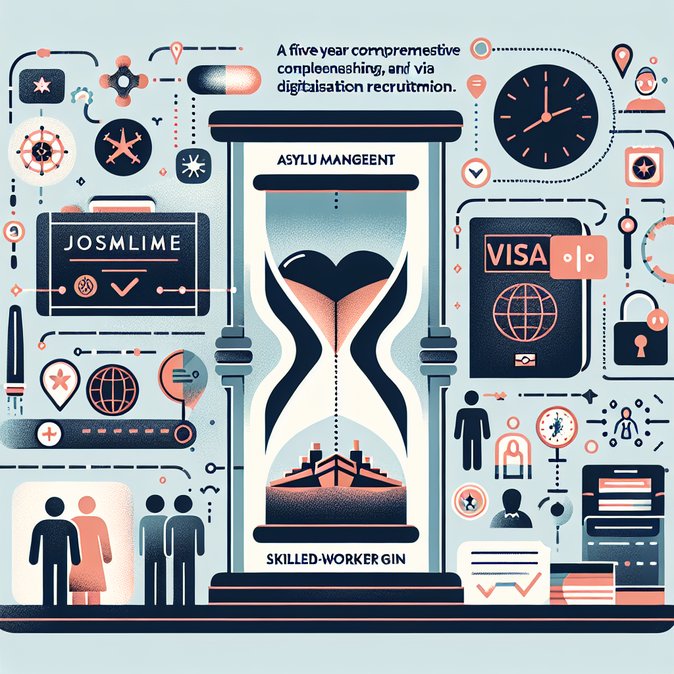
![European Commission Unveils Five-Year Migration and Visa Strategy, Vienna Welcomes Talent Attraction Focus]()
On the enforcement side the strategy doubles down on border technology. All Schengen countries, including Austria, must be live on the biometric Entry/Exit System (EES) by 10 April 2026 and link it to their asylum databases. A separate proposal would let Frontex deploy up to 10 000 guards along the Western Balkan route—Vienna’s main concern—within 72 hours of a surge. Funding for these measures will come from a €3 billion top-up to the EU’s Integrated Border Management Fund.
Austria’s reaction has been broadly positive. The Interior Ministry welcomed stricter return provisions but stressed that talent programmes “must not become back-doors for abuse.” Employer groups, meanwhile, focused on the opportunity: under the draft, Member States may run national fast-track schemes for occupations facing shortages. Vienna is expected to lobby for adding mechanical engineers, IT specialists and geriatric nurses to the EU-wide shortage list, which would automatically entitle candidates to a simplified visa.
Next steps are swift. The Council and Parliament will begin trilogue negotiations in March, aiming for adoption before the summer recess. Companies should therefore prepare now for shorter visa lead-times, additional biometric compliance at Austrian borders and new recruitment channels that could cut sourcing costs for hard-to-fill roles.
For global mobility managers the most eye-catching proposals are practical. First, Brussels wants a single digital application environment for all short-stay (C) visas by 2028, replacing the current patchwork of consular websites. Second, Member States would be obliged to decide 90 % of work-visa and Blue-Card files within 45 days. Third, the Commission calls for a pan-EU “Talent Pool” where employers can search qualified third-country nationals who have registered interest in moving. Austria’s Wirtschaftskammer (Chamber of Commerce) has long argued for such a matching platform, noting that its own job vacancy rate of 4.3 % is the highest since records began.
Global mobility teams that need hands-on assistance with these upcoming changes can leverage VisaHQ’s services. Through its Austria portal (https://www.visahq.com/austria/) the firm consolidates real-time visa requirements, processing times and digital application options, and will update its tools as the EU’s single online platform and faster work-permit pathways come into force.

On the enforcement side the strategy doubles down on border technology. All Schengen countries, including Austria, must be live on the biometric Entry/Exit System (EES) by 10 April 2026 and link it to their asylum databases. A separate proposal would let Frontex deploy up to 10 000 guards along the Western Balkan route—Vienna’s main concern—within 72 hours of a surge. Funding for these measures will come from a €3 billion top-up to the EU’s Integrated Border Management Fund.
Austria’s reaction has been broadly positive. The Interior Ministry welcomed stricter return provisions but stressed that talent programmes “must not become back-doors for abuse.” Employer groups, meanwhile, focused on the opportunity: under the draft, Member States may run national fast-track schemes for occupations facing shortages. Vienna is expected to lobby for adding mechanical engineers, IT specialists and geriatric nurses to the EU-wide shortage list, which would automatically entitle candidates to a simplified visa.
Next steps are swift. The Council and Parliament will begin trilogue negotiations in March, aiming for adoption before the summer recess. Companies should therefore prepare now for shorter visa lead-times, additional biometric compliance at Austrian borders and new recruitment channels that could cut sourcing costs for hard-to-fill roles.