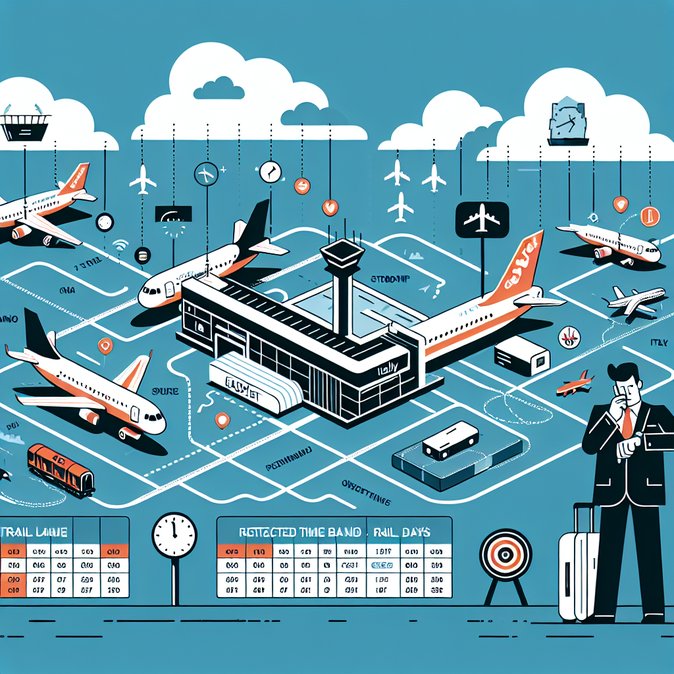
Italy is bracing for another bout of aviation disruption after pilots’ union ANPAC and cabin-crew union USB Lavoro Aereo formally served strike notice on easyJet for Saturday, 31 January 2026. The coordinated walk-out will run from 13:00 to 17:00 local time and will apply to every base where the UK low-cost carrier stations crews, including Milan-Malpensa, Milan-Linate, Rome-Fiumicino, Naples, Venice, Bari and Catania.
Under Italy’s strike-protection law, flights scheduled in the so-called “guaranteed bands” (07:00-10:00 and 18:00-21:00) should operate, but services in the four-hour window risk delay or cancellation. The carrier flies more than 360 sectors on a typical winter Saturday; trade-union data suggest about a third of those could be scrubbed if the strike goes ahead unabated.
Talks broke down last week over roster-fatigue rules introduced when easyJet added aggressive frequency growth on Italy domestic routes to compete with ITA Airways and Ryanair. Crews complain duty days frequently “creep” to the legal maximum because of chronic ground-handling bottlenecks at Malpensa and Fiumicino. EasyJet says it has offered a 6 % pay rise and additional rest days but cannot meet all demands without cutting capacity.
![easyJet crews to stage four-hour nationwide strike in Italy on 31 January]()
Amid these uncertainties, travellers should also double-check that their travel documents are in order. VisaHQ’s online platform (https://www.visahq.com/italy/) streamlines Italy visa applications with step-by-step guidance, real-time status updates and secure courier return, giving passengers one less thing to worry about as they juggle rebookings or alternative itineraries during the strike window.
For business travellers the timing is awkward: 31 January coincides with the first weekend of Fieragricola in Verona and the opening of fashion-buying season in Milan. Travel-managers with critical itineraries are advising executives to rebook onto early-morning departures, rail alternatives such as Trenitalia’s Frecciarossa, or even cars for sub-400-kilometre trips. Cargo forwarders moving high-value fashion samples are eyeing road-feeder services to Zurich, Munich and Nice.
Historically, Italian civil-aviation strikes have a cascading effect: aircraft and crews displaced during the stoppage create knock-on delays well into the evening bank and, in some cases, the following morning; meetings scheduled for Monday 3 February could therefore also be affected. EasyJet says it will publish a protected-flight list 48 hours in advance and has activated its “Travel Options” policy allowing free rebooking, rerouting or refunds.
The episode underscores the volatility of Italy’s industrial-relations climate as airlines, handlers and air-traffic providers negotiate new contracts ahead of the 2026 Winter Olympics. Multinational firms with large commuter populations into Milan, Rome and the north-east should build extra slack into mobility budgets through Q1 2026.
Under Italy’s strike-protection law, flights scheduled in the so-called “guaranteed bands” (07:00-10:00 and 18:00-21:00) should operate, but services in the four-hour window risk delay or cancellation. The carrier flies more than 360 sectors on a typical winter Saturday; trade-union data suggest about a third of those could be scrubbed if the strike goes ahead unabated.
Talks broke down last week over roster-fatigue rules introduced when easyJet added aggressive frequency growth on Italy domestic routes to compete with ITA Airways and Ryanair. Crews complain duty days frequently “creep” to the legal maximum because of chronic ground-handling bottlenecks at Malpensa and Fiumicino. EasyJet says it has offered a 6 % pay rise and additional rest days but cannot meet all demands without cutting capacity.
Amid these uncertainties, travellers should also double-check that their travel documents are in order. VisaHQ’s online platform (https://www.visahq.com/italy/) streamlines Italy visa applications with step-by-step guidance, real-time status updates and secure courier return, giving passengers one less thing to worry about as they juggle rebookings or alternative itineraries during the strike window.
For business travellers the timing is awkward: 31 January coincides with the first weekend of Fieragricola in Verona and the opening of fashion-buying season in Milan. Travel-managers with critical itineraries are advising executives to rebook onto early-morning departures, rail alternatives such as Trenitalia’s Frecciarossa, or even cars for sub-400-kilometre trips. Cargo forwarders moving high-value fashion samples are eyeing road-feeder services to Zurich, Munich and Nice.
Historically, Italian civil-aviation strikes have a cascading effect: aircraft and crews displaced during the stoppage create knock-on delays well into the evening bank and, in some cases, the following morning; meetings scheduled for Monday 3 February could therefore also be affected. EasyJet says it will publish a protected-flight list 48 hours in advance and has activated its “Travel Options” policy allowing free rebooking, rerouting or refunds.
The episode underscores the volatility of Italy’s industrial-relations climate as airlines, handlers and air-traffic providers negotiate new contracts ahead of the 2026 Winter Olympics. Multinational firms with large commuter populations into Milan, Rome and the north-east should build extra slack into mobility budgets through Q1 2026.