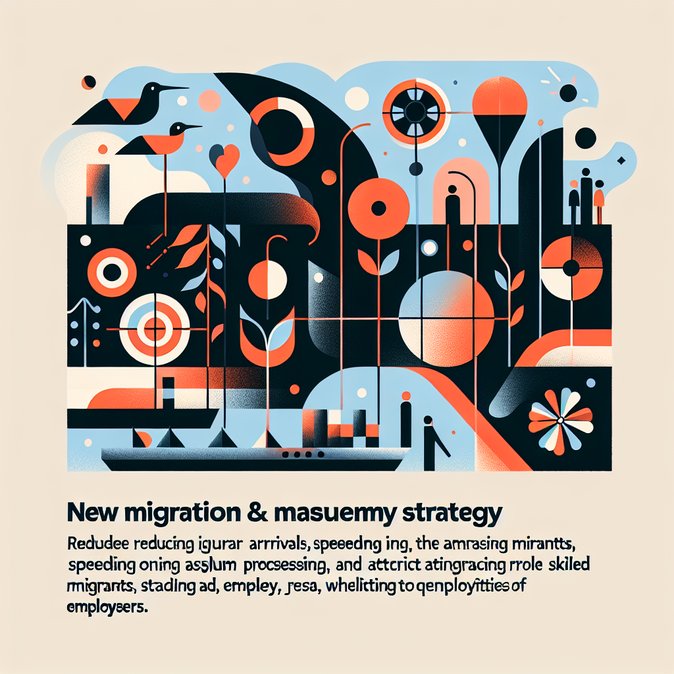
Alongside the Visa Strategy, the European Commission on 29 January 2026 released a broader European Strategy for Asylum and Migration Management. Presented in German by the Commission’s representation in Vienna, the blueprint sets political priorities up to 2031 and will steer legislative work on the long-awaited Pact on Migration and Asylum and the revamped Schengen Borders Code.
For Austria—one of only two Schengen countries still operating internal border controls with three neighbouring states—the roadmap is politically sensitive. EU Home-Affairs Commissioner Magnus Brunner, himself Austrian, said the objective is to keep irregular arrivals “permanently low” while harnessing legal migration to fill skills gaps. Vienna’s Social-Partner organisations immediately called for rapid transposition so that Austria can phase-out costly temporary border checks at the Brenner Pass and along the Hungarian frontier.
Key measures include front-loading EU funds for reception infrastructure, a mandatory screening and fast-track return procedure at external borders, and a talent-attraction recommendation aimed at easing long-stay research and start-up permits. The latter dovetails with Austria’s own plan to digitalise Rot-Weiß-Rot Card applications.
![Brussels Publishes Five-Year Migration & Asylum Roadmap—Austrian Stakeholders React]()
Corporate relocation managers should note that the Commission wants Member States to guarantee electronic filing for long-stay visas by 2028 and to recognise qualifications more swiftly. Multinationals running regional headquarters out of Vienna may therefore see faster intra-EU mobility for their non-EU managers.
Companies and individuals seeking to stay ahead of these changes can tap VisaHQ’s expertise. Through its Austria portal (https://www.visahq.com/austria/), the service aggregates the latest requirements for Rot-Weiß-Rot Cards, research permits and Schengen visas, offers document-preparation tools, and lets users track applications online—saving time while Austria and the EU roll out full digital filing.
Parliamentary debate is expected in Austria in February, where parties will scrutinise burden-sharing obligations. Employers’ federation WKÖ has already urged the government to focus on the talent-attraction chapter, warning that Austria’s IT sector alone faces a shortfall of 24,000 specialists by 2027.
For Austria—one of only two Schengen countries still operating internal border controls with three neighbouring states—the roadmap is politically sensitive. EU Home-Affairs Commissioner Magnus Brunner, himself Austrian, said the objective is to keep irregular arrivals “permanently low” while harnessing legal migration to fill skills gaps. Vienna’s Social-Partner organisations immediately called for rapid transposition so that Austria can phase-out costly temporary border checks at the Brenner Pass and along the Hungarian frontier.
Key measures include front-loading EU funds for reception infrastructure, a mandatory screening and fast-track return procedure at external borders, and a talent-attraction recommendation aimed at easing long-stay research and start-up permits. The latter dovetails with Austria’s own plan to digitalise Rot-Weiß-Rot Card applications.

Corporate relocation managers should note that the Commission wants Member States to guarantee electronic filing for long-stay visas by 2028 and to recognise qualifications more swiftly. Multinationals running regional headquarters out of Vienna may therefore see faster intra-EU mobility for their non-EU managers.
Companies and individuals seeking to stay ahead of these changes can tap VisaHQ’s expertise. Through its Austria portal (https://www.visahq.com/austria/), the service aggregates the latest requirements for Rot-Weiß-Rot Cards, research permits and Schengen visas, offers document-preparation tools, and lets users track applications online—saving time while Austria and the EU roll out full digital filing.
Parliamentary debate is expected in Austria in February, where parties will scrutinise burden-sharing obligations. Employers’ federation WKÖ has already urged the government to focus on the talent-attraction chapter, warning that Austria’s IT sector alone faces a shortfall of 24,000 specialists by 2027.