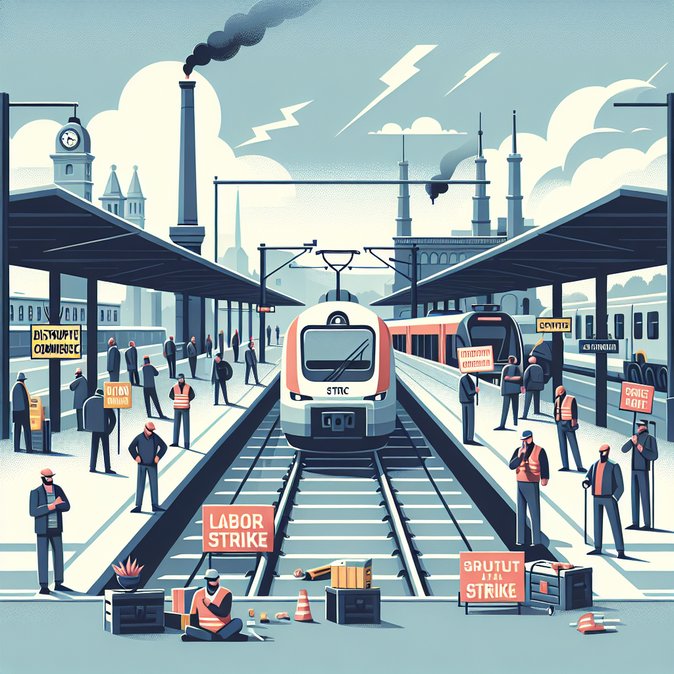
Germany’s fourth—and longest—rail strike in 14 months is now in its third day, with 80 percent of long-distance Deutsche Bahn (DB) services and large parts of the regional network cancelled. The walk-out, called by the train-drivers’ union GDL, began at 2 a.m. on 24 January and is scheduled to run until 6 p.m. on 29 January, spanning the working week and the final weekend of January sales season.
GDL is demanding a €555 monthly pay rise, a €3,000 inflation-bonus and a reduction of the shift-work week from 38 to 35 hours with no loss in pay. DB has offered staged wage increases totalling 10 percent and a flexible “work-time choice model”, which the union rejects. Talks collapsed on 22 January, triggering the strike call.
For travellers who suddenly find themselves rerouting through neighboring countries or extending stays because of cancelled trains, VisaHQ can smooth out the paperwork. The company’s dedicated Germany page (https://www.visahq.com/germany/) provides fast online processing for Schengen visas, extensions, and other travel documents, helping passengers avoid additional stress while the rail dispute plays out.
![Six-Day Nationwide Train Drivers’ Strike Cripples German Rail Network]()
The immediate impact on mobility is severe. DB’s emergency timetable provides roughly one in five ICE/IC trains, but many of those are delayed or overcrowded. Business travellers are scrambling for rental cars and domestic flights; Lufthansa reports a 15 percent spike in last-minute bookings on key trunk routes such as Frankfurt–Berlin. Supply-chain managers warn that freight backlogs will ripple through automotive and chemical industries for weeks.
Employers can invoke Germany’s “traveller’s privilege” to reimburse higher-class tickets or hotel stays when no reasonable rail alternative exists, but many are activating remote-work contingency plans instead. Travel-policy experts advise issuing letters of necessity in German and English to facilitate refunds or re-routing.
While public sympathy for pay increases remains, a YouGov flash poll shows 62 percent of respondents oppose the duration of this strike. Political pressure is growing for compulsory arbitration—a tool rarely used in Germany’s rail sector but floated by Transport Minister Daniela Kluckert on Tuesday.
GDL is demanding a €555 monthly pay rise, a €3,000 inflation-bonus and a reduction of the shift-work week from 38 to 35 hours with no loss in pay. DB has offered staged wage increases totalling 10 percent and a flexible “work-time choice model”, which the union rejects. Talks collapsed on 22 January, triggering the strike call.
For travellers who suddenly find themselves rerouting through neighboring countries or extending stays because of cancelled trains, VisaHQ can smooth out the paperwork. The company’s dedicated Germany page (https://www.visahq.com/germany/) provides fast online processing for Schengen visas, extensions, and other travel documents, helping passengers avoid additional stress while the rail dispute plays out.
The immediate impact on mobility is severe. DB’s emergency timetable provides roughly one in five ICE/IC trains, but many of those are delayed or overcrowded. Business travellers are scrambling for rental cars and domestic flights; Lufthansa reports a 15 percent spike in last-minute bookings on key trunk routes such as Frankfurt–Berlin. Supply-chain managers warn that freight backlogs will ripple through automotive and chemical industries for weeks.
Employers can invoke Germany’s “traveller’s privilege” to reimburse higher-class tickets or hotel stays when no reasonable rail alternative exists, but many are activating remote-work contingency plans instead. Travel-policy experts advise issuing letters of necessity in German and English to facilitate refunds or re-routing.
While public sympathy for pay increases remains, a YouGov flash poll shows 62 percent of respondents oppose the duration of this strike. Political pressure is growing for compulsory arbitration—a tool rarely used in Germany’s rail sector but floated by Transport Minister Daniela Kluckert on Tuesday.