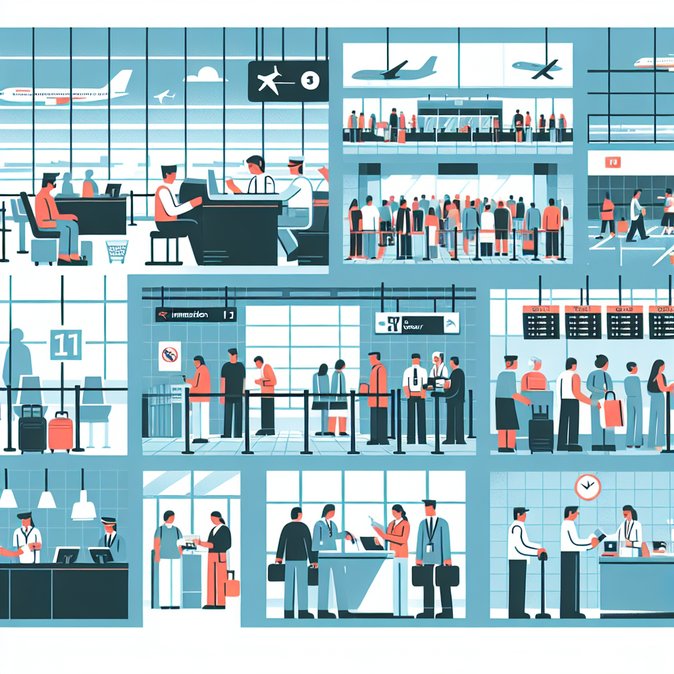
Frankfurt Airport has entered the final countdown to the long-awaited opening of its €4-billion Terminal 3, scheduled for 22 April 2026. On Tuesday, 27 January, more than 200 volunteer “passengers” spent the day playing out every step of an international journey—from online check-in to immigration control—to help operator Fraport fine-tune processes before the first commercial flights depart on 23 April.
The dry-runs will ramp up quickly. Twice a week until April, as many as 1,000 extras plus employees from airlines, federal police, customs and ground-handling companies will rehearse baggage drop, security screening, way-finding and boarding under dozens of scripted scenarios, including peak-hour surges, flight delays and wheelchair assistance. In total, 8,000 people will take part.
Terminal 3 is purpose-built for 19 million passengers a year and will be home to oneworld, SkyTeam and major Gulf carriers, freeing capacity in the ageing Terminal 2. Key features include 50 automated border-control e-gates, a fully biometric self-bag-drop zone and a dedicated people-mover that links the new piers with the long-distance rail station in eight minutes.
![Frankfurt Airport Starts Large-Scale Passenger Simulations Ahead of Terminal 3 Launch]()
Meanwhile, corporate travel planners looking ahead to the 2026 launch can streamline entry requirements through VisaHQ’s Germany platform (https://www.visahq.com/germany/). The online service handles visa and passport processing for more than 200 destinations, offers consolidated billing for companies and provides live status alerts, ensuring employees reach Terminal 3 with all documentation in order.
For corporate mobility managers the upgrade is significant. Airlines such as Emirates, Etihad, British Airways and Air France-KLM will shift operations in four waves over the summer, meaning travel-policy databases and airport-transfer instructions must be updated. Fraport promises shorter minimum-connect times, but warns that familiarisation training for ground staff could still cause “teething delays” in the first weeks.
Business-travel associations welcomed the rehearsal programme, noting that Germany’s busiest hub has suffered reputational damage from pandemic-era chaos. “Early, large-scale testing is the only way to make sure April’s opening is smooth,” said VDR president Christoph Carnier, urging companies to communicate the terminal swap early to travellers.
The dry-runs will ramp up quickly. Twice a week until April, as many as 1,000 extras plus employees from airlines, federal police, customs and ground-handling companies will rehearse baggage drop, security screening, way-finding and boarding under dozens of scripted scenarios, including peak-hour surges, flight delays and wheelchair assistance. In total, 8,000 people will take part.
Terminal 3 is purpose-built for 19 million passengers a year and will be home to oneworld, SkyTeam and major Gulf carriers, freeing capacity in the ageing Terminal 2. Key features include 50 automated border-control e-gates, a fully biometric self-bag-drop zone and a dedicated people-mover that links the new piers with the long-distance rail station in eight minutes.
Meanwhile, corporate travel planners looking ahead to the 2026 launch can streamline entry requirements through VisaHQ’s Germany platform (https://www.visahq.com/germany/). The online service handles visa and passport processing for more than 200 destinations, offers consolidated billing for companies and provides live status alerts, ensuring employees reach Terminal 3 with all documentation in order.
For corporate mobility managers the upgrade is significant. Airlines such as Emirates, Etihad, British Airways and Air France-KLM will shift operations in four waves over the summer, meaning travel-policy databases and airport-transfer instructions must be updated. Fraport promises shorter minimum-connect times, but warns that familiarisation training for ground staff could still cause “teething delays” in the first weeks.
Business-travel associations welcomed the rehearsal programme, noting that Germany’s busiest hub has suffered reputational damage from pandemic-era chaos. “Early, large-scale testing is the only way to make sure April’s opening is smooth,” said VDR president Christoph Carnier, urging companies to communicate the terminal swap early to travellers.