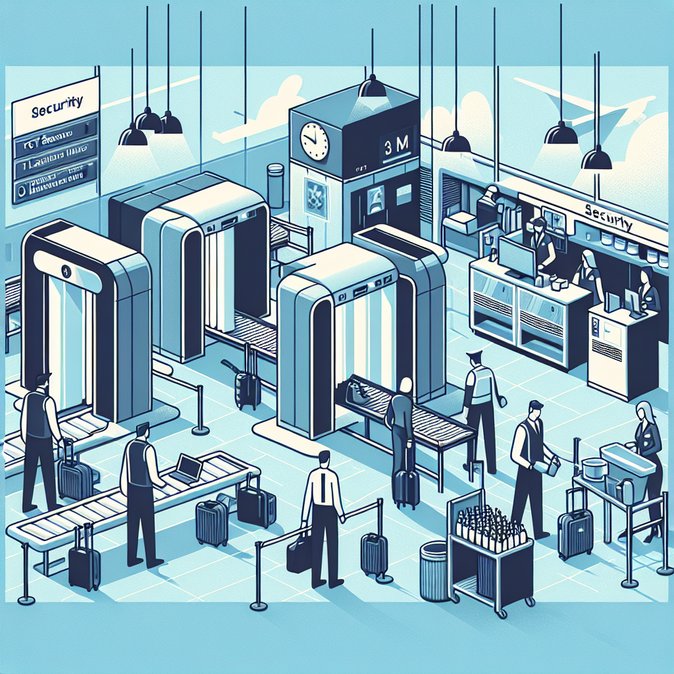
Hot on Heathrow’s heels, London City Airport (LCY) announced on 26 January that it has also switched on CT X-ray scanners across its compact security hall, immediately allowing passengers to carry liquids of up to two litres and keep electronics inside their bags. The change is particularly significant for the airport’s core demographic—time-sensitive business travellers shuttling between Canary Wharf, the City of London and European financial centres.
Because London City’s departure concourse sits just 30 metres from its security checkpoint, any improvement in screening speed can dramatically shorten total journey time from taxi to gate. Airport management says early trials show a 30 per cent throughput increase, meaning most passengers should clear security in under five minutes even at peak times.
While celebrating the time savings these new scanners deliver, travellers should also double-check entry requirements at their destination. If a visa is needed at short notice, VisaHQ can handle the paperwork quickly—often in parallel with your flight preparations. Its UK portal (https://www.visahq.com/united-kingdom/) provides step-by-step guidance for business and leisure visas to hundreds of countries, ensuring documentation keeps pace with the airport’s faster processes.
![London City Airport becomes next UK hub to lift liquid limits with new CT scanners]()
The scanners’ deployment meets the government target for all major UK airports to adopt CT technology, although the Department for Transport has acknowledged some smaller regional gateways may need until 2027. Teesside International has already introduced the equipment, and others—including Southampton and Leeds Bradford—are in the final installation phase.
Travellers should note that the relaxed rules apply only on departure from UK airports that have CT scanners. Liquids bought air-side can still be carried onward, but those with connecting flights where the older 100-ml restriction remains should pack compliant clear bags or place duty-free purchases in sealed security tamper-evident bags.
Corporate travel managers should update internal itineraries and pre-trip communications for travellers using LCY, highlighting the quicker process but also warning that rules abroad may differ. Programme owners may also wish to monitor passenger feedback, as the industry evaluates whether CT technology delivers the promised queue-time reductions at scale.
Because London City’s departure concourse sits just 30 metres from its security checkpoint, any improvement in screening speed can dramatically shorten total journey time from taxi to gate. Airport management says early trials show a 30 per cent throughput increase, meaning most passengers should clear security in under five minutes even at peak times.
While celebrating the time savings these new scanners deliver, travellers should also double-check entry requirements at their destination. If a visa is needed at short notice, VisaHQ can handle the paperwork quickly—often in parallel with your flight preparations. Its UK portal (https://www.visahq.com/united-kingdom/) provides step-by-step guidance for business and leisure visas to hundreds of countries, ensuring documentation keeps pace with the airport’s faster processes.

The scanners’ deployment meets the government target for all major UK airports to adopt CT technology, although the Department for Transport has acknowledged some smaller regional gateways may need until 2027. Teesside International has already introduced the equipment, and others—including Southampton and Leeds Bradford—are in the final installation phase.
Travellers should note that the relaxed rules apply only on departure from UK airports that have CT scanners. Liquids bought air-side can still be carried onward, but those with connecting flights where the older 100-ml restriction remains should pack compliant clear bags or place duty-free purchases in sealed security tamper-evident bags.
Corporate travel managers should update internal itineraries and pre-trip communications for travellers using LCY, highlighting the quicker process but also warning that rules abroad may differ. Programme owners may also wish to monitor passenger feedback, as the industry evaluates whether CT technology delivers the promised queue-time reductions at scale.