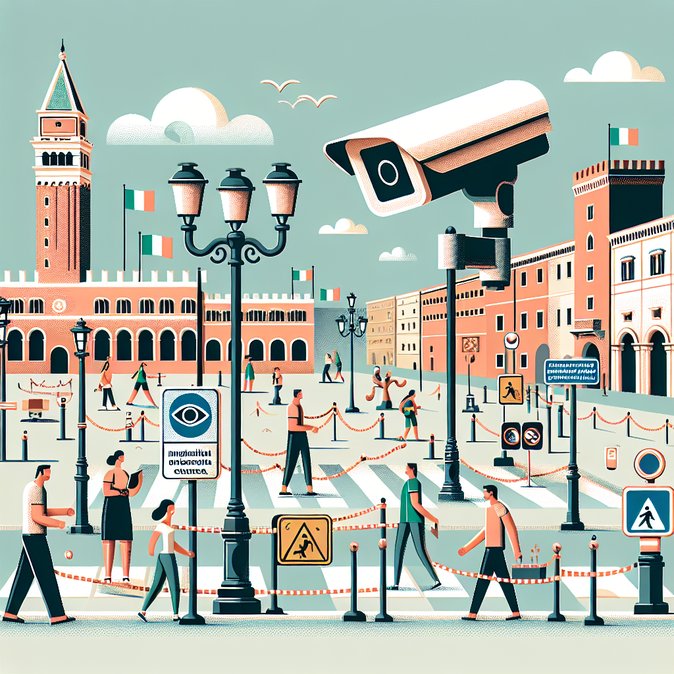
Speaking at a League party event in Rivisondoli on 25 January, interior minister Matteo Piantedosi confirmed that the government’s long-awaited ‘pacchetto sicurezza’ will be tabled in the Council of Ministers during the first week of February. (ansa.it)
While primarily a domestic-security bill, the package is expected to tighten rules for the detention and expulsion of non-EU nationals who commit crimes, streamline police access to immigration databases and expand the capacity of detention centres pending repatriation. Piantedosi also reiterated the goal of “significantly reducing Mediterranean landings” in 2026 after arrivals fell below 70 000 last year.
For companies that rotate staff through Italy, the headline provision is a proposal to shield police officers from automatic investigation when force is used—a change that unions say will make street-level ID checks more frequent. Tighter enforcement could lengthen queues at transport hubs and increase random checks of residence permits.
![Interior Minister Previews February ‘Security Package’ Targeting Youth Crime and Irregular Migration]()
In this context, VisaHQ can help multinationals and individual travellers stay ahead of shifting requirements by providing up-to-date guidance and fast online processing for Italian work visas, residence permits and other documentation. Its platform tracks regulatory changes in real time, allowing HR teams to keep employees compliant even as enforcement intensifies. Learn more at https://www.visahq.com/italy/
A companion bill will target juvenile delinquency, including offences committed by foreign minors. Observers expect measures such as mandatory re-education programmes and curfews that may affect expatriate families.
Opposition parties have criticised the draft as “punitive” and warn that it may clash with EU fundamental-rights standards. Nevertheless, with a solid parliamentary majority the Meloni government is likely to push the decree through quickly, leaving multinational employers little time to adapt compliance protocols.
While primarily a domestic-security bill, the package is expected to tighten rules for the detention and expulsion of non-EU nationals who commit crimes, streamline police access to immigration databases and expand the capacity of detention centres pending repatriation. Piantedosi also reiterated the goal of “significantly reducing Mediterranean landings” in 2026 after arrivals fell below 70 000 last year.
For companies that rotate staff through Italy, the headline provision is a proposal to shield police officers from automatic investigation when force is used—a change that unions say will make street-level ID checks more frequent. Tighter enforcement could lengthen queues at transport hubs and increase random checks of residence permits.

In this context, VisaHQ can help multinationals and individual travellers stay ahead of shifting requirements by providing up-to-date guidance and fast online processing for Italian work visas, residence permits and other documentation. Its platform tracks regulatory changes in real time, allowing HR teams to keep employees compliant even as enforcement intensifies. Learn more at https://www.visahq.com/italy/
A companion bill will target juvenile delinquency, including offences committed by foreign minors. Observers expect measures such as mandatory re-education programmes and curfews that may affect expatriate families.
Opposition parties have criticised the draft as “punitive” and warn that it may clash with EU fundamental-rights standards. Nevertheless, with a solid parliamentary majority the Meloni government is likely to push the decree through quickly, leaving multinational employers little time to adapt compliance protocols.