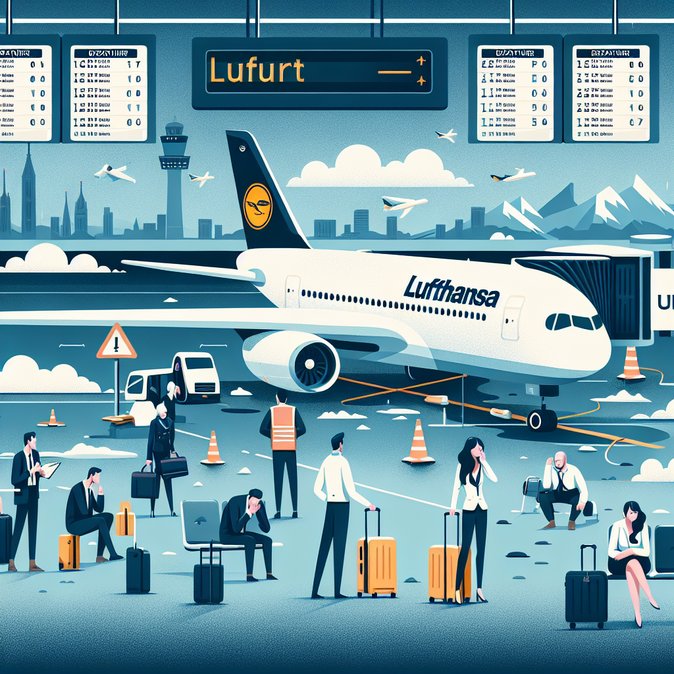
Escalating rhetoric between Washington and Tehran has spilled into commercial aviation. On 24 January Bloomberg reported that Air France, KLM and several smaller European carriers had halted flights to Dubai, Riyadh, Dammam and Tel Aviv. Deutsche Lufthansa AG confirmed that it has extended its suspension of Tehran services until at least 28 March and will operate Tel Aviv and Amman sectors only in daylight for the rest of the month.
Airlines are also rerouting overflights to avoid Iranian, Iraqi and parts of Saudi airspace, adding up to 50 minutes to typical Frankfurt-Bangkok and Frankfurt-Singapore routings. Lufthansa Cargo has warned shippers of temporary surcharges as longer great-circle tracks drive up fuel burn.
![European carriers – including Lufthansa – suspend Gulf routes amid U.S.–Iran tensions]()
The disruption underscores how geopolitical flashpoints can quickly constrict mobility corridors essential to Germany’s export economy. German multinationals with regional hubs in Dubai must now weigh the risks of sudden airspace closures and ensure assignee evacuation plans are current. Insurance brokers say premiums for business-critical travel to the Gulf have already edged higher this quarter.
Amid these uncertainties, firms are discovering that visa logistics can become a hidden chokepoint when itineraries change overnight. VisaHQ’s Germany portal (https://www.visahq.com/germany/) offers an on-demand solution, fast-tracking entry permits and transit visas for more than 200 jurisdictions—critical if crews or executives must reroute through unfamiliar hubs at short notice.
Should the security situation deteriorate further, slot scarcity at alternative hubs such as Doha and Muscat could cascade into Europe-Asia itineraries, making advance contingency planning vital. Travel managers are advised to brief relocated staff on Schengen re-entry rules, as unexpected diversions may push travellers beyond their authorised stay limits.
Airlines are also rerouting overflights to avoid Iranian, Iraqi and parts of Saudi airspace, adding up to 50 minutes to typical Frankfurt-Bangkok and Frankfurt-Singapore routings. Lufthansa Cargo has warned shippers of temporary surcharges as longer great-circle tracks drive up fuel burn.

The disruption underscores how geopolitical flashpoints can quickly constrict mobility corridors essential to Germany’s export economy. German multinationals with regional hubs in Dubai must now weigh the risks of sudden airspace closures and ensure assignee evacuation plans are current. Insurance brokers say premiums for business-critical travel to the Gulf have already edged higher this quarter.
Amid these uncertainties, firms are discovering that visa logistics can become a hidden chokepoint when itineraries change overnight. VisaHQ’s Germany portal (https://www.visahq.com/germany/) offers an on-demand solution, fast-tracking entry permits and transit visas for more than 200 jurisdictions—critical if crews or executives must reroute through unfamiliar hubs at short notice.
Should the security situation deteriorate further, slot scarcity at alternative hubs such as Doha and Muscat could cascade into Europe-Asia itineraries, making advance contingency planning vital. Travel managers are advised to brief relocated staff on Schengen re-entry rules, as unexpected diversions may push travellers beyond their authorised stay limits.