Austria’s Interior Minister Gerhard Karner used a press conference in Vienna on 23 January 2026 to deliver the government’s annual migration balance sheet—and the figures are striking. According to the Federal Office for Immigration and Asylum (BFA), 14,156 people were removed from Austrian territory in 2025, the highest number since records began. On average, 40 individuals a day either left voluntarily under state-funded return programmes or were forcibly deported. Almost half of those returned—about 6,800 people—were convicted criminals, underscoring the government’s policy of prioritising removals of offenders.
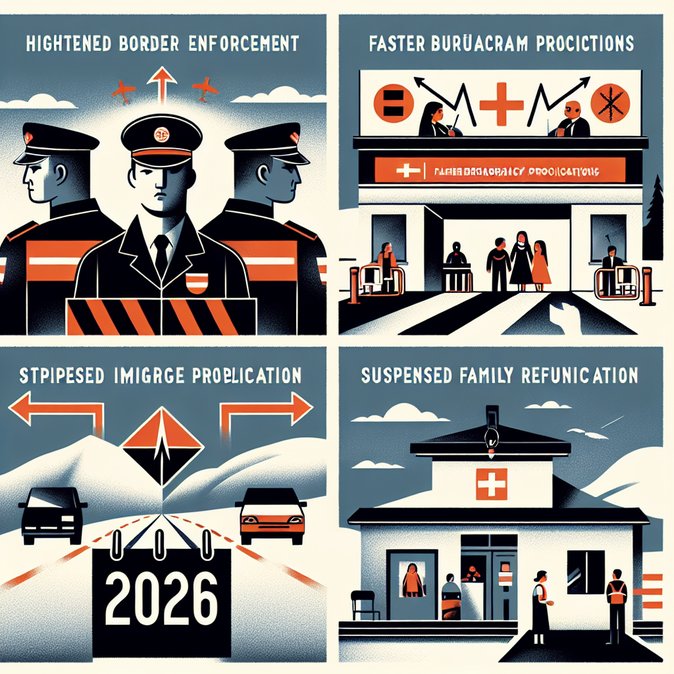
Behind the headline number lies a broader shift in Austria’s migration landscape. First-time asylum claims dropped to 6,849 last year, and total applications—including births and follow-on claims—fell 36 % to 16,284. Officials attribute the decline to a tougher external-border posture, a clamp-down on “abusively repeated” claims, and a decision to suspend most family-reunification visas pending EU-level reforms. The family-reunification pause alone cut inflows from more than 3,400 people in Q4 2023 to just 25 in the same period of 2025.
![Austria Reports Record 14,156 Deportations in 2025 as Asylum Applications Fall 36 %]()
As the regulatory environment grows more complex, organisations and travellers don’t have to face it alone. VisaHQ’s Austria portal (https://www.visahq.com/austria/) offers real-time visa requirements, tailored application checklists and concierge support for everything from Red-White-Red Cards to family-reunification petitions, giving companies a reliable partner amid shifting rules and tight compliance timelines.
From a corporate-mobility perspective, the numbers matter for three reasons. First, businesses that employ non-EU talent under Austria’s Red-White-Red Card system should expect stricter background checks and longer security screenings, because the Interior Ministry has vowed to shift more officers from field removals to document verification. Second, province-level labour authorities have been instructed to double-check whether humanitarian-stay permits can instead be converted into return orders—potentially shortening the local talent pool in sectors such as logistics, construction and seasonal tourism. Third, consultants warn that families on dependant residence permits should keep passports valid for the full permit period and carry school-enrolment evidence when travelling, as spot checks at Vienna Airport have intensified.
Politically, the record deportations allow the ruling coalition to claim that Austria is now only the twelfth-most-burdened EU country when asylum numbers are adjusted for population. Yet NGOs argue the figures reflect a system that is ever harder to access for genuine refugees. With a general election due in autumn 2026 and the far-right FPÖ leading many opinion polls, few observers expect Vienna to soften its line. Multinational HR teams should therefore monitor permit-processing times and prepare contingency plans—especially for intracompany transferees whose dependants might need family-reunification visas later in the year.
Behind the headline number lies a broader shift in Austria’s migration landscape. First-time asylum claims dropped to 6,849 last year, and total applications—including births and follow-on claims—fell 36 % to 16,284. Officials attribute the decline to a tougher external-border posture, a clamp-down on “abusively repeated” claims, and a decision to suspend most family-reunification visas pending EU-level reforms. The family-reunification pause alone cut inflows from more than 3,400 people in Q4 2023 to just 25 in the same period of 2025.

As the regulatory environment grows more complex, organisations and travellers don’t have to face it alone. VisaHQ’s Austria portal (https://www.visahq.com/austria/) offers real-time visa requirements, tailored application checklists and concierge support for everything from Red-White-Red Cards to family-reunification petitions, giving companies a reliable partner amid shifting rules and tight compliance timelines.
From a corporate-mobility perspective, the numbers matter for three reasons. First, businesses that employ non-EU talent under Austria’s Red-White-Red Card system should expect stricter background checks and longer security screenings, because the Interior Ministry has vowed to shift more officers from field removals to document verification. Second, province-level labour authorities have been instructed to double-check whether humanitarian-stay permits can instead be converted into return orders—potentially shortening the local talent pool in sectors such as logistics, construction and seasonal tourism. Third, consultants warn that families on dependant residence permits should keep passports valid for the full permit period and carry school-enrolment evidence when travelling, as spot checks at Vienna Airport have intensified.
Politically, the record deportations allow the ruling coalition to claim that Austria is now only the twelfth-most-burdened EU country when asylum numbers are adjusted for population. Yet NGOs argue the figures reflect a system that is ever harder to access for genuine refugees. With a general election due in autumn 2026 and the far-right FPÖ leading many opinion polls, few observers expect Vienna to soften its line. Multinational HR teams should therefore monitor permit-processing times and prepare contingency plans—especially for intracompany transferees whose dependants might need family-reunification visas later in the year.