Travellers flying out of London Heathrow can finally stop decanting shampoo into miniature bottles. From 23 January 2026 the UK’s largest hub has removed the 100-millilitre limit on liquids, gels and pastes in hand luggage after completing a four-year, £1 billion rollout of next-generation computed-tomography (CT) security scanners. The new equipment produces high-resolution 3-D imagery that allows security officers to rotate and “slice” a bag virtually, detecting explosives without forcing passengers to remove items. Each container of liquid may now hold up to two litres and laptops can stay inside bags, a change Heathrow’s chief executive Thomas Woldbye says will “free passengers from the tyranny of tiny toiletries and speed up our lanes.” (theguardian.com)
The 100-ml rule was imposed worldwide in 2006 after British police foiled a liquid-bomb plot on trans-Atlantic flights. UK airports were ordered to install CT scanners by December 2022, but the pandemic and subsequent supply-chain issues pushed the deadline back twice. Smaller airports such as London City and Teesside upgraded early, only to be told by the government in 2024 to reinstate the limit while regulators finished testing equipment. Heathrow is the first global mega-hub to complete full deployment. (theguardian.com)
![Heathrow abolishes 100-ml liquids rule after £1 billion CT-scanner upgrade]()
Before you head to the airport with full-size toiletries, make sure your paperwork is also in order: VisaHQ’s United Kingdom portal (https://www.visahq.com/united-kingdom/) lets travellers instantly check entry requirements for every destination, secure electronic visas and even renew passports online. The service can spare you last-minute surprises at immigration, preserving the time you’ve just saved at the security lanes.
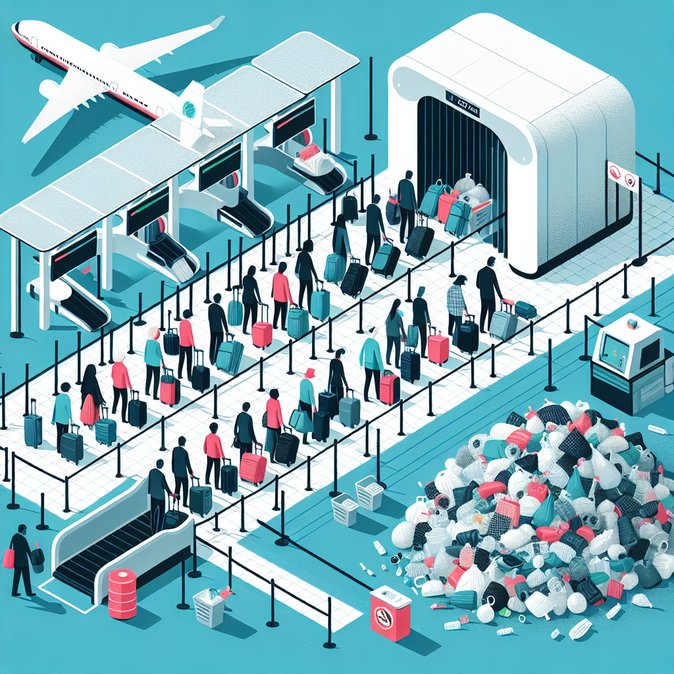
Operationally, Heathrow expects the change to cut queuing times by 15–20 %, eliminating one of the most common causes of secondary bag checks. Airport data suggest more than 65 % of secondary searches were triggered by liquids or laptops packed incorrectly. The airport also predicts an environmental dividend: scrapping single-use plastic security bags will remove up to 16 million pieces of plastic a year from the waste stream. Airlines such as British Airways and Virgin Atlantic have welcomed the move, saying faster throughput will support on-time departures at peak periods. (theguardian.com)
However, the new freedom applies only on departure from Heathrow. Business travellers are being warned that most foreign airports – including many EU hubs – still enforce the 100-ml cap. A bottle that sails through Heathrow security may be confiscated on the return leg. Companies should update travel policies and pre-trip briefings to highlight the patchwork of rules during the transition. The UK Civil Aviation Authority has reiterated that passengers remain responsible for ensuring their luggage complies with rules at every airport on their itinerary. (theguardian.com)
The 100-ml rule was imposed worldwide in 2006 after British police foiled a liquid-bomb plot on trans-Atlantic flights. UK airports were ordered to install CT scanners by December 2022, but the pandemic and subsequent supply-chain issues pushed the deadline back twice. Smaller airports such as London City and Teesside upgraded early, only to be told by the government in 2024 to reinstate the limit while regulators finished testing equipment. Heathrow is the first global mega-hub to complete full deployment. (theguardian.com)
Before you head to the airport with full-size toiletries, make sure your paperwork is also in order: VisaHQ’s United Kingdom portal (https://www.visahq.com/united-kingdom/) lets travellers instantly check entry requirements for every destination, secure electronic visas and even renew passports online. The service can spare you last-minute surprises at immigration, preserving the time you’ve just saved at the security lanes.
Operationally, Heathrow expects the change to cut queuing times by 15–20 %, eliminating one of the most common causes of secondary bag checks. Airport data suggest more than 65 % of secondary searches were triggered by liquids or laptops packed incorrectly. The airport also predicts an environmental dividend: scrapping single-use plastic security bags will remove up to 16 million pieces of plastic a year from the waste stream. Airlines such as British Airways and Virgin Atlantic have welcomed the move, saying faster throughput will support on-time departures at peak periods. (theguardian.com)
However, the new freedom applies only on departure from Heathrow. Business travellers are being warned that most foreign airports – including many EU hubs – still enforce the 100-ml cap. A bottle that sails through Heathrow security may be confiscated on the return leg. Companies should update travel policies and pre-trip briefings to highlight the patchwork of rules during the transition. The UK Civil Aviation Authority has reiterated that passengers remain responsible for ensuring their luggage complies with rules at every airport on their itinerary. (theguardian.com)